Breakdown: Jeremy Redman, the SaaS Founder Who Built a $3M Business With a One-Employee Team
How Jeremy Redman grew TaskMagic to roughly $3M a year with one employee by building small, specific tools that feed one core product, then sold it.

Most SaaS advice still sounds like it was written in a different internet. Build one big product. Raise money if needed. Hire a team. Grind acquisition. Pray churn behaves. Meanwhile, solo builders are over here duct-taping together no-code startup tools, trying to create something useful before the market shape-shifts again.
That is why Jeremy Redman’s story lands. He did not just build a software company. He built a system around a core product, used smaller products to feed it, and scaled TaskMagic to roughly $3 million a year with essentially a two-person operation before selling it for the mid-to-upper seven figures.
What makes this especially relevant now is that his approach feels a lot like an AI-powered launch system for creators, except he was thinking this way before every product demo turned into “type a prompt and become a founder.” The idea is simple: do not force one product to do all the work. Build an ecosystem where each tool solves a specific problem and naturally leads into the next one.
This breakdown unpacks how Jeremy built TaskMagic, what the “tentpole strategy” actually is, why he thinks the old version of SaaS is changing, and what the sale process looked like when the glamorous part stopped being glamorous.
Table of Contents
- 🏠 Meeting the Founder Behind TaskMagic
- ⛺ The Tentpole Strategy That Changed the Growth Model
- 🧩 How Jeremy Built the Ecosystem Around TaskMagic
- 🤖 Is SaaS Dead, or Just Different Now?
- 💸 Why TaskMagic Used a Different Pricing Model
- 📉 The Real Story of Selling a SaaS Business
- 🛠️ Advice Jeremy Would Give to Builders Starting Today
- 🧠 Final Take: The Smarter Way to Build SaaS Now
- 🧰 Build This Stack
- ❓FAQ
🏠 Meeting the Founder Behind TaskMagic
Who is Jeremy Redman, and what did he build?
Jeremy Redman is the founder of TaskMagic, a browser-based automation tool built for people who kept running into the limits of API-first automation platforms like Zapier.
The problem he noticed was painfully practical. Plenty of users wanted to automate workflows, but not everything cleanly connected through APIs. Real businesses do messy human things inside browsers. They click buttons, copy data, move between tabs, log into strange dashboards, and deal with all the little interactions most automation software ignores.
TaskMagic was built to automate that browser behavior. Instead of relying only on clean integrations, it could mimic what a human would do on the web.
That product grew to:
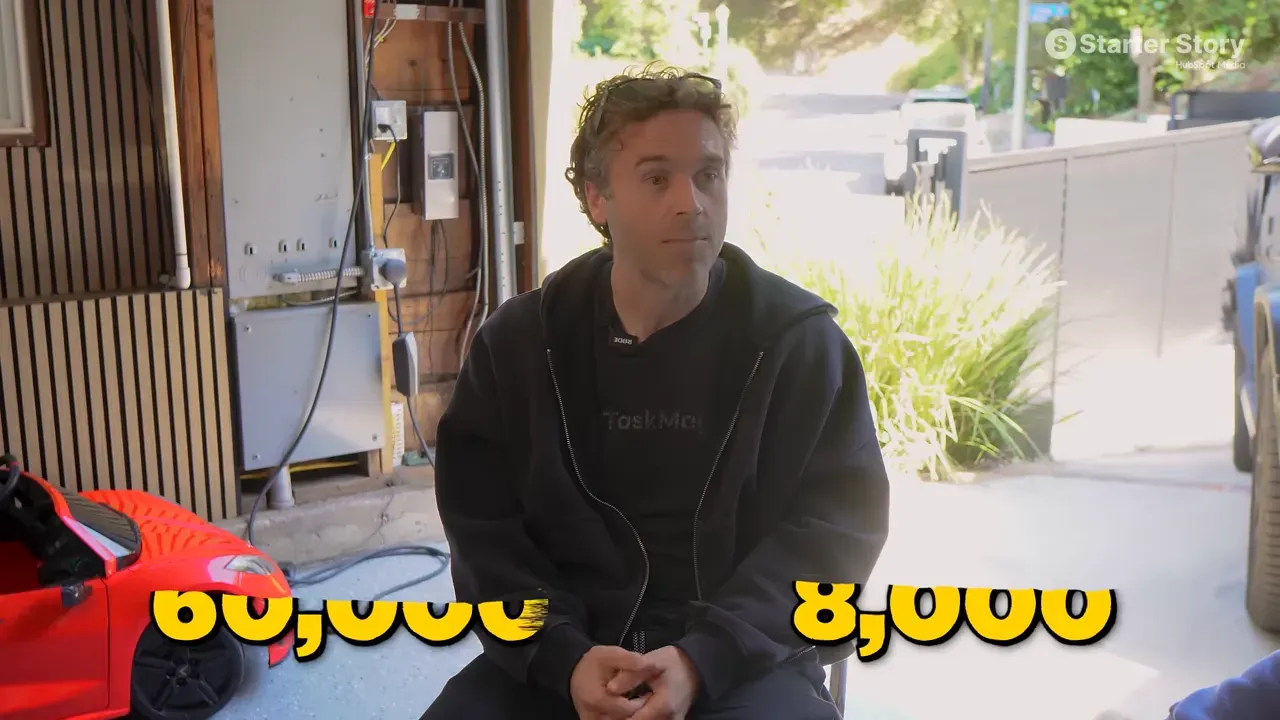
- More than 60,000 users
- Around 8,000 paying customers
- Some months doing north of $400,000 in revenue
- Roughly $3 million annual revenue
And the team? Jeremy plus one employee, his CTO.
Did Jeremy come from a technical background?
No. That is part of what makes the story useful.
Jeremy started as a non-technical founder. The first version of the product was hacked together in no-code and, in his words, ran “slow as hell.” But it was enough to validate demand and start making money. That mattered more than elegance.
Once the first version proved people would pay, he hired his first employee, rebuilt the product, and launched a stronger version in 2020. That version made its way to seven figures in revenue. Then he stepped back and asked a better question: what bigger opportunity were customers pointing at?
The answer was automation. Not generic software. Not bloated “all-in-one” positioning. Just a sharper move toward what customers kept asking for.
⛺ The Tentpole Strategy That Changed the Growth Model
What is the tentpole strategy?
Jeremy’s core idea is this: most founders build one product and try to market that one product directly. He did the opposite.
He built a main product, the “tentpole,” then created smaller side products around it. Those side products solved adjacent problems, ranked on their own, generated their own revenue, and funneled customers back into the main product.
TaskMagic was the tentpole.
The side products were not random experiments. They were tightly connected tools for the same type of customer.
That distinction matters. This was not “start five side hustles and hope one works.” It was one ecosystem, one audience, and multiple points of entry.
Why does this strategy work better now than older SaaS playbooks?
Because software is cheaper to build, faster to test, and easier to niche down.
In the old model, creating additional products meant more engineers, more overhead, and a much bigger bet. Today, especially with AI and no-code tools, founders can build focused functionality much faster. That changes the economics of product development.
Jeremy’s point is that small software products can now work like content assets used to work. They can attract search traffic, solve one narrow pain point, and introduce customers into a larger system.
That is why this approach fits how creators launch products today. Instead of one giant launch and one giant funnel, you create multiple product entry points. Each one earns attention in a different way.
🧩 How Jeremy Built the Ecosystem Around TaskMagic
What was the first step in building a tentpole ecosystem?
Step one was to build for the customer’s next problem.
TaskMagic’s customers included business owners, agencies, freelancers, and people who needed more leads and more sales. So Jeremy did not ask, “What else can I build?” He asked, “What problem shows up right after someone uses TaskMagic?”
That framing is what keeps the strategy from turning into feature sprawl with branding.
What side product did Jeremy build first?
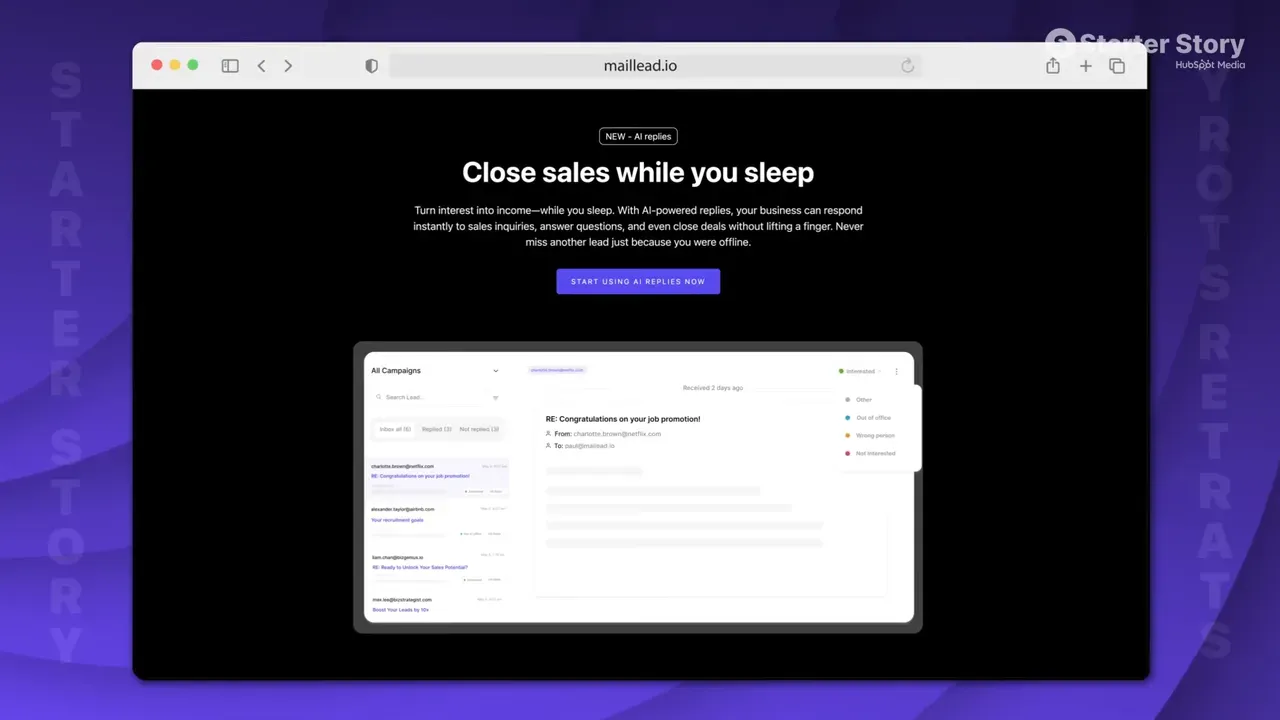
He built MailLead, a simple outbound email platform.
The key here is that it was intentionally specific. Not broad. Not overengineered. Not trying to replace every email platform on earth. Jeremy wanted something simple enough to build and specific enough to rank.
His logic was that SEO rewards specificity. A narrow tool aimed at a clear use case can often rank faster than a general product with vague messaging. So instead of trying to get people to search for a broad automation platform, he created a product tied to a concrete job: sending outbound email.
MailLead did two things:
- It sold to existing TaskMagic customers
- It brought in new customers who had never heard of TaskMagic
On its own, Jeremy says MailLead generated almost seven figures in revenue.
How did the upgrade path back into TaskMagic work?
This is where the system gets smart.
MailLead solved the initial problem: sending outbound email. But eventually users wanted more. They wanted to connect workflows, trigger actions, move data between apps, and automate what happened before or after the email sequence.
That became the natural upgrade path.
Inside the product, users could hit an automation need and be led directly to TaskMagic. No awkward pitch. No hard switch. Just the next logical step.
That is a far better conversion motion than trying to cold-sell everyone on the biggest, most capable product from day one.
People buy small, specific relief first. Then they buy systems.
What came next after MailLead?
The next product was LeadQuest.ai, a tool that helped users find leads to email.
Again, same pattern.
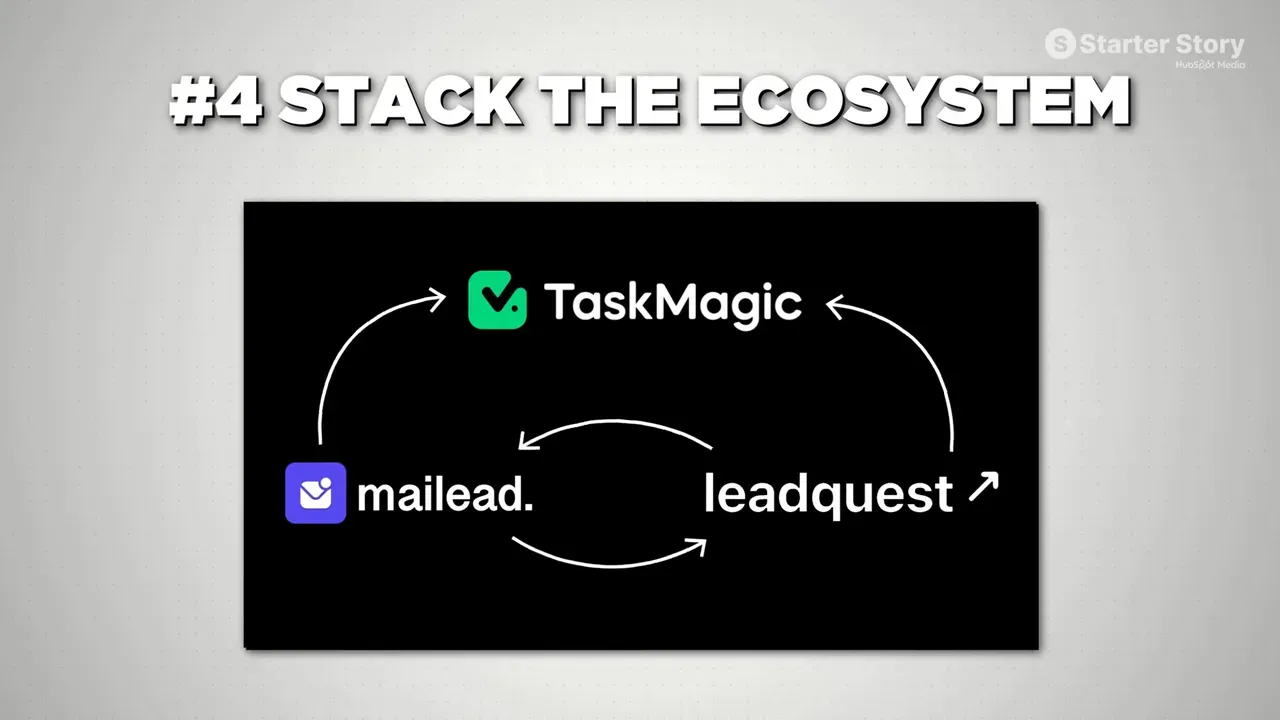
If MailLead users need people to contact, then lead sourcing becomes the next problem. So Jeremy built the product for that. And when LeadQuest users wanted to automate what happened with those leads, TaskMagic was there. If they wanted to email them at scale, MailLead was there too.
Now the products were not just feeding the tentpole. They were feeding each other.
This is the real shape of the strategy:
- LeadQuest.ai helps find leads
- MailLead helps email those leads
- TaskMagic helps automate the workflow around both
That is what Jeremy means by stacking an ecosystem.
🤖 Is SaaS Dead, or Just Different Now?
What does Jeremy think about the future of SaaS?
He does not think SaaS is dead. He thinks the build model has changed.
There is a big difference.
When people say “SaaS is dead,” what they usually mean is the old playbook is getting weaker. It is harder to win by building one generic software product, charging a monthly subscription, and trying to out-market companies with more money and more people.
Jeremy’s answer is to get more modular and more ecosystem-driven.
If he were starting over today, he said he would still use this strategy. He might even choose a different product as the tentpole, such as LeadQuest, and then stack surrounding tools around that.
That is a useful mental shift for anyone trying to launch with AI tools or build a modern solo builder tech stack. The question is not “What giant software company can one person build?”
The better question is:
What useful ecosystem can one person start, where each product earns its keep and supports the next?
How does this apply to launching with AI today?
The overlap is in structure, not buzzwords.
A modern AI-assisted launch plan should do the same thing Jeremy’s product ecosystem did:
- Solve one specific problem at a time
- Create natural upgrade paths
- Use smaller tools or offers as acquisition channels
- Reduce dependence on one giant funnel that has to work perfectly
This matters because most builders get trapped trying to perfect one “main thing” while everything around it stays broken. Meanwhile, the better move is often to build the smaller utility first, let it pull people in, and then automate the rest with AI or software where it actually makes sense.
Not every product needs to be the business. Some products need to be the bridge.
💸 Why TaskMagic Used a Different Pricing Model
How did Jeremy think about pricing?
One of Jeremy’s early pricing insights was that many customers did not want to be trapped in an endless subscription for everything.
So instead of forcing pure monthly SaaS pricing from day one, he found success using lifetime deals paired with usage-based pricing.
That structure helped bankroll growth in the earlier stages. It also lowered the barrier for users who were interested in the product but hesitant to commit to another recurring expense.
This is not a universal rule. But it is a reminder that pricing should match buyer behavior, not just SaaS tradition.
A lot of founders copy the default pricing model because it feels professional. Then they wonder why nobody converts. Sometimes the problem is not the product. Sometimes it is the payment psychology.
📉 The Real Story of Selling a SaaS Business
What was the sale process actually like?
Messy. Stressful. Uncomfortable. Not the kind of story people usually post with a beach photo and a thread about leverage.
Jeremy wanted to sell before turning 38. He had a young daughter. He had a house with a roughly $9,000 mortgage. The business looked strong from the outside, but internally things were tight.
He talked to brokers. He listed on Acquire.com. More than 100 potential buyers reached out. But a crowded inbox is not a closed deal. While the process dragged on, Jeremy says he bought out investors and depleted both business and personal cash.
At one point, he had put $50,000 on an Amex Platinum and took on roughly $200,000 more in personal debt just to cover bills while the process moved forward.
That is the part people skip when they talk about exits.
The sale took around six to seven months. During that time, Jeremy was not gliding toward freedom. He was under pressure, trying to make sure the house stayed the house and did not become an expensive lesson.

What did Jeremy say about the emotional side of the sale?
He described it like coming out of a sales coma.
That makes sense. Even a successful outcome does not erase the months of uncertainty before it. There is relief, yes. But also disorientation. If the business has consumed your identity for years, what exactly are you after it ends?
Jeremy said one of the only things that brought him calm during the darkest part of the process was spending time with his daughter. That detail says more than any business metric could.
Eventually, the company sold and he walked away with millions in the bank. But even then, the next question showed up immediately: what is the new daily routine now?
That is a very real founder problem. The exit is not just financial. It is existential too.
🛠️ Advice Jeremy Would Give to Builders Starting Today
If someone wants to build a SaaS business now, what should they take from this?
Three things stand out from Jeremy’s playbook.
- Build the next problem, not a random product.The best side products are not side quests. They are adjacent solutions for the same customer.
- Use specificity as a growth advantage.Narrow products can rank faster, convert better, and create cleaner acquisition channels than broad “platform” messaging.
- Think in ecosystems, not isolated apps.The win is not one tool. The win is a network of tools that help each other grow.
If someone is building with AI, this is one of the sanest ways to think about it. Not “what giant AI company can I fake by Friday,” but “what small, useful software can I ship that fits into a stack and earns the right to exist?”
What is Jeremy’s broader advice about entrepreneurship?
He made one point that deserves more airtime than growth hacks do: the internet is often toxically positive.
Everybody is crushing it. Everybody is grateful. Everybody is posting wins while hiding the week they almost broke under the pressure.
Jeremy’s advice was to focus on the problems. Have the bad day. Share the rough patch. Do not build your understanding of business from polished highlights only.
That may be the most useful thing in this entire story.
Because realistic operators do better over time than hype addicts. They spot constraints earlier. They make clearer decisions. And they do not implode the first time reality stops being cinematic.
🧠 Final Take: The Smarter Way to Build SaaS Now
What is the big takeaway from Jeremy Redman’s story?
The old software model said one product should do everything: acquisition, conversion, retention, expansion, brand, moat. That is a lot to ask from one app and one homepage.
Jeremy built differently. He treated products almost like strategic content. Small tools. Clear jobs. Distinct entry points. Shared customers. Natural handoffs. Better leverage.
That approach feels especially relevant for anyone building with AI or assembling a lean stack on their own. Build the useful wedge first. Let it attract the right people. Then connect it to the deeper product where the bigger value lives.
And if the build works, great. If it does not, at least it fails as a focused test instead of a two-year monument to “maybe.”
Jeremy’s final promise was basically this: keep building products in the same ecosystem and the cumulative result can get you there, even if product one is not the breakout. Maybe it is product five. Maybe the millionaire moment is less about one genius swing and more about stacking practical wins until the math gets rude.
Which, frankly, is a lot more believable than most startup advice on the internet.
🧰 Build This Stack
Want to borrow the tentpole playbook? Here is a lean stack for one product plus a few focused wedge tools around it, one tool per job:
- Lovable for shipping small wedge tools fast, a solid alternative to the no-code first version Jeremy hacked together
- Framer for giving each side product its own specific, search-friendly landing page (a solid alternative, not part of Jeremy's stack)
- beehiiv for a newsletter that cross-sells your products to one shared audience (a solid alternative, not something Jeremy mentioned using)
- Acquire.com for listing the business when it is time to sell, the marketplace Jeremy actually used for the TaskMagic sale
Some tools above may be affiliate links — we only list tools that fit the build.
❓FAQ
What is TaskMagic?
TaskMagic is a browser-based automation software product founded by Jeremy Redman. It was designed to automate messy human actions inside a browser, especially the kinds of workflows that traditional API-based automation tools often cannot handle.
What is the tentpole strategy in SaaS?
The tentpole strategy is Jeremy Redman’s approach of building one main software product and then creating smaller adjacent products that solve related problems for the same customers. Those side products generate revenue on their own and also funnel users back into the main product.
How much revenue did TaskMagic make?
Jeremy said TaskMagic reached roughly $3 million in annual revenue, with some months exceeding $400,000. The company also grew to more than 60,000 users and around 8,000 paying customers.
How many people were on the team?
TaskMagic was run by Jeremy and one employee, his CTO. That lean structure is part of why the business stood out.
Did Jeremy Redman have a technical background?
No. He started as a non-technical founder using no-code tools to build the first version of the product. After validating demand, he hired his first employee and rebuilt the software.
What side products did Jeremy build around TaskMagic?
Two examples he shared were MailLead, an outbound email platform, and LeadQuest.ai, a tool for finding leads. Both served the same customer ecosystem and fed users back into TaskMagic when they needed automation.
Is SaaS dead according to Jeremy?
No. His position is that SaaS is changing, not dying. The older model of building one broad product is weaker, but focused tools and ecosystem-based strategies still create strong opportunities, especially for solo founders.
How did Jeremy price his product?
He said one major unlock was using lifetime deals combined with usage-based pricing, especially in the early stages. This helped reduce friction for customers who did not want another recurring subscription.
What was the sale process like for TaskMagic?
Jeremy described it as intense and emotionally difficult. The company was listed on Acquire.com, many buyers reached out, and the process took about six to seven months. During that period, he also faced significant personal financial pressure before the sale ultimately closed in the mid-to-upper seven figures.
What can solo builders learn from this story?
The main lessons are to build products around the next problem your customers face, keep those products specific, and think in terms of ecosystems instead of isolated apps. For anyone launching with AI, the same principle applies: build small tools that connect logically and create natural upgrades.
What tools do you need to build a SaaS product ecosystem like TaskMagic?
You need one core product, a fast way to ship small adjacent tools, a focused page for each tool, and a way to talk to the same audience over time. An AI app builder handles the quick wedge tools, a no-code website builder gives each one its own landing page, and a founder newsletter connects the whole ecosystem. Jeremy started his first version with no-code tools and sold the business through Acquire.com.
This article was inspired by this amazing video I Spent 24 Hours With A SaaS Millionaire. Check out more from their awesome channel.