
Breakdown: Marc Lou, the $77K/Month Solopreneur Who Treats Shipping Like a Daily Repetition
Marc Lou has built 35 startups and makes about $77K a month. His system is boring on purpose: offline mornings, deep work, a plain AI setup, and shipping with a buy button.


Table of Contents
- 🔥 Why This Matters More Than Another Productivity Sermon
- ☕ The Setup: What a Day Actually Looks Like
- 🧠 Deep Work Beats Fancy Systems
- 🎲 Shipping 35 Startups and Accepting the Ugly Math
- 💡 How He Finds Ideas Without Romanticizing Them
- 🗂️ The Ship List: Choosing What to Build Next
- 🚧 The Biggest Barrier to Success Is Usually Fear of Being Seen
- 🌙 Evening Routine, Sleep, and the Part Everyone Pretends Is Optional
- 🎯 The Real Talk: Don’t Marry the First Idea
- 🛠️ A Practical Blueprint Builders Can Test Tonight
- 🧰 Build This Stack
- ❓FAQ
- 🚀 The Only Metric That Survives the Hype Cycle
🔥 Why This Matters More Than Another Productivity Sermon
Most advice for builders sounds like it was assembled by someone with twelve dashboards open, a second brain in Notion, and a spiritual dependency on color-coded systems. It looks impressive right up until nothing gets launched.
Marc Lou’s approach is the opposite. Boring on purpose. Repetitive on purpose. Effective because it removes drama from the work.
He makes around $77,000 a month as a solopreneur, has built 35 startups, and his core argument is brutally simple: the metric that matters is not how optimized the workflow looks. It is how many things get shipped.
That makes this less of a lifestyle story and more of a usable operating system for anyone trying to build online. Especially solo builders who are exhausted by tool fatigue, trend panic, and the eternal promise of some magical AI-powered launch system for creators that supposedly replaces discipline.
Marc’s version is less glamorous. It is also more likely to work.
☕ The Setup: What a Day Actually Looks Like
What does Marc Lou’s daily routine look like?
It is almost aggressively consistent. He repeats nearly the same day 365 days a year.
The day starts with coffee and breakfast with his wife, followed by the gym together. Lately they have been training for Hyrox, so that can mean sled pushes, squats, and running. Then they head home, and that is where the real line gets drawn between life and work.
Marc does not begin the day by checking notifications, email, social media, or support requests. He stays offline. Completely.
That choice is not some purity ritual. It is defensive architecture.
He knows that the moment he goes online, he risks getting pulled into everyone else’s priorities. News, AI updates, social feeds, bug reports, random urgency. One scroll becomes one lost hour, and one lost hour becomes a day that never fully starts.

So his mornings are protected. Usually four to six hours of deep work with no internet noise.
Why is staying offline in the morning so important to him?
Because deep work is the thing that built the business in the first place.
Marc treats his phone like the enemy of creation during those hours. It stays off. The computer opens only for building. He goes straight into his code editor and spends the next block making things.
No inbox. No support queue. No casual browsing disguised as research.
That matters because once a support email says an app is broken, the entire day can get hijacked. The bug becomes the main character. The creative work disappears.
His rule is simple: create first, react later.
🧠 Deep Work Beats Fancy Systems
How does Marc get so much done as a solo entrepreneur?
By reducing the number of decisions he has to make before doing real work.
He does not wake up asking what kind of day this will be. He already knows. Gym. Deep work. Build. Later, admin. Then shut down hard.
That consistency sounds boring until it is compared with the alternative, which is a lot of “productive” activity that somehow never results in a product people can buy.
Marc’s days are designed around output, not stimulation. That is why he can keep shipping while other people are still choosing between note-taking apps.
It also explains why his setup is not flashy. He is not chasing some overbuilt solo builder tech stack with seven layers of automation just because AI made it possible.
He codes in a normal editor. He keeps an AI chat open on the side. He asks for help, builds the feature, ships it, and moves on.
That is about as fancy as his AI setup gets. AI supports the work, but it does not replace the decision to publish.
What is his take on AI and productivity?
He has a slightly controversial opinion, and it is a useful one.
There are plenty of people obsessing over productivity in the AI era. They set up agents, chains, workflows, and background processes so complicated they start to resemble a corporate procurement diagram.
Marc is not impressed.
His point is that the main KPI has not changed. Whether the tools are old-school or bleeding-edge, the number that matters is still how many things get shipped.
In other words, launch with AI tools if they help. Great. But if the system becomes another excuse to postpone releasing something, then it is just procrastination wearing a futuristic hat.
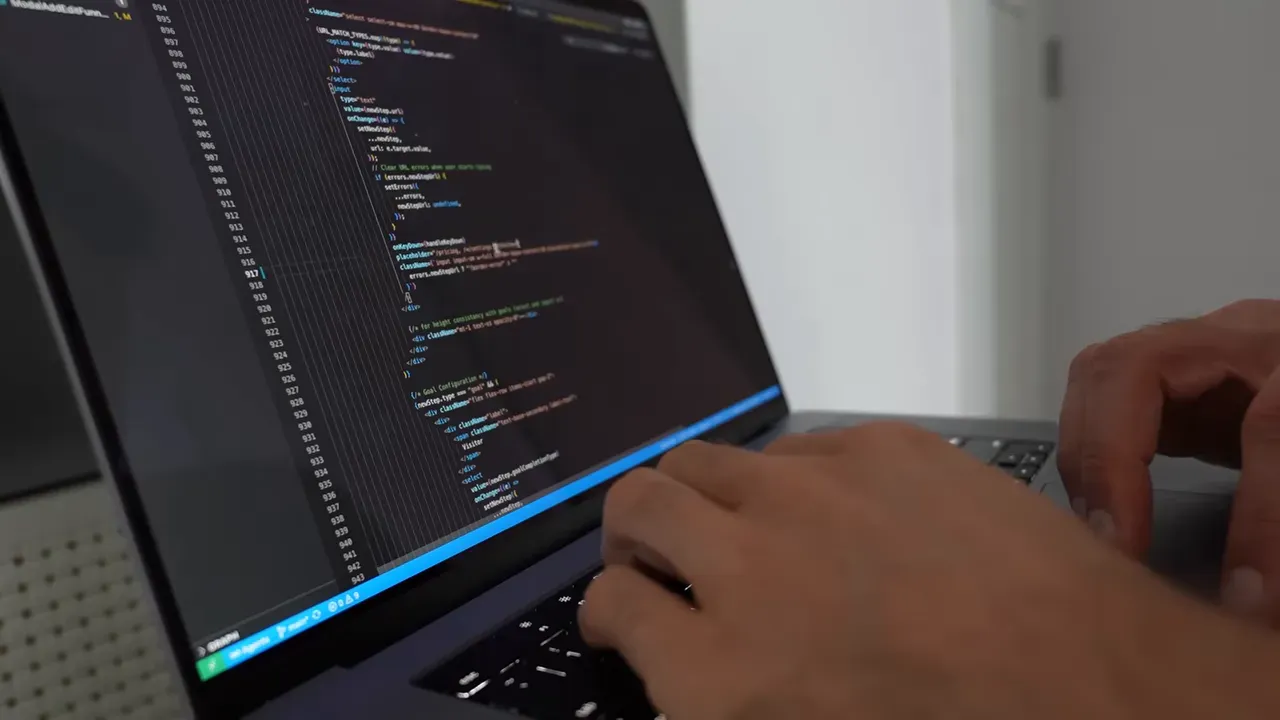
He says he shipped roughly 300 features on his marketplace in three months and six new apps in one year using a very plain workflow. No circus. Just repetition.
🎲 Shipping 35 Startups and Accepting the Ugly Math
What has Marc learned from building 35 startups?
That most ideas will not work, and that is not a tragedy. It is the game.
Out of 35 startups, around 30 did basically nothing. Little money. Few users. No breakout. That gives him a hit rate of roughly 5%.
Some people hear that and think it sounds discouraging. Marc hears it and thinks: good, now the rules are clear.
If the odds are low, then hanging everything on one idea makes no sense. You do not roll the dice once and call it strategy. You roll again. And again. Every launch increases the chance that one thing catches.
That one successful roll can change everything:
- happy users start showing up
- revenue begins to compound
- the day job becomes optional
- you get more freedom to keep building
It is a practical way to think about risk. Not emotionally elegant, but very useful.
Was he always this disciplined?
No, and that part matters.
Marc says that if someone had told him as a student that his life would eventually become waking up early, working all day on a computer, and not playing video games, he would have thought that sounded ridiculous.
The discipline did not come from abstract self-improvement. It came from evidence.
He started seeing people use his apps. He started seeing that users were happy. He saw his work matter to someone else. Then the routine stopped feeling restrictive and started feeling like the mechanism that created more of those moments.
That is a far more durable source of motivation than hype.
💡 How He Finds Ideas Without Romanticizing Them
Where do Marc’s startup ideas come from?
Usually from one of two places:
- something he personally wants to exist
- something that sparks his curiosity enough to build it
That sounds obvious, but it is a useful filter because it removes the need for constant market cosplay. He is not trying to sound like a founder in a slide deck. He is trying to build something concrete.
Can you give an example of an app he built because he wanted it to exist?
One recent example is a small macOS app that uses a webcam to analyze posture and warn him when he starts slouching.
It exists because he spends so much time at the computer and knows that sitting like a shrimp all day is a terrible long-term plan.
The build itself also pushed him into a new category. He was working with an Electron-based macOS app, which was different from what he usually ships. Before launch, he did the classic last-mile checks:
- does licensing work?
- does checkout trigger correctly?
- do customers receive their email?
Then he launched around mid-afternoon, posted about it on X, LinkedIn, Threads, and Reddit, and got his first customers that same day.
The app made about $1,000 in revenue on launch day, but the thing that clearly mattered most to him was seeing people actually using it.
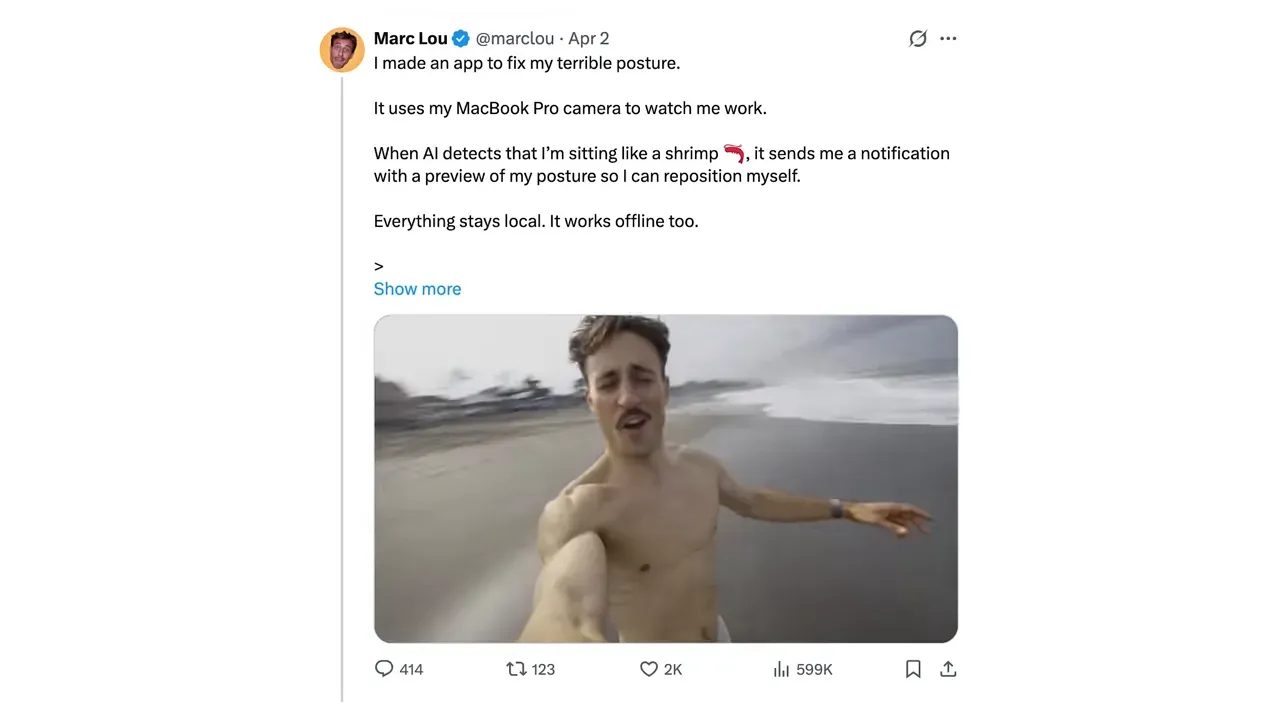
That moment, seeing a product in the hands of users, is the reward loop he is really optimizing for.
What is an example of an idea that started from curiosity?
TrustMRR is the cleanest example.
It started after Marc saw Pieter Levels post about how many people fake their revenue online. Instead of just agreeing and moving on, Marc thought: what if there were a public board showing verified revenue so people could tell who was real and who was bluffing?
That little spark became an app.
Then it became a marketplace.
Now it reportedly brings in more than $35,000 a month.
That arc is important because it shows how some of the best businesses do not arrive looking like businesses. They begin as a small, testable idea with a point of view.
🗂️ The Ship List: Choosing What to Build Next
How does Marc decide what to work on next?
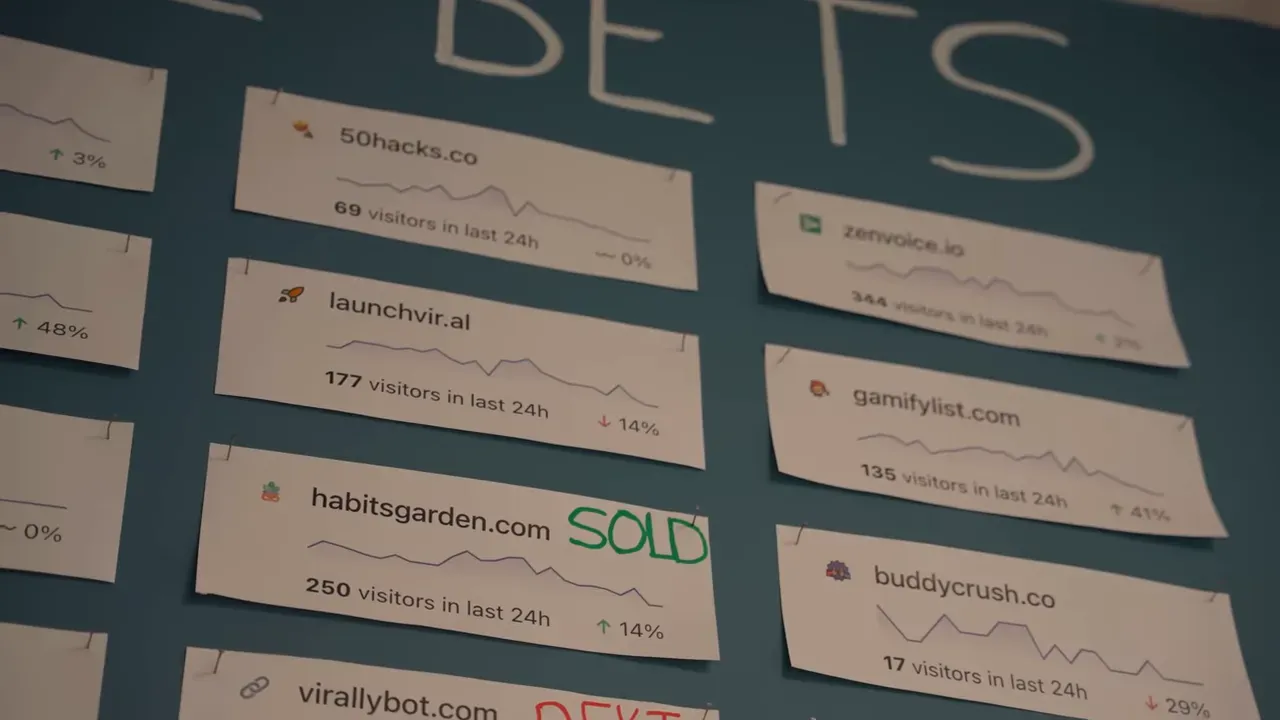
He keeps a massive list of things to build, features to ship, and problems to solve across his existing apps.
Once products are live, the list only grows. Users send feedback. Edge cases appear. New ideas show up. Bugs create opportunities. Every day ends with more on the to-do list than there was at the start.
That is normal.
Marc does not try to conquer the entire list. He knows he never will. He says even 200 years would not be enough to build everything he wants to make.
So when one shipping cycle is done, he scans the list and chooses based on a gut-level blend of:
- what would have the most impact for users
- what would make him happiest to build
- what feels like the right next move
There is no fake precision here. It is not a weighted scoring matrix pretending to be wisdom. It is informed intuition backed by constant shipping.
🚧 The Biggest Barrier to Success Is Usually Fear of Being Seen
What stops most people from shipping?
Fear, mostly.
The classic internal script sounds familiar: it is too early, it is not good enough, maybe after one more feature, maybe after a redesign, maybe after another month.
Marc sees that as the biggest barrier to success.
His comparison is the gym. The first session is terrifying because everything is unfamiliar. The machines look confusing. Everyone else seems to know what they are doing. Then you do one session and a big chunk of the fear disappears. You have crossed the line from imaginary to real.
Shipping works the same way.
The first launch kills most of the fear. The rest dies through repetition.
This is one of those truths people resist because it is annoyingly simple. But simple is not the same as easy.
How should someone validate an idea?
Marc’s answer is blunt: the only way to validate an idea is to ship it with a buy button.
Not with compliments. Not with friends saying “that’s cool.” Not with six months of private polishing.
Validation means asking the market to do something slightly inconvenient, like paying.
That is what makes his approach useful for anyone trying to use no-code startup tools, code-first products, or some hybrid of both. The stack does not matter if the product never reaches a point where someone can buy it.
A buy button reveals truth faster than a hundred strategy threads.
🌙 Evening Routine, Sleep, and the Part Everyone Pretends Is Optional
What happens after the deep work block?
Toward the end of the day, around 4 p.m., Marc goes online.
That is when he checks email, looks at social platforms, and handles the less creative work. The boring stuff has its place, just not in the hours where his best thinking should happen.
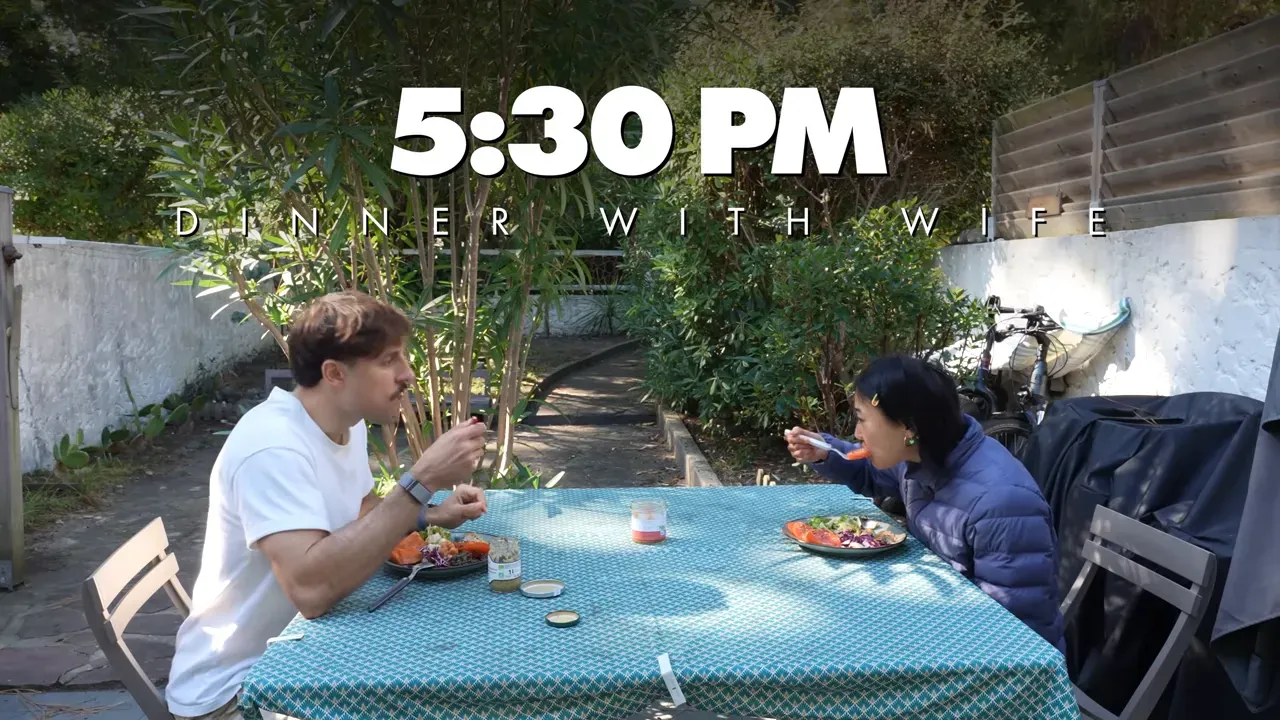
Dinner is around 5:30. He and his wife usually take their time eating, often while watching Better Call Saul, and then go for a walk.
After that, everything gets switched off.
This is not metaphorical. He is very literal about it. Phone off. Computer off. No talking about work.
Then it is either a movie, a book, or winding down before bed.
Why does he care so much about sleep?
Because sleep changed how he works.
He says that for years, especially from around age 18 to 28, he was constantly sleepy. The moment he needed to focus, he would start fading. With better sleep, that changed completely.
Now he feels more emotionally stable, more focused, and able to stay locked into one thing for hours.
His bedtime is consistent. Around 9 p.m. every night. Before bed, there is a wind-down routine lasting 30 to 60 minutes, including dimming the lights at home. He does not need an alarm and typically wakes up naturally between 6 and 7.
For builders who keep trying to solve low energy with more caffeine, more apps, or more “hacks,” this is the unsexy answer: sleep is infrastructure.
🎯 The Real Talk: Don’t Marry the First Idea
What mistake does Marc think builders make too often?
They become emotionally attached to one idea just because they spent a long time building it.
Someone has a brilliant concept, spends six months shipping it, gets a few users, maybe even a little revenue, and then treats it like a sacred object. At that point, they are no longer evaluating it clearly. They are defending it.
Marc thinks that is dangerous.
Some products might eventually work, but they may need three years before producing enough income to change someone’s life. Meanwhile, a new idea could take off 100 times faster.
So his advice is to keep rolling the dice.
Not recklessly. Not by abandoning every project after three days. But by refusing to worship a mediocre result just because a lot of effort went into it.
Every launch teaches something. Every launch builds skill. Every launch puts the work in front of new people. That is how momentum compounds.
That is also the part many people miss when they obsess over the perfect automations or some elaborate plan to automate their whole funnel with AI before they have something worth buying. The point is not to build a monument to effort. The point is to get a real product into the world and learn from what happens next.
🛠️ A Practical Blueprint Builders Can Test Tonight
If someone wanted to borrow Marc’s system, what would that look like?
Probably something like this:
- Start offline. Give the first hours of the day to creation, not consumption.
- Protect a 4 to 6 hour block. That is the work that moves the business.
- Build before reacting. Delay email, support, and social until later.
- Use simple tools. A code editor and AI assistance are enough if they help you ship.
- Validate with payment. A buy button is clearer than praise.
- Keep a running ship list. Ideas, features, fixes, and experiments all in one place.
- Choose by impact and energy. Build what helps users and keeps you engaged.
- Detach from single ideas. Launches are reps, not identity statements.
- Shut down properly. Recovery is part of output.
- Repeat. The boring loop is the edge.
There is no glamorous secret hidden behind this. Which is annoying, because people love secrets. But this is better than a secret because it can actually be used.
🧰 Build This Stack
Marc’s whole point is that the stack matters less than the shipping. Still, if you want a lean setup that stays out of your way, here is one tool per job:
- A plain code editor with an AI chat open on the side for building, which is the simple setup Marc actually describes using
- Lovable for getting a working app in front of buyers if you do not code yet (a solid alternative, not part of Marc’s workflow)
- Framer for a fast, clean landing page with a buy button on it (a solid alternative; Marc did not name his site tools)
- beehiiv for collecting your own audience so every launch does not start from zero on social (a solid alternative; Marc launched by posting on X, LinkedIn, Threads, and Reddit)
Some tools above may be affiliate links — we only list tools that fit the build.
❓FAQ
How much does Marc Lou make as a solopreneur?
Marc Lou says he makes about $77,000 per month as a solo entrepreneur.
How many startups has Marc Lou built?
He says he has built 35 startups, and most of them did not become meaningful successes. His point is that shipping many times matters more than expecting one idea to carry everything.
What is Marc Lou’s main productivity principle?
His main principle is to protect deep work and keep shipping. He stays offline for the first several hours of the day and focuses only on creating.
How does Marc Lou use AI in his workflow?
He uses a simple setup: a code editor and an AI chat alongside it. He does not rely on overly complex agent systems. He believes AI is useful when it helps ship faster, not when it becomes another productivity distraction.
How does Marc Lou validate startup ideas?
He believes the only real validation is to ship the idea with a buy button. Payment is the clearest signal that an idea has value.
What kind of routine helps him stay productive?
A very consistent one. He starts with breakfast and the gym, works deeply for four to six hours, handles admin later in the day, and keeps a strict evening shutdown and sleep routine.
What tools do you need to build and ship micro-SaaS apps like Marc Lou?
Less than most people think. Marc uses a code editor with an AI chat beside it, and validates every idea with a buy button. If you do not code, an AI app builder can get you to a working product, a no-code website builder gives you a simple landing page, and a founder newsletter means each new launch has people waiting for it.
🚀 The Only Metric That Survives the Hype Cycle
Marc Lou’s whole system can be reduced to one idea: keep shipping.
That is the filter he applies to routines, AI, startup ideas, fear, and even ambition. If something helps him ship, it stays. If it only creates the feeling of progress, it probably gets cut.
For builders trying to assemble the perfect AI launch stack, that is the useful takeaway. Not more complexity. Not more tools. Not another expensive stack built to avoid the discomfort of publishing.
Just this:
- make things
- put them online
- ask people to buy
- learn fast
- repeat without getting precious about it
It is not romantic. It is not cinematic. It is a little stubborn, a little repetitive, and probably healthier than spending another six months “researching the market” while three browser tabs argue about the future of work.
Marc’s final advice lands because it is not polished into a slogan. It sounds like what it is: a builder talking to other builders.
Don’t you dare give up.
This article was inspired by this amazing video How I Work: $77K/Month Solopreneur. Check out more from their awesome channel.