
Breakdown: Thomas Mahony, founder of Packager — Built a $60K/month Boring SaaS
An IT admin fixed one tedious Microsoft Intune task, validated it with a free Reddit beta, charged $25/month, and grew Packager into a $60K/month boring SaaS. Here's how to copy the playbook.

Table of Contents
- 🧭 Why boring niches beat flashy AI apps
- ⚙️ Why speed beats perfection
- 📈 Distribution: how to get real customers without paid ads
- 🔧 Tech stack and how complicated the build was
- 🧭 The five-step playbook Thomas used (and how to copy it)
- 🧾 Compliance, trust, and enterprise customers
- 🛠 Demo snapshot: what the UI does (one-click deploy)
- ⚡ Final advice from Thomas
- 🧩 What actually works (reality check)
- 🧰 Build This Stack
- ❓ FAQ 🧾
- 🔚 Closing notes — test this tonight
🧭 Why boring niches beat flashy AI apps
Most people hunt the same shiny ideas: generative AI, flashy consumer bots, "solve everything" marketplaces. Those markets are crowded, noisy, and expensive to compete in. Thomas Mahony did the obvious opposite. He fixed one tiny, tedious problem inside corporate IT: packaging and deploying apps to Microsoft Intune. The result is Packager, a browser-based tool generating roughly $60,000 a month with low churn, a small team, and predictable recurring revenue.
This post reads like a founder story but behaves like a toolkit. It explains how he noticed the pain, validated it without spending a fortune, and scaled a microsaas using simple tech and targeted distribution. It also includes tactical steps you can test tonight to find your own boring niche and ship something that actually earns.
⚙️ Why speed beats perfection
Tools like ChatGPT, no-code platforms, and automation make it easier to build quickly. Thomas’s point is blunt: speed beats perfection. If an idea matters, someone else will build it while you overplan. Use low-friction tools to push something usable, then iterate from real customer feedback.
Pat: Tell us who you are and what you built.
Thomas introduced himself as the founder of Packager. The product is a browser tool that lets IT admins package and deploy applications into Microsoft Intune with one click. It packages, tests, uploads into a tenant, and surfaces metadata—logos, descriptions—so admins can assign apps to devices quickly. What sounds small turned into a full-time business that now makes about $60K per month.
Pat: How did the idea come up? How did you validate it?
Thomas lived the problem. As an IT admin working with Intune, he repeatedly spent an hour or more packaging an app and confirming it installed correctly. He researched forums and found dozens of admins complaining about the same pain. Existing solutions were either too technical or priced for enterprises with millions of devices.
Validation happened the old-fashioned way. He built a minimum viable product and launched it for free on Reddit to get honest feedback. That free beta surfaced bugs, edge cases, advocates, and critics. After stabilizing the product, he introduced a $25 per month subscription. The first paying customer notification on his phone convinced him the product had real value.
📈 Distribution: how to get real customers without paid ads
Pat: Where did you find the first customers?
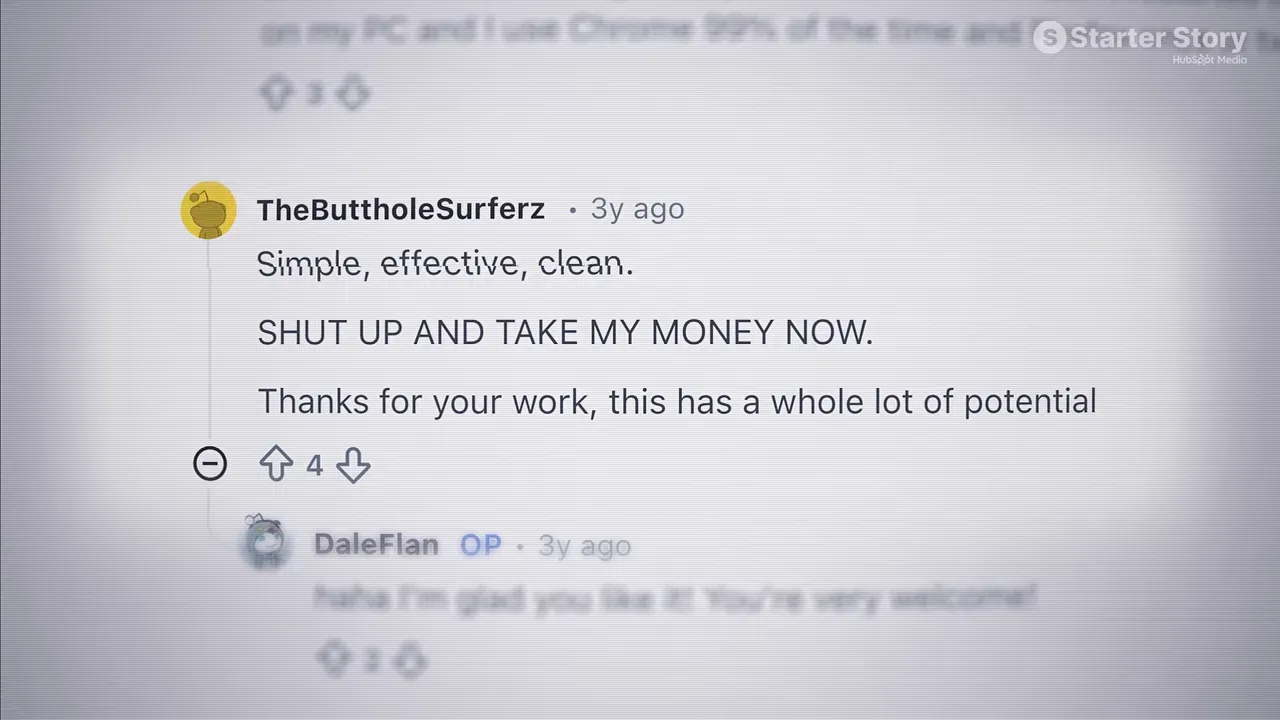
Reddit was the first lever. Thomas posted the free product to targeted subcommunities where his customers spent time. It spread quickly: some users loved it, others were critical—and both kinds of feedback were useful. After fixing issues, he started charging and converted free users into paying customers.
After that initial momentum, he focused on partnerships rather than broad consumer marketing. He worked with Microsoft MVPs who created demos targeted to exactly the crowd that needed Packager. Those demos are long-lived marketing assets: a video posted today might acquire customers for years. That kind of content is a planted seed with huge long-term ROI.
🔧 Tech stack and how complicated the build was
Pat: What tech did you use? How hard was it to build?
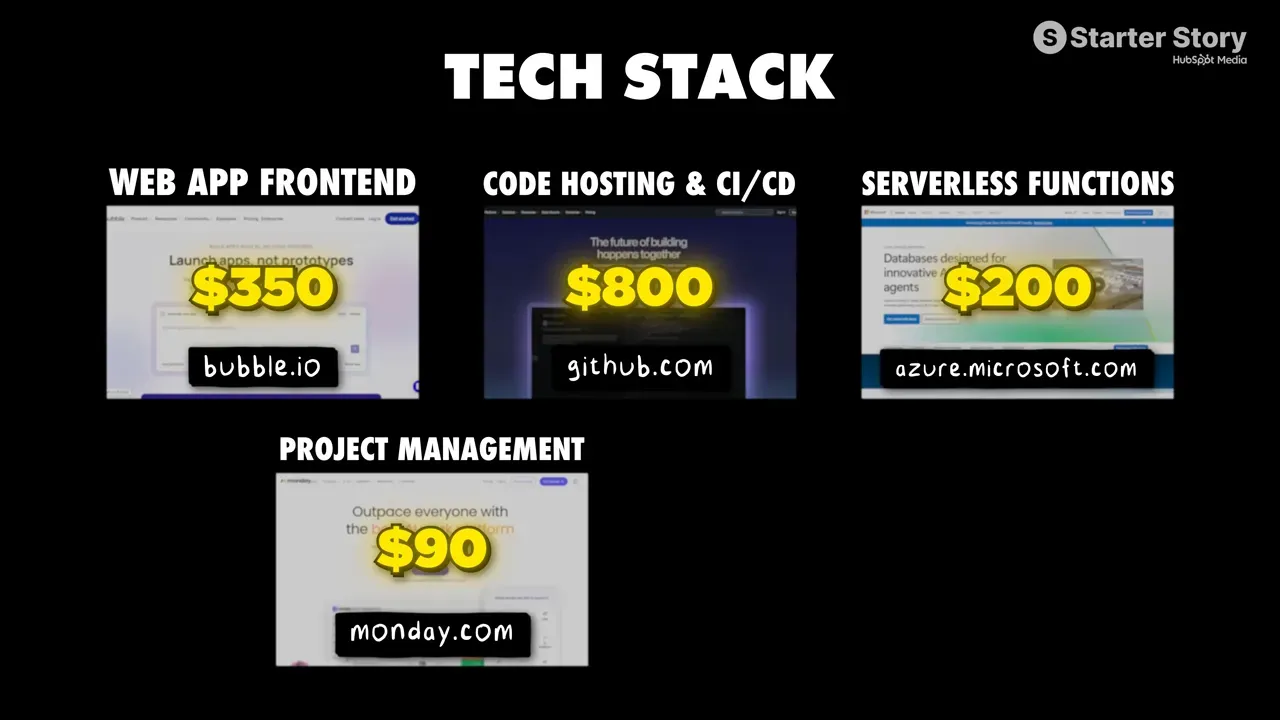
The stack is intentionally simple and pragmatic.
- Front end: Bubble.io to iterate quickly without heavy front-end development.
- CI and packaging: GitHub Actions to build and test packages automatically.
- Serverless: Microsoft Azure for backend functions handling packaging and tenant uploads.
- Operations: Monday.com for ticketing and roadmap tracking; Microsoft 365 for team licensing.
Thomas built much of it himself before AI coding assistants were common. Today, tools like ChatGPT or code-focused AI would speed up iterations. The key is: the product does one job well, so the architecture stayed lean.
🧭 The five-step playbook Thomas used (and how to copy it)
Here’s the distilled playbook, written as actionable steps. This is not motivational fluff. These are the moves that validated demand and turned a side project into a consistent revenue stream.
- Build where you have credibility. If you already live in a domain—company processes, an industry, a specific tool—start there. Domain credibility shortens trust cycles and speeds feedback.
- Look for pain points, not "ideas." Notice repeated gripes at work or in forums. A pain that causes people to lose time, money, or reputation is worth fixing.
- Avoid the mass market. Compete where incumbents ignore smaller customers. Instead of selling to enterprises with millions of devices, Packager targeted small and mid-size IT teams. Plenty of volume exists in niche segments.
- Charge early—even if low. Put a price on your beta. Free users are fine for testing, but paid signups validate true demand. Thomas started charging $25 per month after the first beta wave.
- Optimize for freedom over blind scaling. Keep the team small, costs low, and margins healthy. That buys life balance and sustainable growth rather than vanity metrics.
How to test it tonight: find a list of complaints in a niche forum, build a simple landing page describing a one-click solution, add a "Join beta" or a low-cost $5/month plan, and run one targeted Reddit or LinkedIn post into a community you can reach. Measure signups, not likes.
🧾 Compliance, trust, and enterprise customers
One reality of B2B software: customers care about security and compliance. Packager’s users are IT admins who ask questions like "Are you SOC2 compliant?" or "Do you meet ISO 27001 standards?" If the product targets companies, compliance can become a gating factor.
Thomas partnered with compliance tooling to streamline the process rather than drowning in paperwork. For most founders building B2B, consider compliance as a product requirement, not an afterthought. It affects sales conversations and renewals.
🛠 Demo snapshot: what the UI does (one-click deploy)
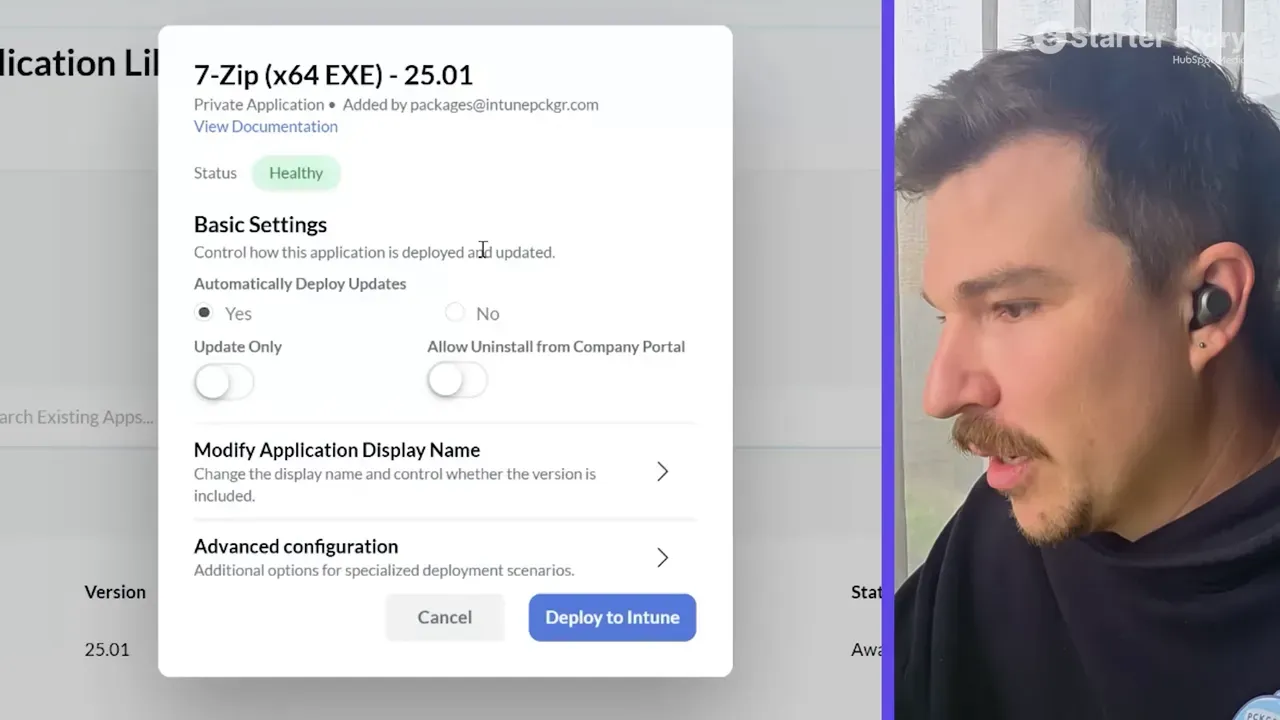
The interface purposefully focuses on function. From a catalog or custom upload, an admin selects an app, clicks deploy, and the system packages and uploads that application into the customer's Microsoft tenant. Metadata like icons and descriptions are pulled in, and the admin assigns the app to devices. Behind the scenes, GitHub Actions builds the package, Azure functions handle server-side logic, and the tenant gets updated without manual packaging steps.
⚡ Final advice from Thomas
Start with the tools available today—code and ChatGPT. Build fast. Launch early. Collect feedback and iterate. Speed reduces the chance that someone else builds your idea first. Thomas’s last line is blunt and useful: launching early turns planning into learning.
Prompt to speed packaging automation:
"You're an automation developer. Generate a GitHub Actions workflow that:
- Downloads a specified .msi or .exe from a URL
- Runs an automated test to validate installation success
- Packages the installer into a format compatible with Microsoft Intune
- Uploads the package to an Azure function endpoint with metadata (name, version, icon URL)
Include environment variables and failure steps with clear logging."
🧩 What actually works (reality check)
Not every micro idea becomes $60K/month. What makes Thomas’s case repeatable is the combination of:
- Deep domain expertise
- Solving a time-consuming, repetitive task
- Low competition for mid-market customers
- Early pricing validation
- Long-lived distribution through niche experts (MVPs, demo creators)
If you want to replicate it, don’t chase trends. Chase repeated complaints. Plant long-lived content seeds. Charge early and keep the infrastructure lean.
🧰 Build This Stack
- Bubble for the front end — what Thomas used to build Packager's UI without heavy front-end work
- GitHub Actions plus Azure Functions for packaging, testing and tenant uploads — Thomas's actual backend setup
- Lovable for your first version — a solid alternative to Bubble if you'd rather start from a prompt today
- Framer for your landing page and beta waitlist — a solid alternative for testing demand before you build
- Make.com for beta signup and follow-up workflows — a solid alternative to chasing early users by hand
Some tools above may be affiliate links — we only list tools that fit the build.
❓ FAQ 🧾
How do I know a pain point is worth building for?
Look for repeat mentions across multiple channels: internal Slack, niche forums, support tickets, and LinkedIn groups. If people are spending hours on the task or repeatedly asking for shortcuts, it's likely monetizable. Run a low-friction experiment: landing page, simple sign-up, and a paid optional alpha. If people pay, you have validation.
What minimum stack works for launching quickly?
Bubble or another no-code front end, GitHub Actions for CI, serverless functions (Azure, AWS Lambda) for backend tasks, and a simple project management tool. This mix keeps costs low and development fast. Replace Bubble with a lightweight front end if you prefer code, but the principle is the same: iterate fast.
How did Thomas price the product?
He started free for feedback, then moved to $25 per month for early adopters. Pricing was deliberately conservative to validate market willingness to pay. After product-market fit, price can be optimized based on value metrics like the number of devices, seats, or managed apps.
How long did it take to reach meaningful revenue?
It began as a side project. Early traction happened within the beta launch on Reddit, then converted slowly to paid customers as the product stabilized. Exact timelines vary, but the core timeline was: build an MVP, launch to a targeted community, fix bugs, charge a low price, then scale via partnerships and evergreen content.
Do I need formal compliance certifications to sell to businesses?
Not immediately, but compliance becomes important for larger customers and enterprise deals. For small to mid-size buyers, demonstrable security practices and transparent policies can be enough early on. Plan for compliance if you target regulated industries or enterprise customers.
What tools do you need to build a B2B micro-SaaS like Packager?
Thomas built Packager with Bubble on the front end, GitHub Actions for automated packaging and testing, and Azure Functions on the backend. If you're starting today, Lovable is a solid alternative to Bubble, Framer can carry the landing page while you validate, and Make.com can handle beta signup follow-ups.
🔚 Closing notes — test this tonight
Thomas’s win is not magic. It’s the effect of living in a domain, recognizing repetitive pain, and shipping a single-purpose tool to fix it. You can run the same playbook: find a real pain from your day job, build a minimal solution tonight with no-code or a few scripts, post it to a community where those people hang out, and put a small price on it to test real demand.
The true advantage is speed and focus. Use AI to accelerate dev, but don’t let AI be the idea. Build a small, useful tool for people who will open their wallets because it saves them time, reduces risk, or simplifies compliance. That is boring, and that is where reliable revenue lives.
This article was inspired by this amazing video I Make $60K/Month From the Most Boring SaaS on the Internet. Check out more from their awesome channel.