
Breakdown: Joseph Lee, founder of Supademo — How This $250K/Month SaaS Got Its First 100 Users
Supademo founder Joseph Lee's playbook for the first 100 paying customers: comparison pages, ungated free tools, hand-built demos in public communities, and being everywhere your buyers already are.

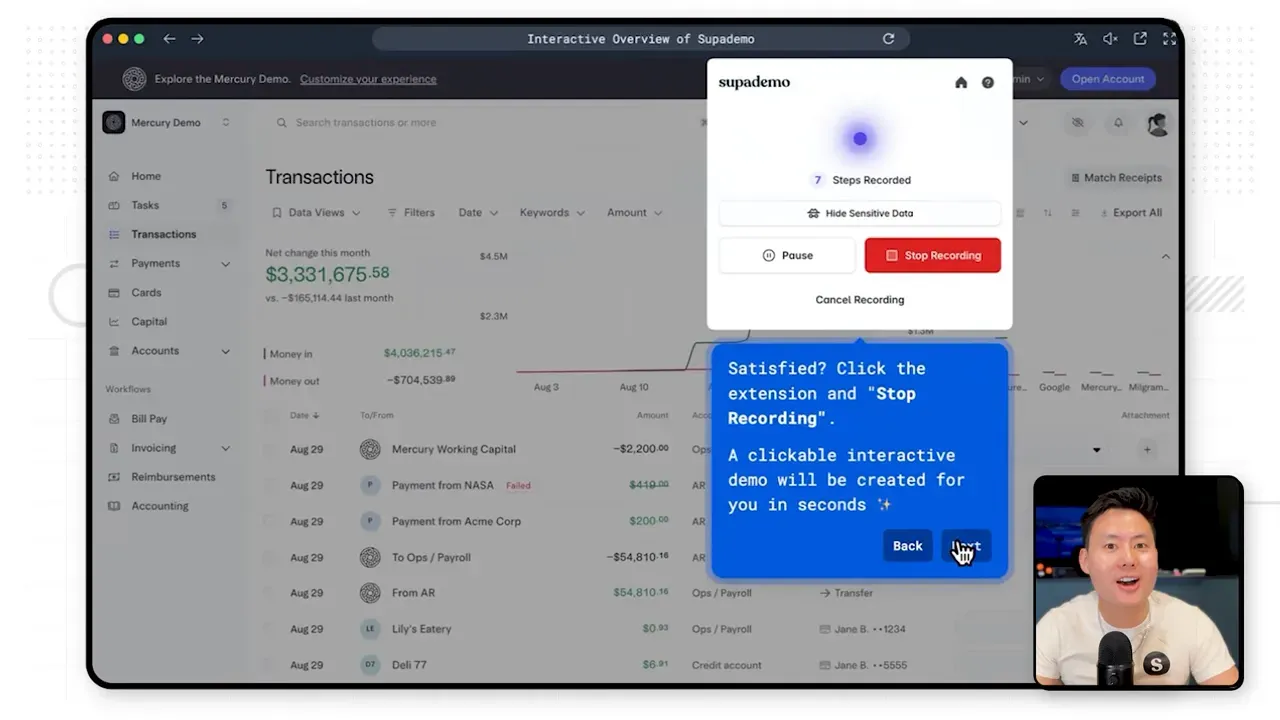
Table of Contents
- 🧭 Why this playbook matters
- 🧰 The setup and the problem
- ⚙️ The exact playbook to get the first 100 customers
- 🛠️ Tactical blueprint — what to build first
- 🔩 The demo and tech reality
- 🧾 What founders get wrong
- 🎯 The distilled checklist to steal tonight
- 🧾 Real talk and final advice
- 🧰 Build This Stack
- ❓FAQ
- 🔁 Final takeaway — try this tonight
🧭 Why this playbook matters
Solo builders and small teams run out of time and patience before they run out of ideas. Joseph Lee didn’t invent a buzzword or whiteboard a “growth hack.” He built a product that solves a stubbornly practical problem — demoing software without roping sales in — and then used pragmatic distribution to get real revenue fast.
This is useful because it shows how an AI-powered launch system for creators can be simple: pick a real pain, ship something that helps people right away, and funnel the obvious demand into signups. No viral luck required, just honest, repeatable work.
🧰 The setup and the problem
Pat: Tell us what Supademo is and why it exists.
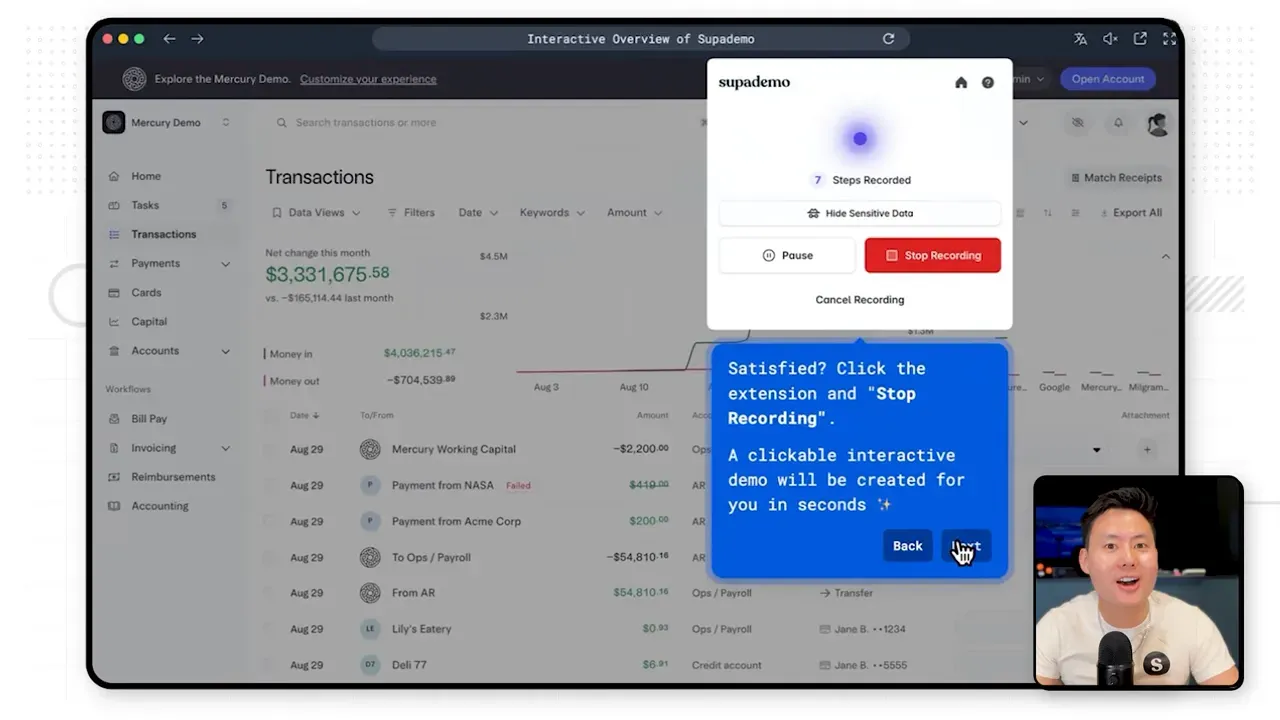
Joseph explains Supademo as an interactive demo builder that clones a product's front end into a guided, clickable experience. Instead of recording a Loom and hoping prospects watch, Supademo lets users experience the aha moment without signing up. It is product-led with a freemium starter tier that acts as the engine of growth.
The idea came from a pattern Joseph had seen across ventures: demoing software is tedious, quickly outdated, and rarely consumed by buyers. That friction turned into the product opportunity: make demos live, interactive, and instantly accessible.
⚙️ The exact playbook to get the first 100 customers
Pat: If you were starting today, how would you get the first 100 paying customers?
Joseph lays out a three-step, low-ambition-first playbook: capture the obvious demand, do things that don't scale, and be everywhere your users hang out. Each step is tactical and built to be executed by a small team or a solo founder.
Step 1 — Capture the obvious demand via content and SEO
Start with what people already search for. Joseph used content across the entire funnel:
- Bottom of funnel: Comparison pages that pit Supademo against every competitor in the category. These pages are the fastest way to piggyback on competitors' traffic and pick up mentions in search and large language models.
- Mid funnel: Free tools and ungated product experiences that let people immediately extract value without signing up.
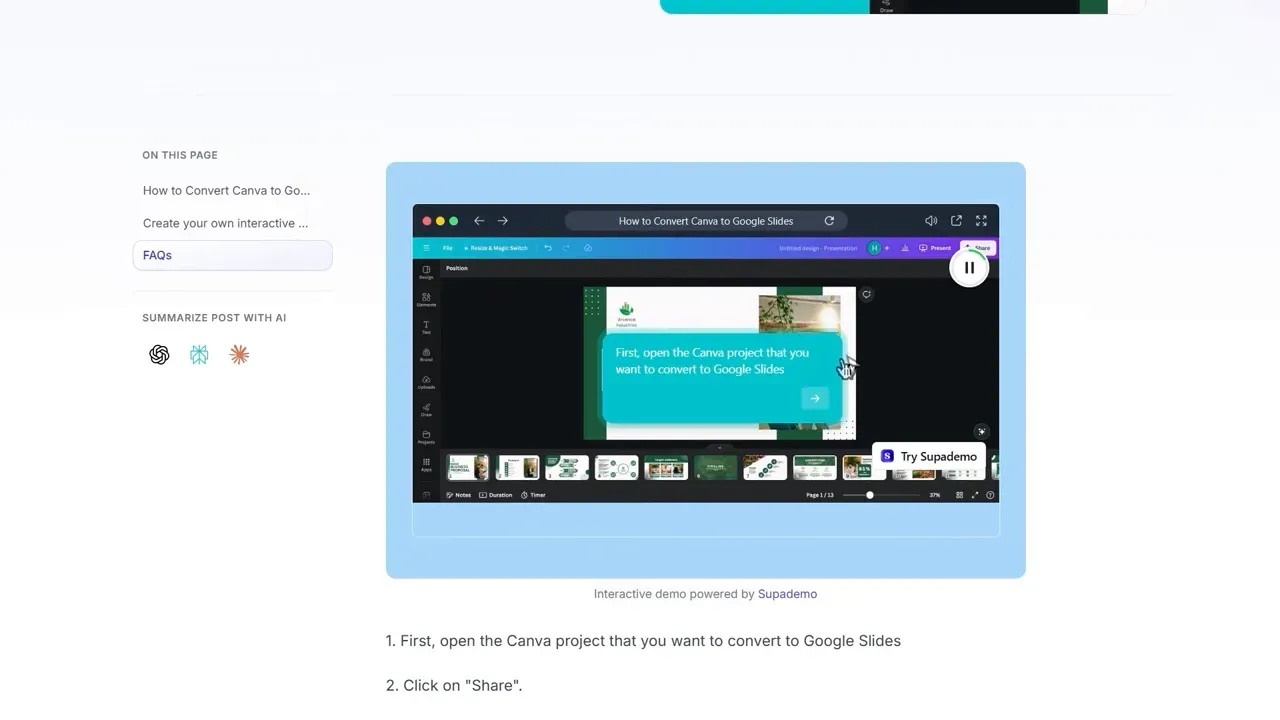
- Top of funnel: Programmatic, keyword-driven pages embedded with interactive demos solving very specific tasks like "how to export Figma to PDF" or "how to merge cells on Excel."
The practical takeaway: build content that answers specific user intent, then put an interactive product experience directly in front of that intent. The interactive demo itself doubles as both content and acquisition.
How to replicate this tonight
- Pick five competitor product pages that rank for terms your ideal customer searches.
- Create one comparison page for each competitor outlining pros, cons, and use-cases; optimize for the competitor's branded keywords.
- Ship one free tool or ungated feature that solves a tiny adjacent problem your customers have. Make it immediately useful. No signup walls.
- Publish a how-to page that solves a narrow query and embed an interactive demo or walkthrough.
Step 2 — Do things that don’t scale
Joseph emphasizes hand-to-hand combat. Early on he personally created free demos for founders on Reddit and Indie Hackers. He asked them to post their product URL, then replied publicly with an interactive demo linked inline. That public reply did two things: it directly onboarded a user and it served as visible social proof for other readers.
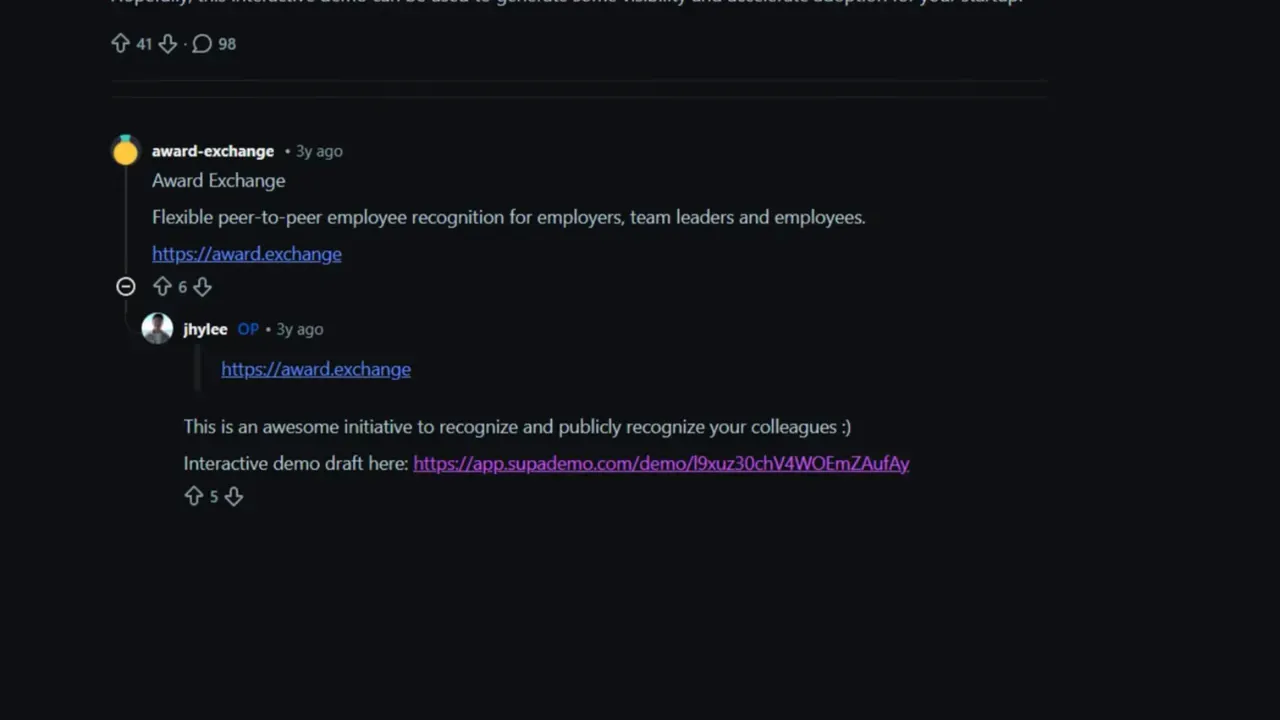
This low-scale hustle converted consistently because it removed friction for buyers. People could duplicate the demo, tweak it, and start using it immediately. The frictionless experience drove signups and word-of-mouth.
How to do it without wasting time
- Set a quota: commit to creating 20 bespoke demos rather than 200 random outreach messages.
- Template the follow-up: after creating each demo, leave a short public comment with the link and a two-line setup guide.
- Track conversions: note how many of these bespoke demos convert to paid accounts and which channels (Reddit, IndieHackers, product forums) perform best.
Step 3 — Be everywhere your users are (distribution density)
There is no single magic channel anymore. Joseph split distribution across SEO and LLMs, word of mouth, and building in public on platforms like LinkedIn. The idea here is distribution density: show the product in multiple contexts so your ICP encounters it repeatedly in relevant moments.
- 30–40% of traffic came from SEO and LLMs
- 30% from word of mouth and people sharing demos
- ~20% from building in public on LinkedIn
Put another way, aim for shallow, broad reach in places your buyers trust and deeper, focused reach where they're actively evaluating solutions.
🛠️ Tactical blueprint — what to build first
Joseph’s work is a blueprint more than a manifesto. Here are the concrete assets to prioritize in week one to move from zero to 100 customers.
- One comparison page per competitor — Publish, then monitor which pages are mentioned by LLMs and search snippets; optimize the ones that start picking up traction.
- One ungated micro-tool — Make a usable slice of your product available without signup. If you’re building an AI tool, let people try one prompt or export without an account.
- 20 bespoke demos or setups — Reach out to founders on forums, build for them, and post the result publicly.
- One programmatic how-to set — Find ten narrow keywords and create pages that answer them with an embedded demo.
🔩 The demo and tech reality
Pat: How does Supademo actually work?
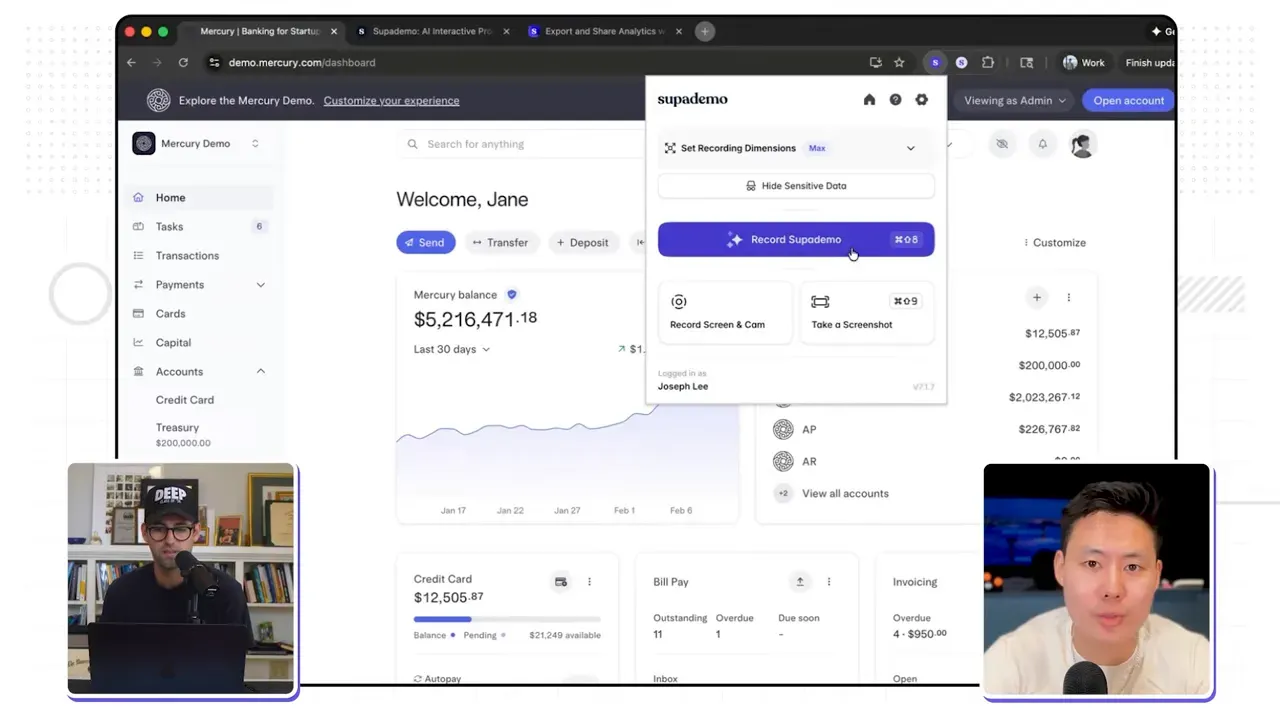
Joseph shows creation via a Chrome extension. Click record, walk through the workflow, stop, and the system clones the front end into an editable modular editor. You can add chapters, edit HTML, add voiceovers, clone your voice, or record a camera overlay. The demo becomes a link you can embed anywhere, accessible without forcing a signup.
From a stack perspective, Joseph keeps things pragmatic: the team rotates through AI providers (Claude Code, Cursor, Codex) depending on performance, uses Linear for task management, AWS for hosting, Postmark for transactional email, Intercom for onboarding and support, and a mix of SEO tools and no-code glue like Zapier and Clay for GTM workflows.
🧾 What founders get wrong
Pat: What's the biggest mistake early SaaS founders make?
Joseph’s answer: obsessing over polishing and over-delivering on perfection before launch. Speed beats polish in many cases because early launch accelerates learning. But Joseph does add nuance: the AI era still requires good craftsmanship where first impressions matter. The founder’s advantage is urgency — ship, learn, iterate.
🎯 The distilled checklist to steal tonight
- Identify five competitors and build a comparison page for each.
- Ship one useful, ungated slice of product as a free tool.
- Create 20 bespoke use-case demos for people in public communities.
- Publish focused how-to content that targets narrow tasks and embed product experiences.
- Track which pages are cited by LLMs and which convert, then double down.
🧾 Real talk and final advice
Joseph’s closing advice is blunt and useful: stop obsessing over the competition and start building. If the problem is real, there is abundant room in the market. Most startups die from inaction, not lack of opportunity.
From a Roger Mendoza-style perspective: this is how you build a practical launch engine. Pick a painful, repeatable problem, ship a minimum that helps people immediately, and amplify by marrying content with product. The freemium starter tier or ungated tool is not a "lead magnet" polish trick; it is the product functioning as marketing.
There is no hype here, only a pattern you can test tonight. Do the small, repetitive things that create trust and remove friction. If you measure and iterate, 100 customers will stop feeling mythical and start feeling like the inevitable result of predictable work.
🧰 Build This Stack
- Cursor for building the product — one of the AI coding tools Joseph's team rotates through, alongside Claude Code and Codex
- Intercom for onboarding and support, plus Postmark for transactional email — both part of Supademo's actual stack
- Framer for comparison pages and how-to landing pages — a solid alternative if you want to ship pages without engineering time
- Make.com as a Zapier alternative for GTM workflows — a solid alternative (Joseph's team uses Zapier and Clay)
- ElevenLabs for AI voiceovers on demos and walkthroughs — a solid alternative when you want polished narration
Some tools above may be affiliate links — we only list tools that fit the build.
❓FAQ
How did Joseph get from zero to the first 100 paying customers?
He focused on low-hanging demand: SEO comparison pages and targeted how-to content, shipped ungated micro-tools so prospects could get value immediately, and performed high-touch outreach by building bespoke demos for founders on public forums. The combination of content-driven acquisition and hand-crafted experiences converted initial users into paying customers.
Will free tools or ungated features actually convert users?
Yes, when they deliver immediate, tangible value. Joseph reports these free experiences brought in roughly 20% of traffic and converted 15 to 20 percent of visitors into signups. The key is relevance: the free tool must solve a real pain point the target customer has right now.
Which channels should a solo builder prioritize?
Start with SEO and niche communities where your buyers hang out. Build a few pieces of content that solve specific queries, then do direct outreach and hand-built demos in communities like Reddit, IndieHackers, and LinkedIn. The goal is distribution density across search, community trust, and social proof.
What tech stack do you need to replicate this?
You don’t need a laundry list of tools. Joseph used a mix of AI providers for generative tasks, Linear for task management, AWS for hosting, Postmark for emails, and Intercom for onboarding. For GTM and analytics, SEO tools, Clay, and Zapier were enough. Ship with what works and swap pieces later.
What tools do you need to build an interactive demo SaaS like Supademo?
Joseph's team builds with AI coding tools like Cursor, Claude Code and Codex, hosts on AWS, and runs onboarding through Intercom with Postmark for email. For the content engine, Framer is a solid alternative for shipping comparison and how-to pages fast, while Zapier and Clay handle GTM workflows in their own stack.
🔁 Final takeaway — try this tonight
Joseph’s method is not glamorous, but it is reliable: build useful things people can use without friction, put those things where users are already searching, and manually create early wins so you can learn fast. If a founder can validate 10 paying customers who stick around, scaling to 100 becomes a matter of repetition and optimization.
The practical experiment to run tonight: pick one competitor keyword, publish a comparison page, ship one ungated micro-feature, and create three bespoke demos for products in your niche. Measure conversions, double down on the best-performing page, and repeat.
This is a launch system that prioritizes clarity and speed over illusions of virality. It’s tactical, testable, and brutal in its simplicity. Build the thing people need, show it in the right places, and stop polishing the welcome mat.
This article was inspired by this amazing video How This $250K/Month SaaS Got Its First 100 Users (Steal This Playbook). Check out more from their awesome channel.