
Interview with a $150K/Month App Founder, the Operator Behind 200 UGC Creators at Once

Most people still talk about growth like it is a tooling problem. Pick the right dashboard. Add one more automation. Buy another course made by somebody who last touched reality in 2022. Meanwhile, the people actually scaling consumer apps are building systems around content volume, creator management, and repeatable execution.
That is the useful part here. Not hype. Not founder cosplay. Just the mechanics of what it takes to run an operation where hundreds of creators are producing content at the same time and the result is massive reach across short form platforms.
For builders trying to piece together an AI-powered launch system for creators, this is a good reminder that growth usually comes from process before software. The stack matters, sure. But the real leverage is in how content gets sourced, trained, reviewed, and scaled without the whole thing turning into a flaming group chat.
Table of Contents
- 🛠️ Why This Matters
- 📈 The Setup Behind the Scale
- 🧱 The Building Blocks of the Creator Machine
- 🤝 Managing 200 Creators Without Losing the Plot
- 🚀 What the Metrics Actually Signal
- ⚙️ How a Solo Builder Could Adapt This Without a 200 Person Army
- 💬 The Real Talk
- ❓FAQ
🛠️ Why This Matters
There is a specific kind of pain that shows up when a product needs content to grow.
One creator is manageable. Ten is annoying. Fifty becomes operations. Two hundred means the founder is no longer just building a product. The founder is building a machine.
That is what makes this setup interesting. At peak, this operation was pushing numbers that sound fake until they are attached to a system:
- Roughly 200 million Instagram views for the app
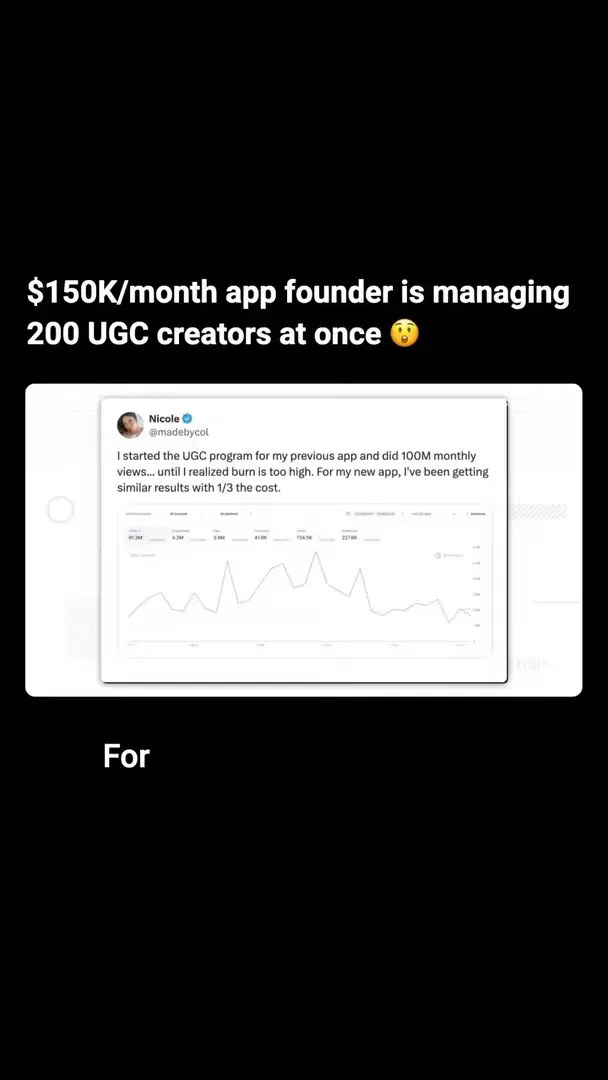
- About 100 million monthly views during a sustained period
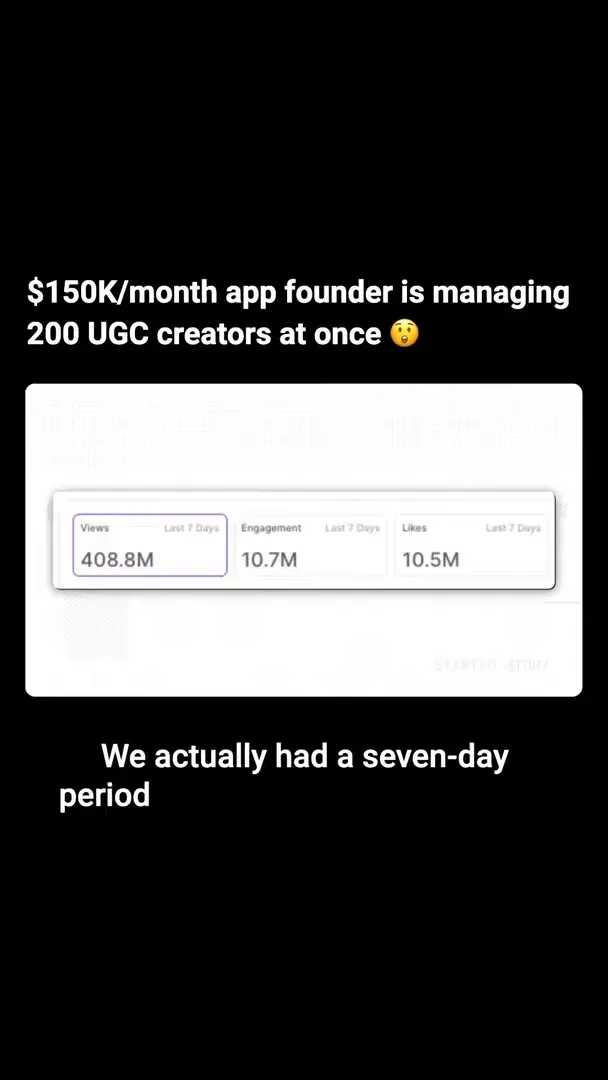
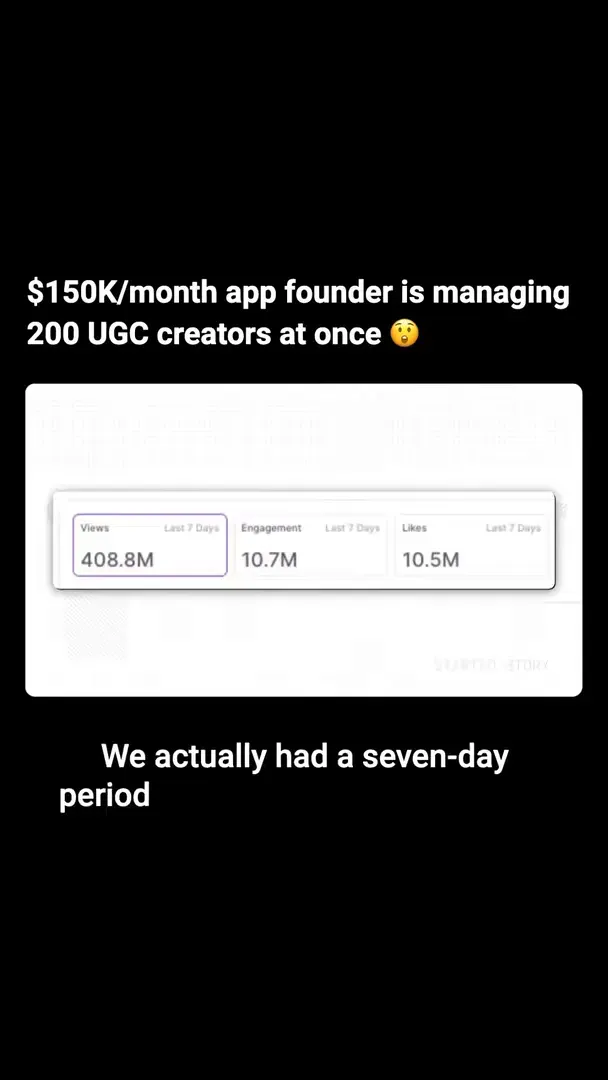
- A seven day stretch that reached over 400 million views
- A creator network of around 200 active UGC creators at once
Those numbers are not just a vanity screenshot. They imply recruiting, onboarding, training, quality control, creator communication, and enough structure to keep momentum from collapsing under its own weight.
📈 The Setup Behind the Scale
What kind of growth engine was actually running here?
The core engine was a UGC system built for volume. Not random creator deals. Not one off influencer campaigns. A repeatable process where creators were sourced, vetted, trained, and managed as part of an ongoing content operation.
The point was not to find one magical person who could carry the brand. The point was to create a pipeline where many creators could contribute content, some percentage of that content would break out, and the entire system would improve over time.
That is the part a lot of solo builders miss when thinking about an AI-powered launch system for creators. AI can absolutely help organize outreach, summarize feedback, draft briefs, and automate reporting. But if the underlying workflow is messy, AI just helps produce chaos faster.
What made this approach different from typical influencer marketing?
It was closer to managed distribution than traditional influencer marketing.
Instead of betting the whole strategy on a few expensive names, the system spread output across a large creator base. That makes the operation more resilient. One creator goes quiet, another posts. One format dies, another catches. One week underperforms, then a cluster of posts spikes and carries the month.
That model fits especially well for consumer apps, where attention often comes from repeated short form content rather than a single polished campaign.
🧱 The Building Blocks of the Creator Machine
How were creators brought into the system?
The operation relied on two main acquisition channels.
- Inbound forms for people already interested in working with the brand
- VA led outreach to proactively find creators who fit the style and audience
That combination matters. Inbound alone can be too passive. Outreach alone can become a grind. Put both together and there is a steadier flow of potential creators entering the pipeline.
This is also where most teams overcomplicate things. The sourcing layer does not need to be fancy. It needs to be dependable. A form. A database. A way to tag and track replies. A VA or assistant who can keep the top of funnel moving. That is already enough to outperform teams still pretending a spreadsheet with twelve stale names counts as strategy.
Was everyone accepted right away?
No. There was a filtering step.
Before onboarding, creators were interviewed and vibe checked. That sounds informal, but it is actually smart operations. Skill matters, but reliability matters more when someone is joining a scaled content engine.
A creator may have decent style and still be a terrible fit if they miss deadlines, ignore briefs, or create constant admin drag. When a founder is managing something this large, bad fit multiplies quickly.
So the interview was not just about whether someone could make content. It was about whether they could function inside the system.
What happened after creators were approved?
They were trained through a proprietary course. That is one of the strongest details in the whole setup because it turns tribal knowledge into repeatable process.
Instead of explaining the same creative standards over and over, the founder built training once and used it to align creators at scale. The reported outcome was that more than half of creators who went through that process ended up going viral.
That does not mean the course was magic. It means training increased the odds that creators understood what worked, what hooks to use, what content style matched the product, and how to avoid wasting posts on weak execution.
For solo builders using no-code startup tools or trying to launch with AI tools, this is a useful lesson. Documentation is leverage. A simple onboarding library, swipe file, or mini course can do more for scale than another software subscription.
🤝 Managing 200 Creators Without Losing the Plot
How do you manage that many people at the same time?
Not manually, at least not in the chaotic sense.
The management layer used a mix of:
- Discord for communication and coordination
- Top creators as anchors inside the network
- Feedback calls to improve output and maintain quality
- Dashboards to track what was working
- Referrals to expand the creator base through trusted connections
That stack makes sense because each part solves a different problem.
Discord handles ongoing communication. Top creators create standards and social proof. Feedback calls prevent drift. Dashboards stop decisions from being made based on vibes alone. Referrals reduce sourcing friction.
Put differently, this is not just community management. It is operational design.
Why are top creators so important in a system like this?
Because scale needs internal examples.
When a creator network gets large, the founder cannot personally model best practices for everyone every day. Top creators become the visible proof of what good output looks like. They help set the tone for quality, pacing, style, and expectations.
They also create a healthy kind of gravity. Newer creators can learn from people already succeeding in the system instead of depending on one founder bottleneck.
Every large creator operation ends up needing this whether it admits it or not. Without internal leaders, the whole thing becomes one long thread of repeated questions and preventable mistakes.
What role did feedback play?
A huge one.
At this scale, content quality will drift unless there is a feedback loop. Calls and review systems help creators understand what is landing, what is missing, and how to improve. More importantly, feedback turns the creator program into a learning system instead of a content lottery.
That distinction matters. If posts perform well but nobody knows why, growth is fragile. If performance gets studied, patterns emerge. Then the process gets sharper, training improves, and the next wave of creators starts from a better baseline.
🚀 What the Metrics Actually Signal
Those numbers are huge. What do they really mean operationally?
They signal consistency at volume.
Anyone can get lucky with one viral post. A sustained average of around 100 million monthly views means the system was producing enough quality content often enough to keep hitting. A seven day period over 400 million means the machine had serious momentum, not just isolated spikes.
And when the founder says around 200 active creators were being managed during the strongest scaling period, that tells you the operation was built to absorb complexity. Recruiting that many people is one challenge. Keeping them active is another entirely.
There is a big difference between having 200 names in a database and having 200 people actually producing content. The second one requires structure.
Why is this especially relevant for consumer apps?
Because consumer products increasingly compete on distribution speed, not just product quality.
An app can be solid and still disappear if nobody hears about it. Meanwhile, a decent app with aggressive content distribution can dominate attention long enough to improve the product later.
That is not always pretty, but it is reality. This kind of creator engine is one answer to that reality. Instead of hoping paid ads solve everything, it builds a stream of native content that can travel across Instagram, TikTok, and YouTube Shorts.
That is also why the idea of an AI funnel builder or a perfect automation stack can be a bit misleading. The funnel is only as strong as the content feeding it. Distribution still starts with making enough useful, interesting, native material that people actually care about.
⚙️ How a Solo Builder Could Adapt This Without a 200 Person Army
What is the practical version of this for someone smaller?
No sane solo builder needs to start with 200 creators. That would be like deciding to learn cooking by opening a buffet.
A smaller version could look like this:
- Create one simple intake form for potential creators or affiliates
- Use lightweight outreach through a VA or structured manual search
- Add a short vetting call to filter for reliability and fit
- Build a small onboarding guide with examples of good hooks, formats, and offers
- Centralize communication in one place instead of scattered DMs
- Track content performance so feedback is based on outcomes
- Promote referrals once the first few creators are working well
That is already a usable solo builder tech stack even before adding any AI layer.
Where does AI fit without becoming theater?
In the admin and pattern recognition layers.
Good uses would include:
- Summarizing creator applications
- Drafting first pass outreach messages
- Organizing feedback from calls
- Turning winning posts into repeatable creative briefs
- Generating weekly performance summaries from dashboard data
Bad uses would include pretending AI can replace taste, trust, or creator relationships. It cannot. At least not if the goal is good content and not synthetic sludge at scale.
So yes, an AI-powered launch system for creators can help. It just works best when it supports a human process that already makes sense.
💬 The Real Talk
What is the biggest takeaway from this whole setup?
The founder was not winning because of some hidden growth hack. The edge came from building an ecosystem around content production and making it repeatable.
The numbers look flashy, but the underlying logic is boring in the best way:
- Find creators consistently
- Filter for fit
- Train them well
- Give feedback often
- Track performance
- Use strong creators to reinforce standards
- Keep the pipeline full through referrals and outreach
That is not glamorous. It is just effective.
Would this work again today?
The broad model probably would, yes. Consumer attention still rewards volume, repetition, and native platform content. What changes is the execution detail. Hooks evolve. Platforms shift. Creator economics change. But the system logic remains solid.
In other words, the principle scales even if the playbook needs regular maintenance.
What should builders test first?
Not more tools. Start with one repeatable creator workflow.
Get five creators. Train them properly. Track results. Notice which messages, hooks, or formats travel. Then tighten the process before adding more people.
That approach is less exciting than buying another software stack that promises to automate funnel with AI while quietly adding six new failure points. But it is a lot closer to how real growth systems are built.
And if that feels almost annoyingly practical, good. That usually means it might actually work.
❓FAQ
What was the founder managing at peak scale?
During the strongest scaling period, the operation was handling around 200 active UGC creators at the same time while generating massive short form reach across major platforms.
How many views was the content engine producing?
The app was reaching around 200 million Instagram views, averaging about 100 million monthly views during one period, and hit more than 400 million views in a seven day stretch.
What made the creator system scalable?
The system combined inbound sourcing, outreach, vetting, training, centralized communication, feedback loops, dashboards, and referrals. Each piece reduced chaos and made the process more repeatable.
Why use a course for creator onboarding?
A training course turns best practices into a standard process. It helps creators understand what kind of content works, reduces repetitive explanations, and improves the odds of strong performance.
Can a smaller business use this approach without a huge team?
Yes. A smaller version can start with a simple intake form, a few vetted creators, one communication hub, a lightweight onboarding guide, and basic performance tracking. The same logic works at a smaller scale.
Where does an AI-powered launch system for creators fit in?
AI is most useful for admin support, summaries, outreach drafts, feedback organization, and reporting. It helps reduce operational drag, but it does not replace creator fit, content taste, or strong management.
That is probably the cleanest conclusion here. The real moat was not code. It was coordination. The founder built a content operation big enough to create momentum and structured enough to keep it from breaking.
For anyone building a consumer product, that is the uncomfortable lesson. Growth is often less about finding the perfect tool and more about designing a system people can actually run. If an AI-powered launch system for creators is part of that, great. Just make sure the humans, process, and incentives are doing the heavy lifting first.
This article was inspired by this amazing video $150K/month app founder is managing 200 UGC creators at once. Check out more from their awesome channel.