Breakdown: Bohdan Drozdov, Founder of a $1.7M/Year Business in One of the Most Boring Niches Imaginable
Savvy Nomad does $1.7M a year solving a painfully boring tax problem. Here's Bohdan Drozdov's framework for finding unsexy, high-value niches.

Most people are busy sprinting toward the next shiny thing. AI wrappers. Trend-chasing SaaS. Creator tools for people who already have too many creator tools. Meanwhile, some of the best businesses are hiding in categories nobody wants to brag about at dinner.
This conversation with Bohdan Drozdov is a good reminder that the real opportunity is often buried inside stress, paperwork, regulation, and expensive human services. Not glamorous. Very profitable.
His company, Savvy Nomad, helps U.S. citizens living abroad reduce state tax burdens by handling domicile and related compliance problems. It serves more than 1,400 customers, has around six employees, and is doing roughly $1.7 million a year. The lesson here is bigger than taxes. It is about how to spot a painful, high-value workflow and turn it into software.
And yes, there is a useful angle here for anyone thinking about a no-code product or some lean service-software hybrid. The principle is the same: stop trying to look innovative and start solving something expensive, annoying, and real.
Table of Contents
- 🧱 Why This Business Matters
- 🧭 The Origin of Savvy Nomad
- ⚙️ The Product Is Simpler Than People Think
- 💡 Three Boring Business Ideas Hiding in Plain Sight
- 🛠️ Bohdan’s Playbook for Building in Unsexy Markets
- 🔍 Why This Matters More Than the Latest Trend
- 🧠 The Real Talk on Building Something Like This
- 🧰 Build This Stack
- ❓FAQ
🧱 Why This Business Matters
What did Bohdan actually build?
Bohdan is the co-founder of Savvy Nomad, a business built around a surprisingly ugly problem: helping Americans abroad stop paying unnecessary U.S. state taxes.
That sounds niche because it is niche. Which is part of why it works.
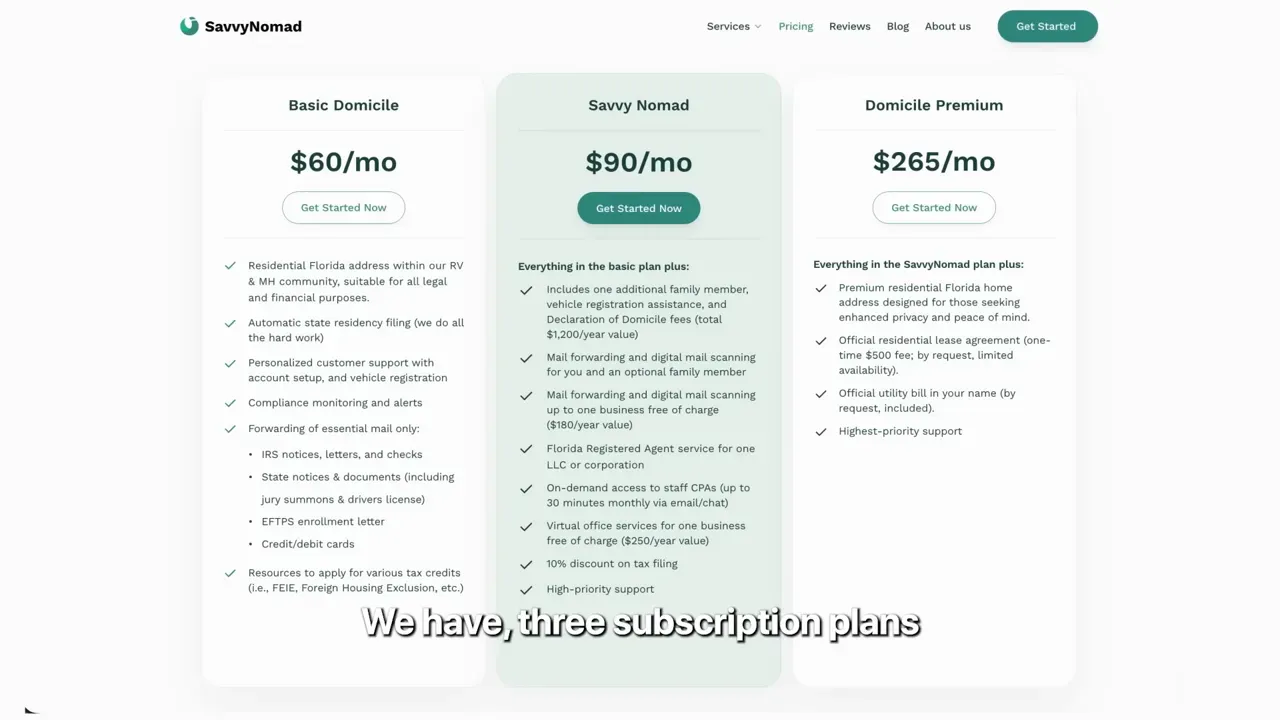
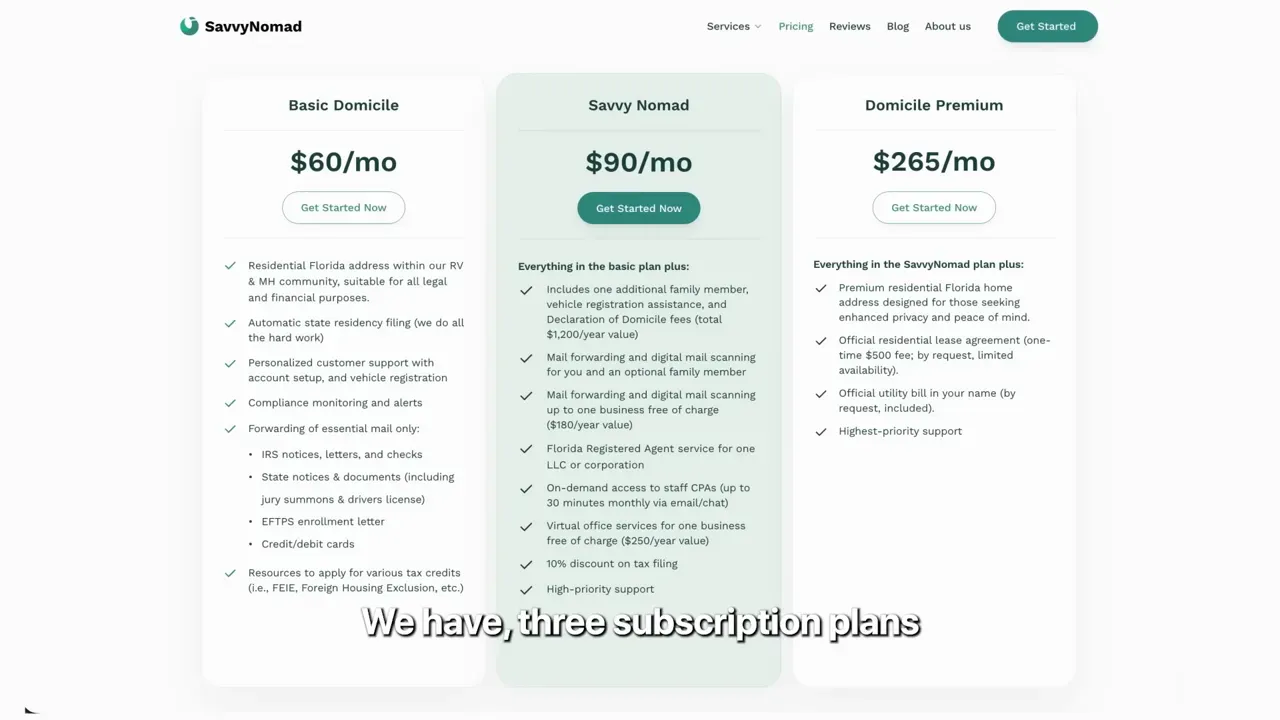
The business has a subscription model with multiple service tiers, and it has become what Bohdan described as a kind of American infrastructure layer for people who no longer live in America full-time. Instead of trying to be a giant finance platform, the company focused on one painful issue and made it easier to navigate.
At the time of the interview, the business was doing about:
- $140,000 in monthly recurring revenue
- $1.7 million in annual revenue
- 120 to 150 new customers per month
- More than 1,400 customers served
- Approximately $10 million in state taxes saved for customers
That last number matters. It explains why people buy.
Why is a “boring business” often a better business?
Because boring usually means ignored.
And ignored categories tend to come with three beautiful properties:
- Customers already have the problem
- They are already paying too much to solve it
- Most founders are too distracted to build there
That is a much nicer setup than entering a crowded market full of venture-backed teams all building the same “future of work” dashboard with slightly different gradients.
🧭 The Origin of Savvy Nomad
How did Bohdan find the idea?
The idea came from lived experience and pattern recognition, which is usually where the good ideas are, buried under inconvenience.
Bohdan said that because of the war in Ukraine, he was rebuilding his life in a more international context. That pushed him deeper into the world of international taxation. During that process, he noticed a recurring pattern: Americans abroad were a massive underserved group.
His co-founder had seen another version of the same problem. He met Californians living overseas who had been out of the country for years and were still paying California state taxes. That is the kind of situation that sounds absurd until you remember how government systems work.
Together, they turned that observation into a product.

Why did this idea work when so many software ideas don’t?
Bohdan broke it down into four reasons, and honestly, it is one of the cleaner frameworks for evaluating niche opportunities.
- Low competition, real demand
Unsexy markets attract fewer founders, even when the demand is obvious and expensive. - Extremely high willingness to pay
Taxes, compliance, and domicile issues are not things people want to “learn for fun.” They want them gone. - Concrete, quantifiable value
This is the big one. If a service saves someone thousands of dollars and costs less than the savings, the sale becomes rational instead of emotional. - Team-market fit
This was not just a boring market. It was a boring market where the founders’ strengths actually matched the problem.
That third point is especially useful. A lot of startups sell possibility. This business sells math.
In taxes, you can say: here is the likely financial benefit, and here is what our service costs.
That is a much easier conversation than “this AI assistant may improve productivity if your team changes behavior and adopts the workflow correctly.”
⚙️ The Product Is Simpler Than People Think
What does the actual software look like?
Not fancy. Which is good news.
Savvy Nomad starts by asking qualifying questions. Based on the user’s situation, it estimates possible tax savings. Then it recommends the most suitable plan. Most customers finish the online part of the process in under an hour.
That is worth sitting with for a second.
A business doing nearly $2 million a year does not need to look like a moon mission control panel. It just needs to guide someone through a stressful workflow and show them a clear outcome.
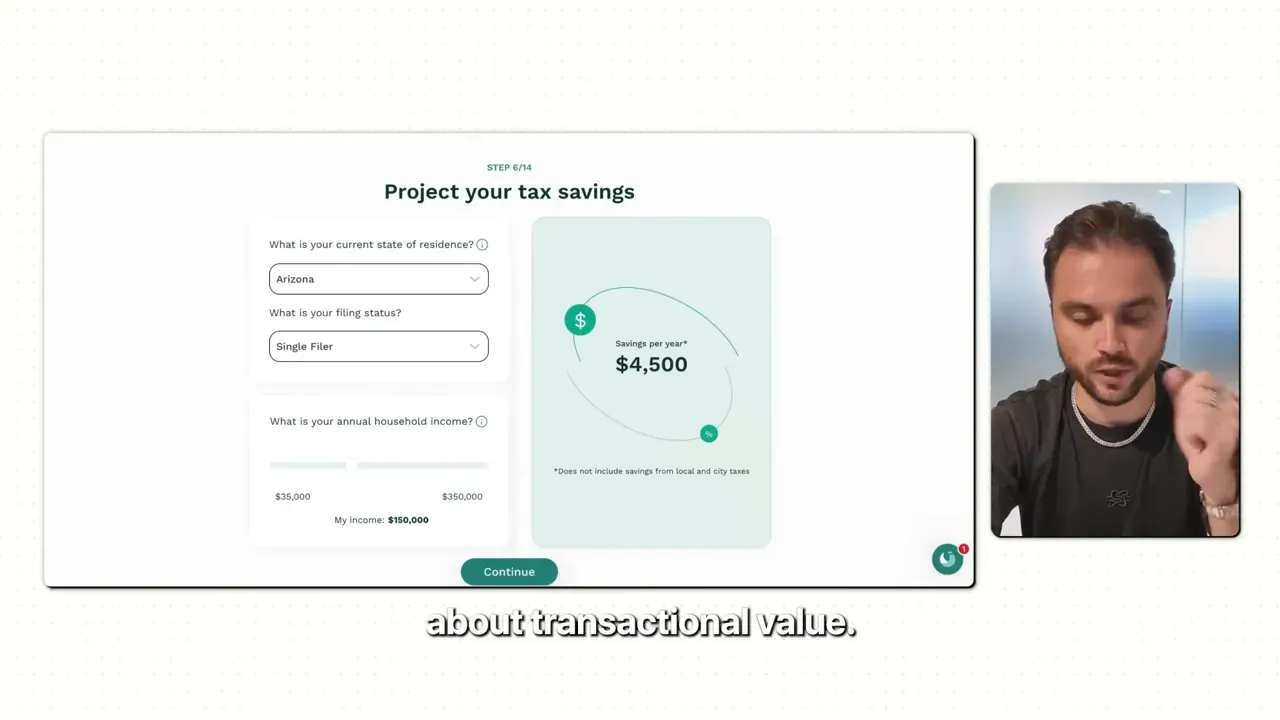
This is where the broader takeaway comes in. Whether someone is building tax software, an onboarding workflow, or a creator tool, the same principle applies:
- Ask the right questions
- Calculate a useful outcome
- Recommend the next step
- Reduce confusion
That is half of software right there. The other half is remembering to charge for it.
How hard is this kind of product to build now?
Much easier than people assume.
Bohdan’s stack is very no-drama, which is exactly how a stack should be:
- Bubble for the core product
- Framer for the marketing site
- Ghost for content publishing
- ChatGPT and Claude for operations support
- Customer.io for email
- Power BI + BigQuery for dashboards and reporting
- Churnkey for churn analysis
- Stripe for billing
- SavvyCal for scheduling
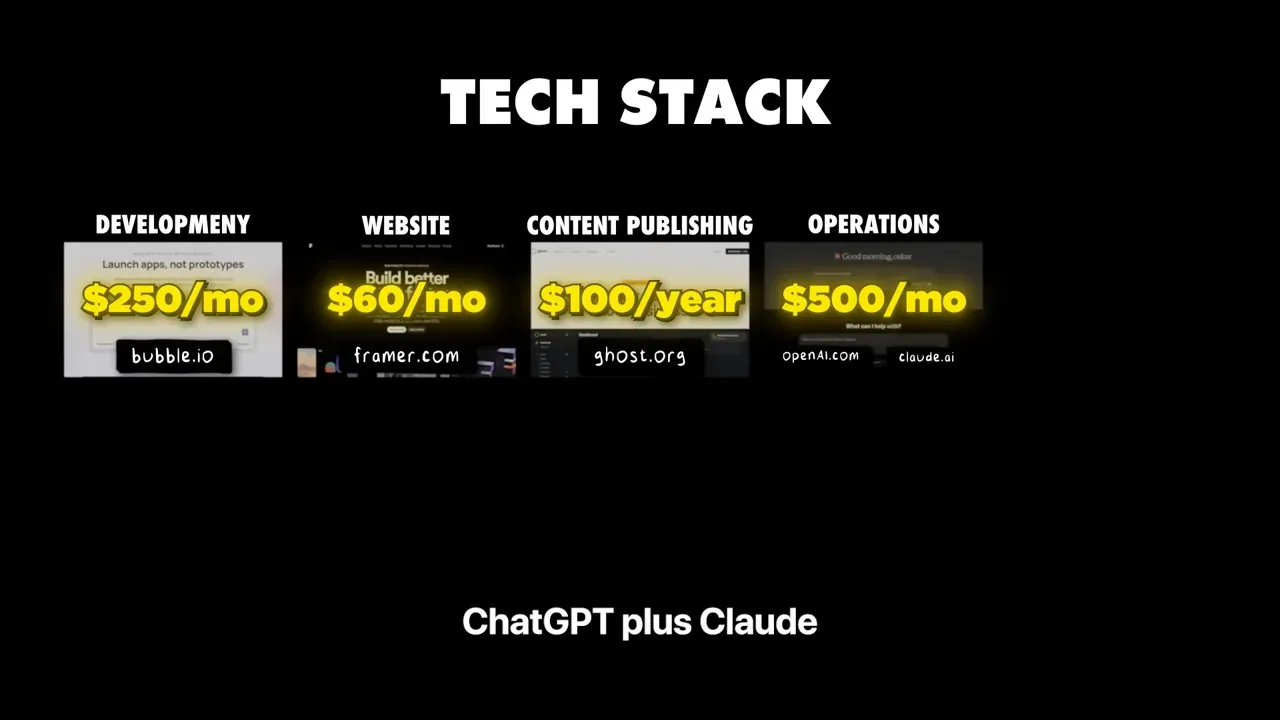
This matters because too many builders still think they need a full engineering team before they can touch regulated or process-heavy markets. They do not. In many cases, they need a better workflow, tighter onboarding, and a stack of no-code startup tools that lets them move before someone else notices the niche.
💡 Three Boring Business Ideas Hiding in Plain Sight
What other unsexy ideas did Bohdan call out?
He shared three categories that could support million-dollar businesses, especially if they are productized well.
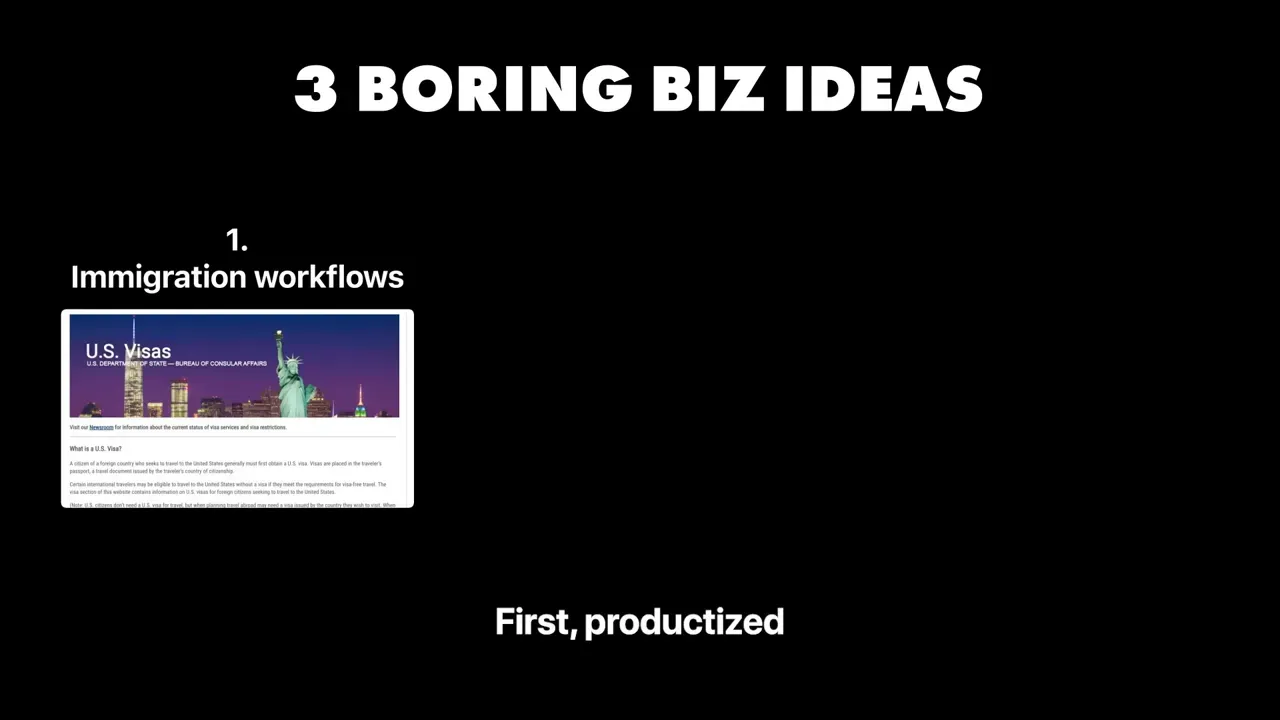
1) Productized immigration workflows
People moving to the U.S. often pay agencies $8,000 to $15,000 to navigate immigration paperwork and process management. In many cases, that is really a workflow problem wearing a legal costume.
A product that handles guided forms, templates, progress tracking, and maybe a lawyer review at the end could charge $1,000 to $2,000 and still feel like a bargain.
That is a classic service-to-software opportunity.
2) Moving people into tax-friendly jurisdictions and out of sticky ones
There are people moving to places like Dubai, Costa Rica, or Malaysia who want to do things properly. There are also people trying to leave high-friction tax systems in places like Canada, the UK, or Spain, where exit procedures can get messy.
This creates two related workflows:
- Entry planning into the new jurisdiction
- Clean exit from the old one
Handled well, this is not one sale. It can become multiple revenue events across the same customer’s life cycle.
3) International banking, asset holding, and estate planning
Founders and investors spread across countries often need help with things like:
- Opening bank accounts in specific countries
- Choosing jurisdictions for holding companies
- Structuring ownership of real estate or intellectual property
- Handling estate planning across borders
Bohdan’s point was that there is no real productized default here yet. It is still fragmented, expensive, and confusing. Which usually means there is room.
The smart insight underneath all three ideas is that they often serve the same customer at different stages. So instead of thinking in isolated offers, think in adjacent workflows.
Same customer. Different paperwork. Same pain. Different invoice.
🛠️ Bohdan’s Playbook for Building in Unsexy Markets
If someone had to start from scratch today, what should they do?
Bohdan laid out a simple three-step playbook. It is practical, not glamorous, which is why it is useful.
Step 1: Start with painful problems people already overpay to solve
Look for problems where customers are:
- Stressed
- Confused
- Losing money
- Forced to comply with something
The best categories tend to include:
- Taxes
- Compliance
- Legal workflows
- Residency and immigration
- Banking
- Documentation
Then examine how people solve the problem now. Usually, it is one of two extremes:
- They DIY it using blog posts, Reddit threads, and panic
- They pay a professional thousands of dollars
If there is a giant gap between those two options, there is probably room for a product.
Step 2: Evaluate competition relative to opportunity
Too many founders only ask, “How big is the market?”
Bohdan’s better question is, “How many smart founders actually want to build here?”
That shift matters.
In flashy categories, you may have a huge market and miserable odds because hundreds of capable teams are already there. In unsexy categories, you can find strong demand, high willingness to pay, and very little founder competition.
That asymmetry is often where the money is.
Step 3: Pick one workflow and productize it
This is the part people love to overcomplicate.
Do not build the giant platform. Do not try to solve the whole category. Do not make a roadmap that looks like it was assembled during a caffeine emergency.
Pick the most common, painful workflow and turn it into a reusable process.
For Savvy Nomad, that starting point was state domicile change. Not all of international tax. One sharp problem.
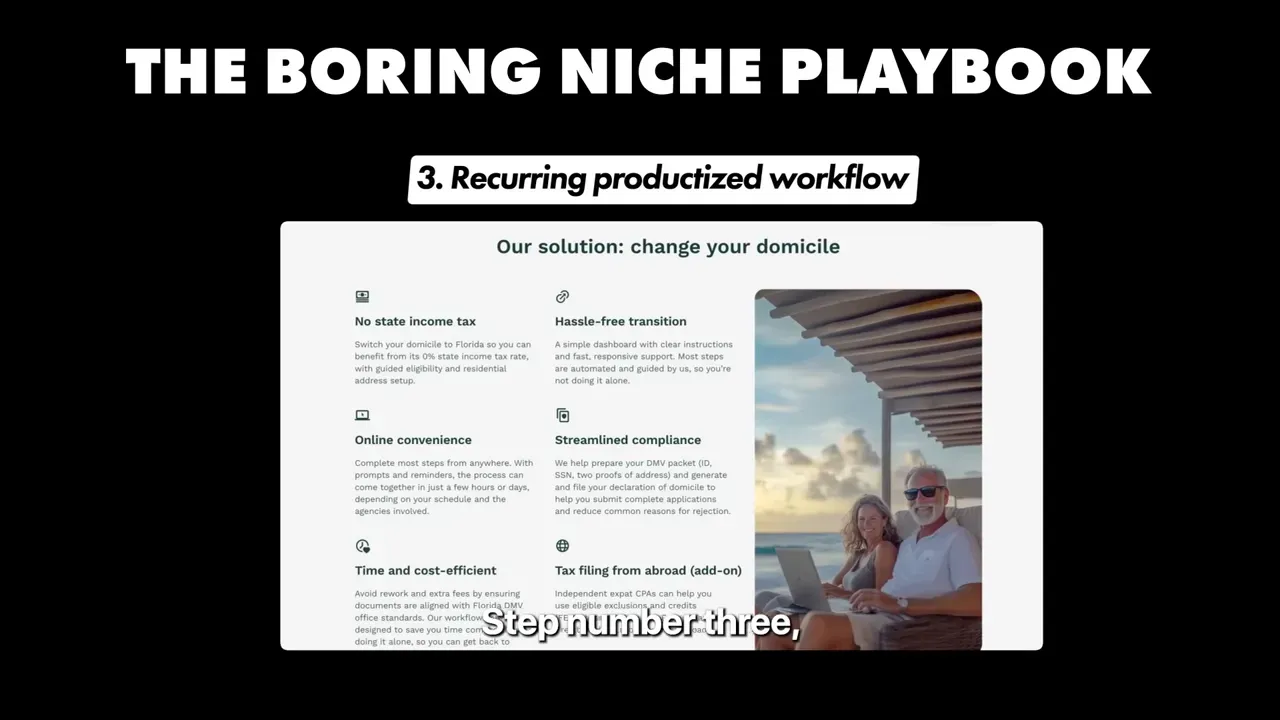
This is also where modern tooling helps. If someone wants to build a guided workflow and validate a business quickly, the playbook looks like this:
- Capture intake with forms
- Use logic to qualify users
- Estimate value or savings
- Surface a recommended plan
- Automate follow-up and operations where possible
That could apply to taxes, legal paperwork, creator operations, agency onboarding, or any tool built around a real business bottleneck instead of pure trend energy.
🔍 Why This Matters More Than the Latest Trend
What is the bigger strategic lesson here?
There are two trends colliding right now:
- Governments and institutions have created layers of complexity over decades
- Software and AI now make it easier to simplify and productize those layers
That combination is powerful.
It means a solo operator or small team can go after categories that used to be reserved for expensive firms and fragmented consultants. Not because the problem got smaller, but because the tooling got better.
And unlike trend-driven software, these workflows do not disappear when the hype cycle rotates to the next toy.
Taxes will remain annoying. Immigration will remain confusing. Compliance will remain a bureaucratic haunted house. Good business opportunities tend to survive exactly because nobody fixed them properly.
🧠 The Real Talk on Building Something Like This
What should founders actually take away from Bohdan’s story?
First, you do not need a sexy idea. You need a painful one.
Second, a boring niche becomes very interesting when the economics are obvious.
Third, software does not have to be complex to be valuable. If it reduces confusion and saves money, that is enough.
And fourth, the best opportunities often live where social media is not pointing. That alone should make anyone suspicious of whatever everyone is suddenly “bullish” on this week.
Bohdan also ended with advice that lands because it is simple and earned:
The difference between a winner and a loser is that the winner tried one more time.
He had shut down a previous startup. He could have stopped. Instead, he kept going and built something sturdier in a category that looked boring from the outside and obvious in hindsight.
That is usually how it works.
If someone is building a workflow tool or any small software business today, the best move might not be adding more AI. It might be picking a painful, expensive process and making it 80 percent simpler.
That is not flashy. It is just useful. Which is annoyingly where the money tends to be.
🧰 Build This Stack
Most of this is Bohdan's actual stack. The last two items are solid alternatives, not tools he mentioned.
- Bubble for the core product — the no-code app behind Savvy Nomad.
- Framer for the marketing site — Bohdan's pick.
- Stripe for billing and Customer.io for email — both from his stack.
- Make.com to automate the busywork — a solid alternative for intake follow-ups and handoffs between tools.
- Lovable as an AI app builder — a solid alternative to Bubble if you'd rather describe the workflow than drag it together.
Some tools above may be affiliate links — we only list tools that fit the build.
❓FAQ
What does Savvy Nomad do?
Savvy Nomad helps U.S. citizens living abroad reduce unnecessary state tax burdens by helping them handle domicile and related tax-compliance issues through a productized service and software workflow.
How much revenue is the business making?
At the time discussed, the business was doing about $140,000 in monthly recurring revenue and roughly $1.7 million per year.
Why are boring businesses often good startup opportunities?
Because they often have real demand, high willingness to pay, lower founder competition, and clear customer pain. People may avoid these niches because they seem dull, but that usually means there is more room to build.
What are examples of unsexy business ideas similar to this?
Bohdan highlighted three: productized immigration workflows, services that help people move into tax-friendly jurisdictions or exit high-friction ones, and international banking or cross-border asset-planning software.
Do you need a large engineering team to build this kind of business?
No. Savvy Nomad’s stack includes no-code and low-code tools like Bubble, Ghost, Stripe, and Customer.io. The key is solving a focused workflow well, not building a massive platform on day one.
What is the best way to find an unsexy startup idea?
Look for painful, high-cost problems where customers are either struggling through DIY solutions or paying expensive professionals. If there is a gap between those two options, that is often where a productized business can win.
How does this apply to creators and small software builders?
The same principle applies. Instead of building generic AI features, identify a costly, repetitive workflow creators already deal with, such as lead qualification, offer setup, onboarding, or follow-up, and turn it into a guided system that saves time or money.
What is the main takeaway from Bohdan’s story?
Solve something real. If the problem is painful, expensive, and underserved, it does not need to be exciting to become a great business.
What tools do you need to build a productized service business like Savvy Nomad?
Less than you'd expect. Savvy Nomad runs on Bubble for the product, Stripe for billing, Customer.io for email and Ghost for content. The real work goes into the intake questions and savings estimate that guide each customer to the right plan.
This article was inspired by this amazing video I Make $1.7M/Year In The Most Boring Niche Imaginable. Check out more from their awesome channel.