
Interview with Yoni Smolyar, Brainrot Cofounder Behind a $400K/Month iOS App

Tool fatigue makes building look complicated before the first useful feature exists. An AI-powered launch system for creators should reduce that mess, not add six subscriptions and a dashboard nobody opens. Brainrot offers a grounded example: solve one familiar problem, build distribution, measure behavior, and use AI to help with the work. The digital brain is cute. The operating lessons are considerably less fluffy.
Table of Contents
- 🧠 Why This App Was Worth Building
- 🛠️ The Setup: Distribution Before Launch, Tools After Purpose
- 🔬 The Magic: An AI-powered launch system for creators That Starts With Evidence
- 🎯 Finding an Idea Without Building a Super App
- ⚖️ The Real Talk: Risk, Delayed Results, and Useful Work
🧠 Why This App Was Worth Building
What problem does Brainrot solve, and why give it a digital pet?
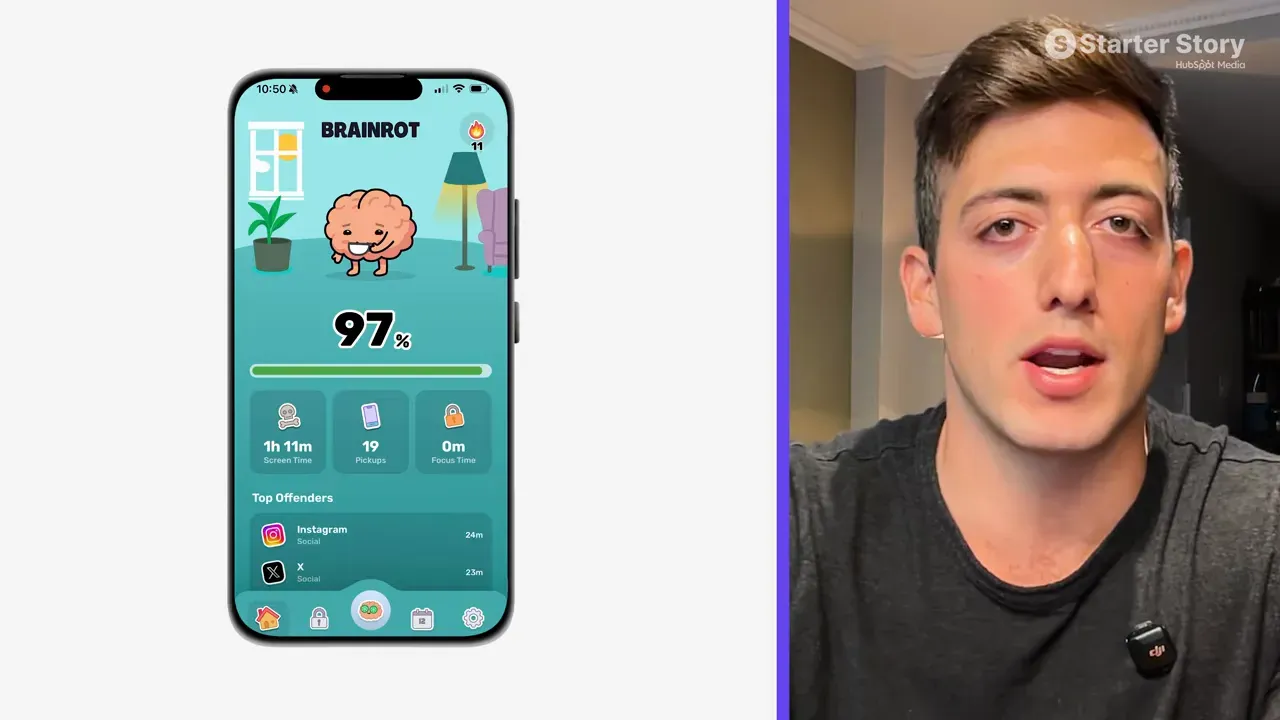
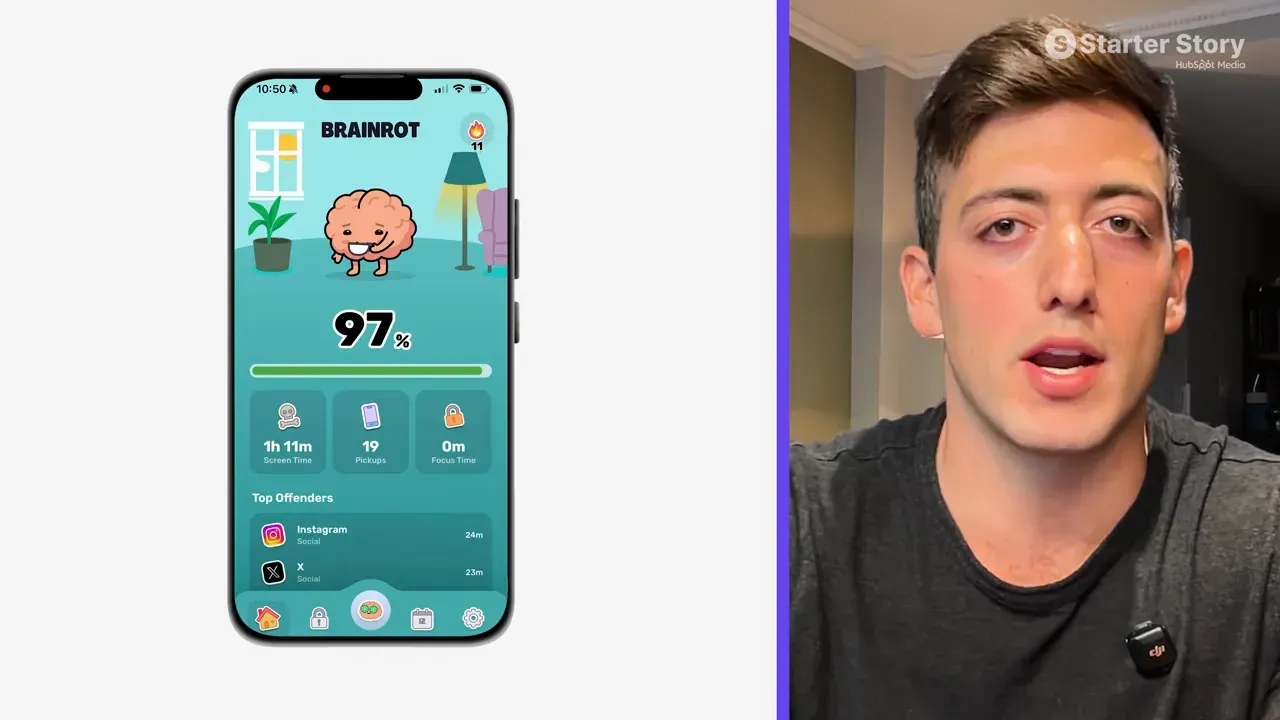
Brainrot tackles excessive phone use through a gamified screen time app. Its central character is a small pet brain whose condition deteriorates as someone spends more time in selected distracting apps.
The concept came from a problem Yoni knew personally. Instagram, YouTube, and Twitter were taking too much of his attention. Existing app blockers already addressed the category, so inventing screen time management was not the opportunity. Giving it a memorable, emotionally legible mechanic was.
Instead of presenting only another usage chart, Brainrot turns scrolling into a visible consequence. More time on distracting apps means a less healthy brain. The product makes its premise understandable without requiring a lengthy productivity sermon.
That distinction also made Yoni excited enough to focus intensely on building for about a month. His enthusiasm was not proof of market demand. It was enough motivation to get a real product into the world, where demand could finally be tested.
How does Brainrot actually interrupt a scrolling habit?
The app combines a playful home screen with practical screen time controls. Its main pieces include:
- A digital brain with a visible health score.
- Usage information for individual apps.
- Blocking rules for different apps and times.
- Screen time statistics across days.
- Interruption flows before accessing a distracting app.
In Yoni’s demonstration, the brain starts at 97% health. Opening Instagram triggers an intervening experience rather than immediate access. One flow includes a simulated FaceTime call from the brain.
The mechanism is deliberately modest: insert enough friction to interrupt an automatic action. Brainrot does not need to solve every productivity problem. It needs to make opening a distracting app slightly less automatic.
The useful product lesson: a narrow behavioral intervention can be more coherent than an ambitious collection of loosely connected features.
🛠️ The Setup: Distribution Before Launch, Tools After Purpose
What happened before the $400,000 monthly revenue figure?
Before Brainrot, Yoni worked as a corporate software engineer and tried small businesses that never meaningfully took off. Alongside those attempts, he began publishing content about the process of trying to become an entrepreneur.
He had noticed a distribution advantage among founders such as Pat Walls and Peter Levels: a new product did not necessarily start with an empty room. Their existing audiences could become early users.
Yoni began sharing the person and process behind his projects rather than remaining invisible until launch day. Over time, that content attracted an audience.
By Brainrot’s launch, he estimates that he had roughly 100,000 to 150,000 Instagram followers. That matters. The launch was not a cold start, and treating it as one would produce a fairly misleading blueprint.
How did that audience translate into early sales?
During development, Yoni built anticipation around the app and directed interested people to a waitlist. He did not reveal everything immediately. The combination of an established audience, an upcoming product, and a clear signup destination gave the launch somewhere to go.
He recalls roughly $10,000 in revenue on the first day. He separately describes the business growing from about $10,000 per month to approximately $400,000 per month after launching in summer 2025.
Brainrot primarily sells annual subscriptions. Those figures should therefore be described as reported revenue, not casually relabeled monthly recurring revenue or profit. Subscription billing, revenue, and take-home earnings are different things, even when a headline would prefer otherwise.
The repeatable lesson is not “post a few updates and collect five figures.” It is that distribution work happened before launch, and the waitlist gave that attention a practical destination.
Which tools support the business?
Yoni describes a stack organized around understanding users, running experiments, monetizing the app, and getting work done:
- Mixpanel: product analytics and user behavior analysis.
- Firebase: analytics and experiments.
- Supabase: internal tools and tracking.
- Superwall: subscription paywalls.
- AppStack: paid advertising attribution.
- Claude Code and Codex: coding and internal business work.
- Upwork: finding contractors and freelancers.
This is not presented as a no-code build, and the tool list is not a shopping requirement. The useful part for a solo builder tech stack is the responsibility assigned to each tool. Analytics answers behavior questions. Attribution connects acquisition activity to outcomes. Coding assistants help execute work.
A tool without a job is mostly another login.
🔬 The Magic: An AI-powered launch system for creators That Starts With Evidence
What changed between a successful launch and a growing business?
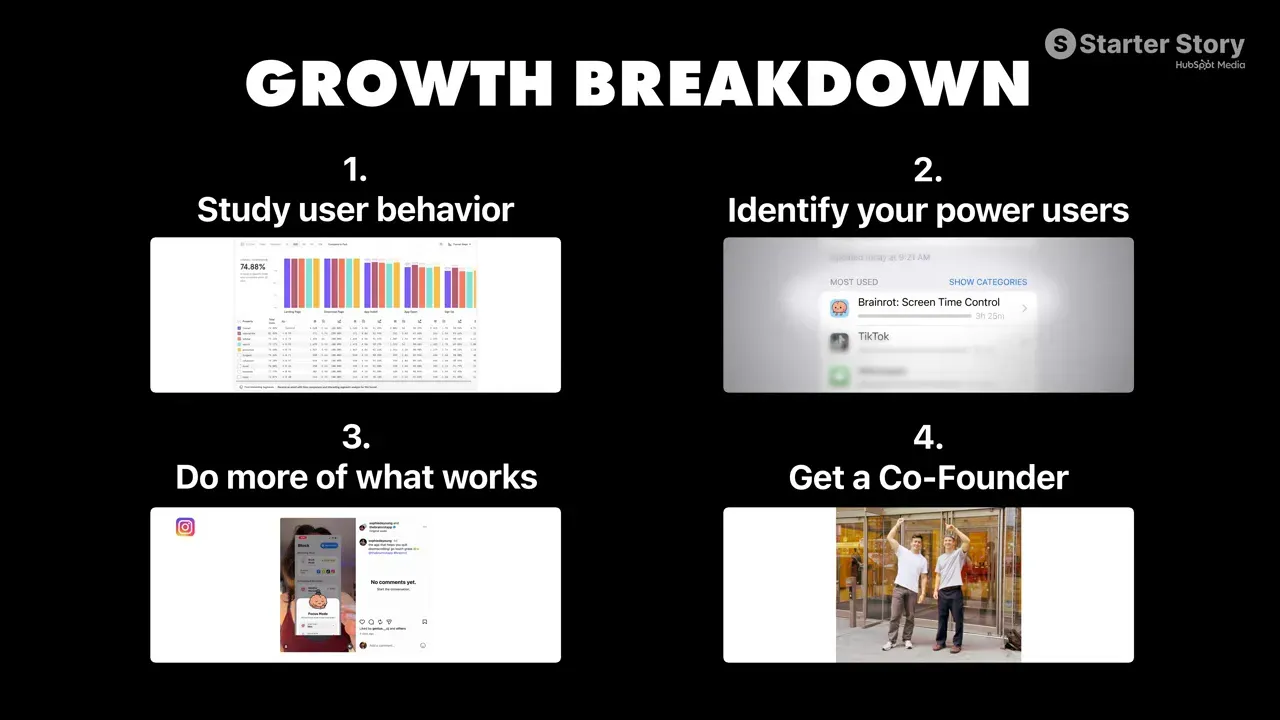
Yoni points first to understanding how people actually use the app. Once Brainrot had live users, the team could distinguish highly engaged users from casual or average users.
That distinction became a major unlock. Aggregate activity can show that something is happening. Studying power users helps reveal which behaviors may matter most.
His second principle is to expand what already works. For Brainrot, influencer content and paid advertising supported early growth. The team scaled those channels instead of treating every possible acquisition tactic as equally deserving of attention.
The third change was partnering with Brock Anderson as cofounder. Yoni describes that partnership as a substantial multiplier for the business. More growth did not come only from more software. It also came from more capacity to make and execute decisions.
What would Yoni’s starting-over process look like in 2026?
His advice forms a practical sequence rather than a promise that the same result can be reproduced.
- Choose a problem that remains interesting after the novelty fades. Building a business becomes difficult. Genuine interest makes the difficult parts more tolerable.
- Build complementary capacity. A cofounder or team can cover work that one person cannot reasonably do well alone.
- Instrument the product. Send usage events to an analytics provider such as Mixpanel or PostHog.
- Study activation and engaged cohorts. Identify when users first experience meaningful value and which groups remain most active.
- Run small, measurable experiments. Change an onboarding step or sequence, then evaluate the result.
- Compare acquisition economics. Assess both the cost of acquiring users and the revenue those users generate.
- Keep working through the delay. Today’s activity may not produce visible results until weeks or months later.
AI fits into the analysis and execution portions. Yoni recommends letting Claude or Codex help investigate usage data. That is assistance with a feedback loop, not a substitute for having one.
What should the analytics investigation actually uncover?
Yoni emphasizes three questions: what users do, when they activate, and which cohorts become the most engaged.
An activation moment is the point at which a person experiences the product’s core value. He does not identify one definitive activation event for Brainrot, so inventing one would be neat, tidy, and wrong.
Instead, his method is to investigate the behavior of the most committed users and look for patterns that other users could be guided toward.
A practical analysis brief based on that advice would focus on:
- Which behaviors distinguish highly active users from casual users?
- What happens before a user becomes consistently engaged?
- Which cohorts show the strongest ongoing activity?
- Where might onboarding help more users reach valuable behavior?
The objective is not a larger pile of charts. It is a clearer next decision. AI can help examine the data, but it cannot rescue missing instrumentation by sounding confident about it.
What kinds of experiments are worth running?
Yoni’s examples are small: remove an onboarding slide, move it elsewhere, or change which element appears first. Each change creates something concrete to measure.
His rough expectation is that most experiments will not materially change results. He describes perhaps one in ten as potentially significant, not as a measured success rate that every app should expect.
That changes how experimentation feels. An unsuccessful test is not automatically a failed strategy. It may simply be one of the many changes that did not help.
The important discipline is connecting the change to an outcome. Otherwise, onboarding becomes an endless furniture-moving exercise, with everyone congratulating themselves on the new layout.
A testable starting point: one onboarding change, one defined outcome, and a decision about whether the change helped. Small enough to execute, specific enough to learn from.
How should acquisition channels be compared?
Not all acquired audiences create the same value. Yoni recommends comparing the cost of bringing users in through a channel with the revenue those users subsequently generate.
A cheaper acquisition source is not automatically better. A more expensive audience may generate more revenue. The useful comparison includes both sides.
This is also why Brainrot’s influencer and paid advertising strategy should not be copied mechanically. Every app, founder, and audience differs. The principle is to identify a working channel through evidence, then give it more resources.
For a creator planning to launch with AI tools, the same constraint applies: faster content production does not eliminate the need to know whether the resulting audience becomes valuable users.
🎯 Finding an Idea Without Building a Super App
What makes an app idea worth pursuing?
Yoni recommends a simple utility with one central function, solving one central problem for a clearly defined user. For a first entrepreneurial attempt, he advises against extremely competitive spaces and sprawling products with many unrelated use cases.
His idea filter is straightforward:
- The founder genuinely understands the problem.
- The product addresses a need rather than merely copying a trend.
- The founder can use it regularly and judge it honestly.
- The app offers either substantial lifetime customer value or a compelling reason for daily use.
- The core function creates real value for its intended users.
Lifetime value describes the revenue a customer generates over the relationship with a business. Yoni presents high lifetime value and frequent use as useful directions, not as guarantees of success.
Brainrot already had competitors at the category level. Its distinctiveness came from a specific experience layered onto a familiar problem. That is a more realistic interpretation of originality than waiting for an idea no human has ever considered.
Does starting solo mean staying solo?
Not in Yoni’s experience. He strongly recommends considering a complementary cofounder, especially after repeated solo attempts have not produced a first meaningful win.
He also suggests equity as one way to assemble a team when the business is still early. The underlying point is capacity: product development, distribution, analytics, experimentation, and operations create more work than one person can comfortably absorb.
For an overworked builder, the lesson is not to hire a small department immediately. It is to recognize that doing everything personally is not automatically the most efficient operating model.
Brock’s contribution mattered enough that Yoni repeatedly credits the partnership with helping Brainrot take off. The solitary founder story makes a cleaner poster. The team made the business stronger.
⚖️ The Real Talk: Risk, Delayed Results, and Useful Work
When did leaving a full-time job become reasonable?
Yoni spent time looking for a moment when the leap would feel less risky. He did not offer a universal revenue threshold or a particular date.
His conclusion was that every path carries risk. Remaining in an unhappy job has costs, just as leaving one does. The decision depends partly on which discomfort someone is prepared to tolerate.
He still emphasizes practical runway. Savings and a plan matter. His point is not that uncertainty disappears, but that waiting for complete certainty can become its own form of avoidance.
That is a personal perspective, not a financial rule. Brainrot’s reported revenue does not establish what another founder can safely afford to do.
What should a builder take away and test next?
Yoni’s final warning concerns busywork. Many actions create the feeling of progress while contributing little. A founder’s job is to find decisions that can substantially improve the system, then delegate or discard lower-value work.
He also warns against complacency when results improve. Growth appearing today may reflect work completed months earlier. Stopping the work because the numbers finally look good can create a delayed problem.
The smallest useful version of an AI-powered launch system for creators follows the same logic: one understood problem, one clear utility, a distribution path, meaningful analytics, and a measurable experiment. AI helps with coding and analysis. It does not replace the reason someone needs the product.
A practical next session could produce a short problem statement, a review of existing user behavior, or one onboarding test. The right choice depends on the current bottleneck, not the most fashionable tool.
Brainrot demonstrates what worked for this team. The useful move is to adapt the operating principles, not photocopy the pet brain. More meaningful decisions, fewer ceremonial tabs.