
Interview with Michael, the College Builder Behind a $100K/Month Height Predictor App


Most people looking for an AI-powered launch system for creators assume the answer involves a complicated product, expensive automation, and a dashboard with enough tabs to make a small airline nervous. Michael’s story offers a more useful version of reality: find a question people genuinely care about, make a simple product around it, prove that content creates demand, then scale what already works.
At 20, while studying finance at NYU, Michael built GoTall, a height prediction app that averages about $100,000 in monthly revenue. The app has reached roughly one million total downloads across iOS and Android. Its core offer is almost aggressively simple: users answer questions about themselves and receive a height prediction, alongside features that help them track sleep, meals, and habits related to growth.
The idea may sound too niche to matter. That is exactly why it matters.
Table of Contents
- 🧠 The Setup: A Rejected Job Hunt Became a Build Experiment
- 🔎 Finding the Weird Idea Nobody Else Wanted
- 📐 The Demand Test: Does This Hit a Real Human Need?
- 📈 The Magic: Turn Content Into a Repeatable Acquisition System
- 🛠️ The Product: Long Onboarding, Simple Stack
- 😬 The Real Talk: Build the Thing That Feels a Little Embarrassing
- ❓ FAQ
🧠 The Setup: A Rejected Job Hunt Became a Build Experiment
What led Michael to build GoTall?
Michael was studying finance at NYU and recruiting for corporate jobs when he was rejected from the roles he wanted most. Rather than treating that as the end of the road, he used the summer to return to something he had already tried as a teenager: building apps.
He had made products before, but marketing had always been the missing skill. So the initial goal was not to build the next huge startup with a grand mission statement and a 46-slide pitch deck. The goal was to find an app idea worth testing and learn how to get attention for it.
That distinction is useful. A first project does not need to be a forever business. It can be a practical training ground for distribution, positioning, conversion, and customer behavior. Building is only half the job. Getting anyone to care is the half that tends to ruin everyone’s nice little spreadsheet.
What does GoTall actually sell?
GoTall is primarily a height prediction app. It gathers information through a detailed onboarding flow and uses baseline CDC growth data along with research-informed adjustments to create a prediction. The questions include factors connected to growth and puberty, because more relevant input can support a more tailored estimate.
The app offers a $35 yearly subscription and a $5 weekly subscription. There is also a freemium layer for people who do not subscribe. Paid access unlocks the final prediction, while other features, such as stretches, meal scanning, and sleep logging, support ongoing engagement.
Crucially, the app does not promise that someone can simply force themselves to become taller. Genetics remain a major factor. The habit tools are positioned around helping teenagers optimize routines and potentially reach their natural height potential.

🔎 Finding the Weird Idea Nobody Else Wanted
How did Michael find a height prediction app idea?
He did not pull it from a founder brainstorm involving cold brew and an oversized whiteboard. He looked at businesses already listed for sale on Acquire.com because he wanted a validated idea. There, he found a similar app listed at around $20,000.
That gave him a starting signal, but the stronger validation came from memory. When Michael was around 13, he had searched online for height calculators himself. He knew the question was not imaginary because he had been the customer.
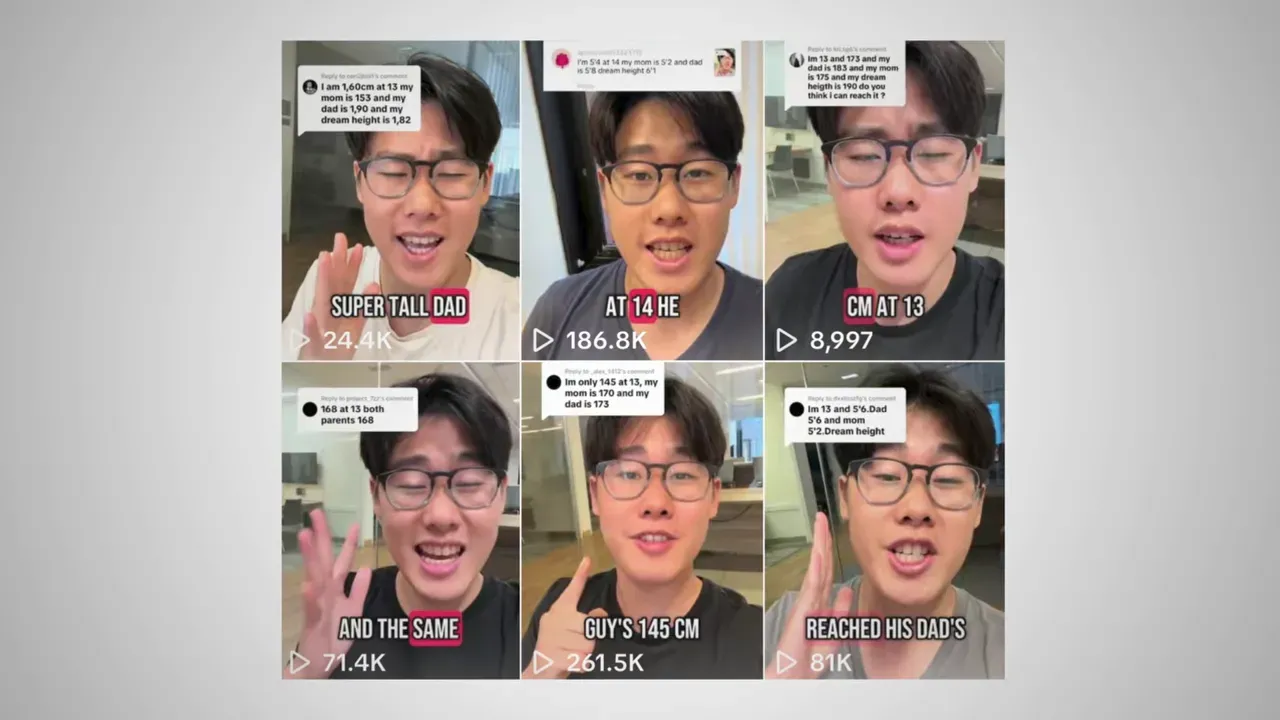
Then came the best kind of evidence: people independently asking for the thing. On TikTok, height-related videos were filled with comments from teenagers volunteering their age, current height, and parents’ heights. They wanted a prediction. Michael began replying to those comments with predictions, creating a content format that directly reflected the demand he was seeing.
Within two days of launching the app, he had his first sale. There were not massive traffic numbers behind it yet. That was the point. A sale from small exposure can be far more useful than a pile of polite likes from people who will never pay.
What is the lesson for solo builders looking for app ideas?
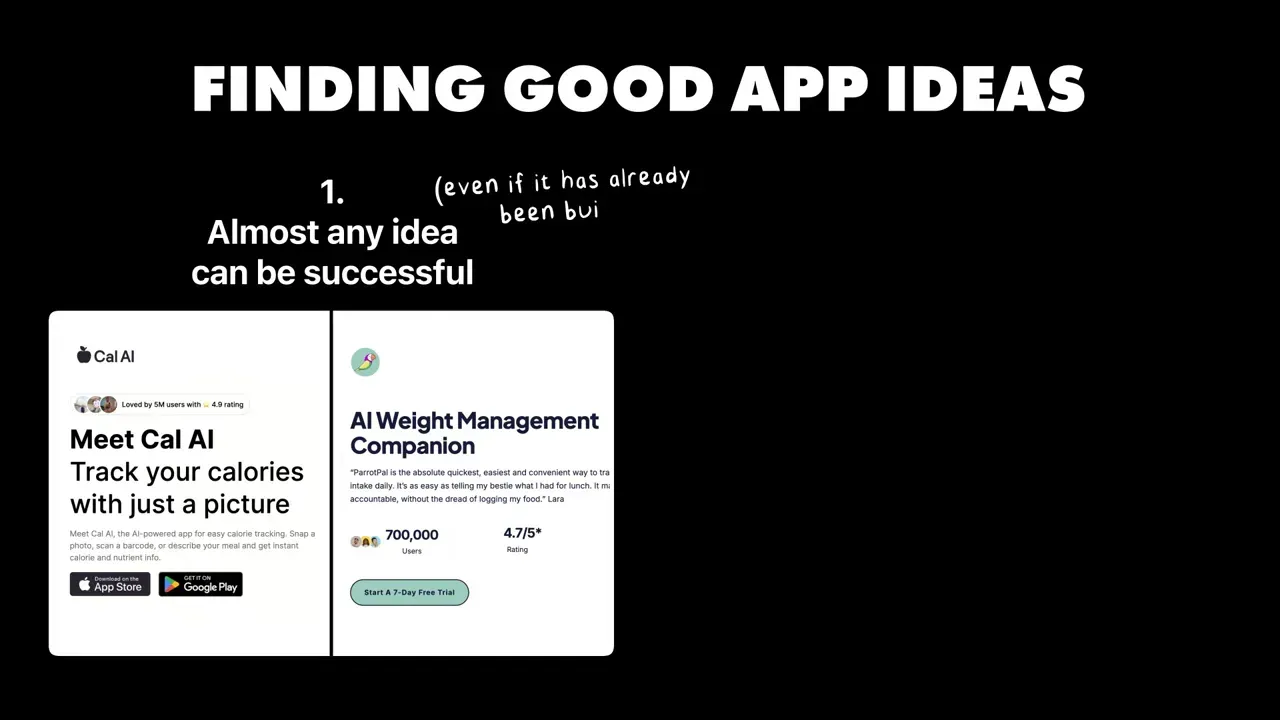
Existing competition is not a stop sign. It is evidence that a market exists. Michael points to calorie trackers that still generate substantial monthly revenue despite major incumbents such as Cal AI. The market does not become unavailable just because someone else got there first.
A better question is: can the product be made more specific, more relevant, easier to discover, or better matched to a particular audience?
For a solo builder tech stack, this is the more realistic play: start with a proven category, then add a meaningful angle. The angle might be audience, format, channel, onboarding, pricing, retention loop, or simply a better understanding of the emotional reason someone wants the product.
📐 The Demand Test: Does This Hit a Real Human Need?
How did Michael know people cared enough to pay?
The clearest evidence was not a survey, a waitlist, or a stranger saying “cool idea” while already opening another browser tab. It was direct demand. Michael received roughly 10 to 20 direct messages a day asking for height predictions.
That behavior matters because people were taking effort to provide personal information and ask for an answer. They cared enough to initiate contact. In product work, that is a very different signal from passive attention.
A useful filter is to look for questions people repeatedly ask in public:
- What information are people volunteering without being prompted?
- What do they ask creators or experts to calculate, explain, or solve?
- What problem keeps returning in comments, direct messages, and search queries?
- What do people feel slightly embarrassed, anxious, or impatient about?
Why use Maslow’s hierarchy of needs as an idea filter?
Michael uses Maslow’s hierarchy as a simple framework for evaluating whether an app touches something people deeply want. The more core needs a product can serve, the more potential it has to matter.
For GoTall, height touches esteem, since people may associate height with confidence, respect, or attractiveness. It can also touch love and belonging, especially for teenagers who connect appearance with dating, social standing, or acceptance.
This does not mean every app needs to solve someone’s entire existence before lunch. It means a product becomes more compelling when it serves a real emotional motive, not merely a technical one.

📈 The Magic: Turn Content Into a Repeatable Acquisition System
How did GoTall grow from launch to $100K per month?
Michael began by making content himself, largely on TikTok. For about a month, he ran a high-volume experiment, publishing around 10 TikToks per day. The initial height-prediction reply format gave him one clean distribution channel and one repeatable creative concept.
That simplicity made attribution easier. He could observe the relationship between views and downloads, then use that data to estimate what he could afford to pay creators. This is much cleaner than launching six channels at once, changing every variable, then declaring analytics “mysterious.”
The growth sequence was straightforward:
- Test one content format manually. Michael made the content himself until he found a format that worked.
- Replicate the creative across accounts. He tested it on two different accounts and had his girlfriend try it as well. The format continued to perform.
- Turn the format into a creator brief. Once it was teachable, he contacted roughly 50 people per day and asked them to make the same kind of simple content.
- Use affordable UGC creators. With his own content plus a small group of creators, GoTall reached roughly $3,000 per month.
- Improve the paywall and test more formats. Revenue grew to around $10,000 per month, then to around $30,000 by month five.
- Scale validated creative with paid ads. After reaching $30,000 monthly revenue, paid advertising helped push the business past $100,000 per month.
This is the part an AI funnel builder cannot replace. Tools can speed up production, editing, and research, but they cannot manufacture the core insight that people care about a certain outcome. The winning content was not polished for the sake of polish. It answered a question the audience was already asking.
What is the reusable marketing framework here?
For builders who want to launch with AI tools or no-code startup tools, the system is less about any one platform and more about sequencing:
- Start with visible demand. Look for repeated questions and voluntary requests.
- Create content that demonstrates the answer. Do not explain the business. Show the useful outcome.
- Keep one channel long enough to learn its numbers. Know what a meaningful amount of reach produces in installs or leads.
- Prove the creative can be made by someone else. A format is scalable when it can be taught, not when only the founder can perform it.
- Improve conversion before blindly buying more traffic. The paywall and onboarding deserve attention before ad spend gets serious.
- Put paid distribution behind a proven format. Ads are an amplifier, not CPR for weak creative.
🛠️ The Product: Long Onboarding, Simple Stack
Why is the onboarding intentionally long?
GoTall’s onboarding is built around a straightforward tradeoff: users want a better prediction, and better predictions need more information. Michael noticed that people requesting predictions in comments voluntarily provided lots of details because they believed those details improved accuracy.
So the onboarding asks a long series of questions related to factors such as growth, puberty, sleep, and family height. The flow creates an expectation of specificity before the result appears. Despite the length, Michael reports a roughly 91% paywall show rate.
That is not permission to make every onboarding flow feel like filing taxes in a wind tunnel. It is a reminder that users will tolerate effort when each step feels connected to an outcome they genuinely want.

What technology powers GoTall?
The stack is intentionally inexpensive and practical:
- Expo for building across iOS and Android.
- Superwall for subscription paywalls.
- Adapty to access advanced payouts rather than waiting through Apple’s long payout cycles.
- Singular as a mobile measurement partner for install attribution, at roughly three cents per install.
The technical lesson is refreshingly unsexy: a business doing meaningful revenue does not require an exotic stack. It needs a product that people want, an acquisition channel that can be measured, and enough operational plumbing to keep revenue, subscriptions, and attribution from becoming a haunted house.
😬 The Real Talk: Build the Thing That Feels a Little Embarrassing
What would Michael tell his younger self?
He would tell him to let go of ego.
Michael came from an environment where prestigious corporate jobs and venture-backed startups solving highly complex problems carried social status. A height predictor app did not fit neatly into that story. Telling people about it could feel embarrassing because it sounded small, strange, or unserious.
But that discomfort was not a reason to avoid it. It was often the toll for entering the useful part of the internet.
Michael’s advice is blunt: make the “stupid” TikToks, test the unglamorous idea, and follow the demand even when the idea does not make someone sound impressive at dinner. There are opportunities hidden behind the projects that look too obvious, too ordinary, or too cringe for people who are protecting their image.
The GoTall case is not a guarantee that every oddly specific app will make $100,000 a month. It is better than that. It is evidence that an AI-powered launch system for creators starts with judgment, not software: notice demand, make a useful first version, test distribution hard, and scale the parts that prove themselves.
❓ FAQ
What is GoTall?
GoTall is a mobile app that provides height predictions through a detailed onboarding flow and includes features related to sleep, meals, stretches, and growth-related habit tracking.
How much does GoTall cost?
GoTall offers a $35 annual subscription and a $5 weekly subscription, alongside a freemium option with access to selected features.
How did Michael validate the app idea?
He found a comparable app listed for sale, remembered having the same question as a teenager, saw repeated height-related questions in TikTok comments, and received his first sale within two days of launching.
What was GoTall’s main growth channel?
TikTok was the initial growth channel. Michael tested high-volume content, found a repeatable height-prediction format, replicated it with other accounts and UGC creators, then used paid ads after validating the creative.
What is the biggest lesson for a solo builder?
Do not reject an idea simply because it already exists or seems unglamorous. Look for visible evidence that people care, test a focused version quickly, and let real user behavior decide whether the idea deserves more effort.
This article was inspired by this amazing video I Can't Believe This App Makes $100K/Month. Check out more from their awesome channel.