
Interview with Sam Adeniyi, university student who built a $14K/month SaaS using Discord

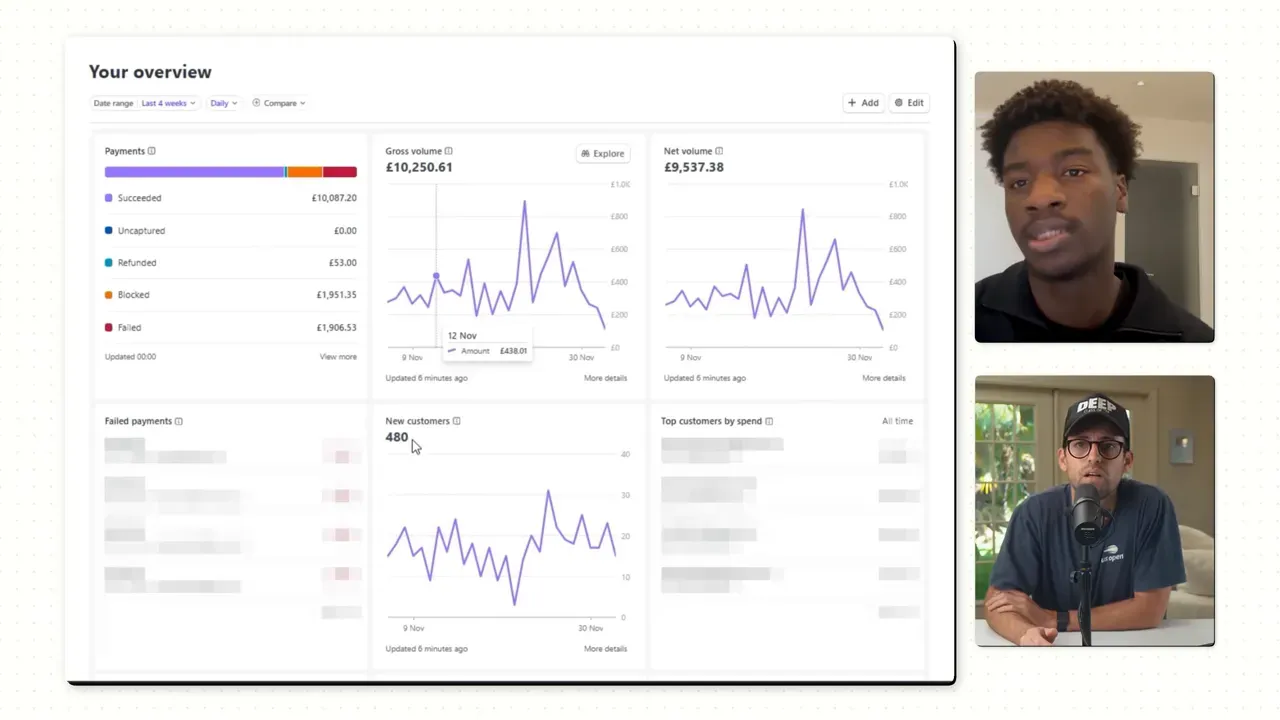
Table of Contents
- 🔥 Why this matters: AI-powered launch system for creators
- 🧾 Quick TL;DR
- 🧩 Interview (Q&A)
- ⚙️ The setup (tools and why they matter)
- ✨ The magic: exact steps to replicate (night-one checklist)
- 🔍 Real talk: what actually worked and what to expect
- 🛠️ Optional add-on: one blunt AI prompt that saves hours
- 🧾 The conclusion — what you should test this week
- ❓FAQ
🔥 Why this matters: AI-powered launch system for creators
Sam Adeniyi built a creator tool called Algrow in six months and reached roughly $14,000 monthly revenue while onboarding over 10,000 users. This is a story about building fast, validating with a tiny community, and using an AI-powered launch system for creators without a deep engineering background. The angle that matters: Discord, not ads, was the distribution channel that turned curiosity into paying customers.
🧾 Quick TL;DR
- What he built: Algrow — a creator tool that finds trending short-form formats and can generate videos using AI.
- How he built it: vibe coding with AI (ChatGPT + Cursor), hosted on Heroku, integrated AI video and image models.
- How he launched: targeted Discord communities, screen-shared the product in voice channels, collected a waitlist, and gave early access to advocates.
- Result: ~10,000 users and ~$13–14k in monthly revenue within months. Initial MVP shipped with bugs but solved the core pain.
🧩 Interview (Q&A)
Pat Walls: Tell us who you are and what you built.
Sam is a university student who "vibe coded" his first SaaS, Algrow, in about a week for the core MVP. He built a product aimed at creators who need to research viral formats and quickly spin up content. Algrow analyzes channel metrics (subscriber counts, average views) and surfaces trending formats. It also hooks into AI video generators so a user can replicate a viral format, generate a video, and optimize it for their platform.

Pat Walls: Show us the numbers — how's the business doing?
Sam pulled up his recent revenue: roughly 10,000 pounds in the last four weeks, which converts to about $13–14k. He added 480 new customers that month. Algrow's user base has broadened beyond its original target (faceless YouTube automation) to influencers and dropshippers who find the product useful for short-form content discovery and replication.
Pat Walls: You had no technical background. How did you even start building?
Sam had been experimenting online for years — affiliate marketing, faceless content and YouTube automation. A friend asked why nobody built a tool to find short-form channels to run, and that itch became the product idea. He used ChatGPT's code generation and pasted snippets into Notepad and later Visual Studio Code. The earliest MVP was cobbled together quickly and hosted on Heroku. The first testers saw application errors, but the core flow worked enough for people to use it.
Pat Walls: You shipped a broken MVP. Did that hurt you?
No. Sam’s thesis: fix the core problem, ship the core value. Early users will forgive surface bugs if the product meaningfully reduces pain. The MVP’s reliability wasn't perfect, but it exposed the concept to real users and created feedback loops that mattered more than polish.
Pat Walls: How did you get the first users? Why Discord?
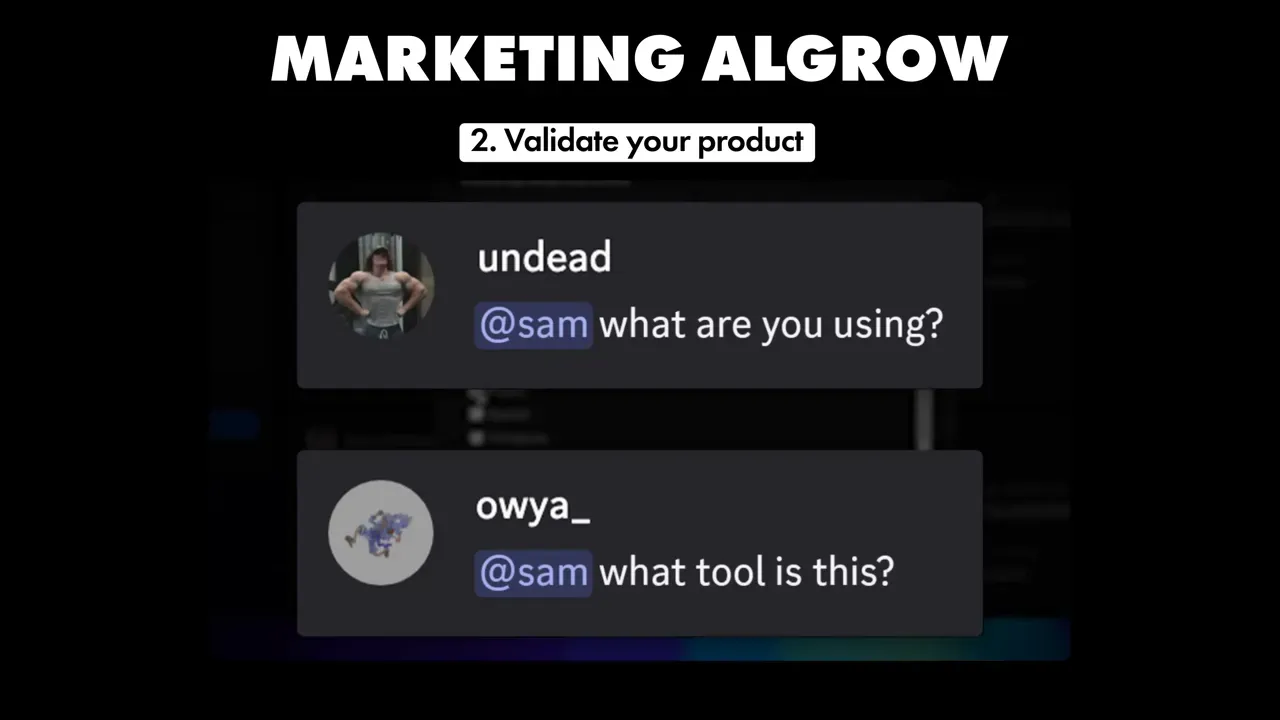
Sam used Discboard.org to search Discord servers by niche keywords. He found servers packed with his ideal customers, like MoneyMind, where people repeatedly asked how to find niches and channels. Instead of spamming, Sam joined voice channels and silently screen-shared himself using the tool. Curious members asked what he was using. He answered honestly: it’s my tool. Over days, that passive demoing converted into warm leads. Eventually a server owner even made an unsolicited promotional video.
Pat Walls: Discord is noisy. How do you avoid bans and look helpful rather than spammy?
Sam’s playbook focused on rapport and utility. Rather than dropping a "use this tool" link in chat, he helped people directly in threads, answered questions, and used the tool to solve specific requests. When users saw immediate value, they told their friends. For early growth he handed out free access to testers so they could demo the product to their peers — turning them into product advocates.
Pat Walls: If you had to start over, what's the step-by-step playbook to use Discord as a distribution channel?
Sam boiled it down to five actionable steps:
- Find your ICP: Use Discboard or Discord search to find servers where the ideal customer actually hangs out. For a 3D asset tool, join Blender and Cinema 4D servers and study the threads.
- Listen before you build: Export chat history and run it through an LLM prompt to extract recurring pain points. Focus on repeated complaints — those are your demand signals.
- Validate with real conversations: DM five to six people across different servers, send a short Loom or screen recording of your prototype, and watch responses. If multiple people say "I've been looking for this," you have traction.
- Build with the users: Try a waitlist and collect emails. Better: create your own Discord for the product so you can iterate publicly with users without hitting self-promo walls.
- Turn early users into advocates: Give early testers free access, and let them show friends. Social proof inside tight communities scales faster than any cold outreach.
Pat Walls: What's the tech and cost profile of what you built?
Sam started on a modest AI-first stack. Key pieces:
- Cursor for AI coding assistance (upgraded from $20/mo to $200/mo plan).
- AI image generation via NanoBanana (~$100/mo).
- AI video models like Sora2 (~$200/mo).
- Hosting on Heroku (~$100/mo).
- MailerLite for email (~$80/mo).
- AI compute costs (Gemini and others) totaling an additional $300–500/mo.

Pat Walls: If you could go back, what would you tell yourself now?
Sam would have designed for scale from day one. Even when vibe coding, he advises prompting the AI to think in scale-first terms: ask Cursor to structure code and deployments with 100,000 users in mind. That saves time and engineering debt later.
⚙️ The setup (tools and why they matter)
Sam’s stack is not fancy. It’s pragmatic and cheap enough for a solo founder to maintain while delivering real value.
- Cursor — AI code assistant. It allowed Sam to vibe code without formal software experience. Upgrading the plan improved output and speed.
- ChatGPT — Idea validation, code snippets, and prompts to summarize Discord chats.
- Heroku — Fast hosting to get an MVP online; cheap and simple for early stages.
- NanoBanana / Sora2 — Replaceable AI models for image and video generation. These are the differentiators enabling creators to go from idea to asset fast.
- MailerLite — Basic email for waitlists and transactional messages.
✨ The magic: exact steps to replicate (night-one checklist)
Here’s a tested sequence that a solo creator can run tonight. It’s tactical and stripped of hype.
- Pick a narrow niche: Be specific. "Faceless YouTube automation" is a better starting niche than "content creators."
- Find the Discord pockets: Use Discboard.org to collect 5–10 active servers where your ICP posts daily.
- Harvest pain points: Select several days of chat, paste into ChatGPT with a prompt like: "List recurring problems users mention about X, grouped by frequency." Keep the top 3 problems as your product hypotheses.
- Build a one-flow MVP: Ship the absolute minimum that solves one top pain point. Use Cursor to scaffold routes, forms, and the core output. Host on Heroku so you can iterate fast.
- Passive demos in voice channels: Join public voice channels and quietly screen-share the product. Let curiosity pull people in. When asked, be transparent about it being an early tool and ask for feedback.
- Collect a waitlist and create a private Discord: Funnel interested users into your server and email list. Use the server to ship features and collect direct feedback.
- Seed advocates: Give a small group free access in exchange for honest feedback. Encourage them to demo the tool to friends.
🔍 Real talk: what actually worked and what to expect
Ship fast. Sam’s MVP was buggy and crashed for the first testers, yet people still used the core features because they relieved a recurring pain. The signal was stronger than the noise of crashes.
Discord gave two advantages that Facebook groups and Reddit struggle to match:
- Real-time presence. If you can be in a voice channel, you can demo to dozens of humans instantly.
- Higher network effects inside tight communities. One impressed early adopter becomes a direct advocate to friends in the same server.
Downsides and realities:
- Moderation rules vary and many servers ban self-promo. The workaround is to add value first, avoid spam, and cultivate relationships.
- AI compute costs can climb fast as you scale. Expect several hundred dollars a month in model calls once you have real usage.
- Early free access is an acquisition lever but it can reduce early revenue. Use it strategically for advocacy, not permanent giveaways.
🛠️ Optional add-on: one blunt AI prompt that saves hours
When extracting pain from Discord logs, use this prompt in ChatGPT:
"Given the following Discord chat logs, list the top recurring pain points mentioned by users about [topic]. Group them by frequency and include example quotes for each pain point. Prioritize items mentioned by multiple unique usernames." Feed a few thousand lines and let the model surface the highest demand pieces. That simple step converts murmur into prioritized product features.
🧾 The conclusion — what you should test this week
Sam’s playbook is a blueprint for an AI-powered launch system for creators focused on community-first distribution. If you are a solo builder, pick one tightly defined niche, find 5 Discord servers, extract recurring pain with an LLM, build the smallest flow that solves one pain, and demo it live in voice channels. Don’t over-engineer early features; focus on useful outputs and repeatable demos. Expect to trade polish for speed early.
❓FAQ
How do you avoid getting banned while promoting a product on Discord?
Sam recommends building rapport first. Help people in threads, answer questions without pitching, and use your tool to directly solve a user's request before mentioning it. When you do post a waitlist, keep it contextual and small. Alternatively, create your own Discord to funnel interested users and avoid self-promo restrictions in other servers.
How do you validate product-market fit using Discord chats?
Export days of chat history and use an LLM to extract recurring complaints. Then DM individuals with a short screen recording of your prototype and gauge reactions. Collect at least five confirmations across different servers to reduce echo-chamber risk.
What is the minimum tech stack to ship this kind of product?
Cursor for coding help, an LLM for prompts and copy, Heroku for hosting, and one or two AI models for generation (image/video). MailerLite or similar for email. That keeps monthly costs under control until usage ramps.
Does giving early users free access destroy revenue?
Not necessarily. Sam used free access as a growth lever to build advocates. Structure it with limits: early testers get time-limited or feature-limited free access so they can demo to friends without reducing long-term revenue potential.
What's the one thing builders always get wrong?
They build for the wrong channel. Sam’s example shows that audience and channel must align. If your users live on Discord and you bombard LinkedIn posts, you will fail. Channel selection is as important as the product itself.
This article was inspired by this amazing video I built a $14K/month SaaS using Discord. Check out more from their awesome channel.