
Interview with Jack Friks, the $40K/Month Solopreneur Building Apps Around His Own Problems

Most solo builders do not need another productivity doctrine, color-coded second brain, or $97 “work four hours a week” PDF written by someone who apparently outsourced reality. They need a way to build useful things, listen to customers, and stay sane long enough for the compounding to happen.
Jack Friks runs a portfolio of bootstrapped apps that brings in roughly $40,000 a month. Some weeks he works a couple of hours a day. Other weeks, especially around a launch, he works eight to ten hours a day. The system is not really a system in the rigid, performative sense. It is a set of operating principles: handle customers first, work in sprints, follow genuine curiosity, test ideas in public, and stop treating endless work as proof of seriousness.
For creators trying to assemble an AI-powered launch system for creators, the useful lesson is not to automate every breath. It is to start with a problem close enough to feel personally annoying, then use real feedback to decide what gets built next.
Table of Contents
- ☀️ The Morning Starts With the Least Fun Task
- 🏃 Work in Sprints, Not Pretend Balance
- 🧠 Security Changes How Hard Work Feels
- 🔧 Build Products You Actually Want
- 📊 Test the Framing Instead of Debating the Idea
- 🌙 The Stop Time Is Part of the Job
- 🌱 Keep Trying Things Until the Path Appears
- 🛠️ The Real Takeaway for Solo Builders
☀️ The Morning Starts With the Least Fun Task
What does a normal morning look like for Jack?
There is no military-grade wake-up routine. Jack generally gets up around 7 or 8 a.m., depending on how the previous day went. He brushes his teeth, works out, showers, makes coffee, and gets to his desk.
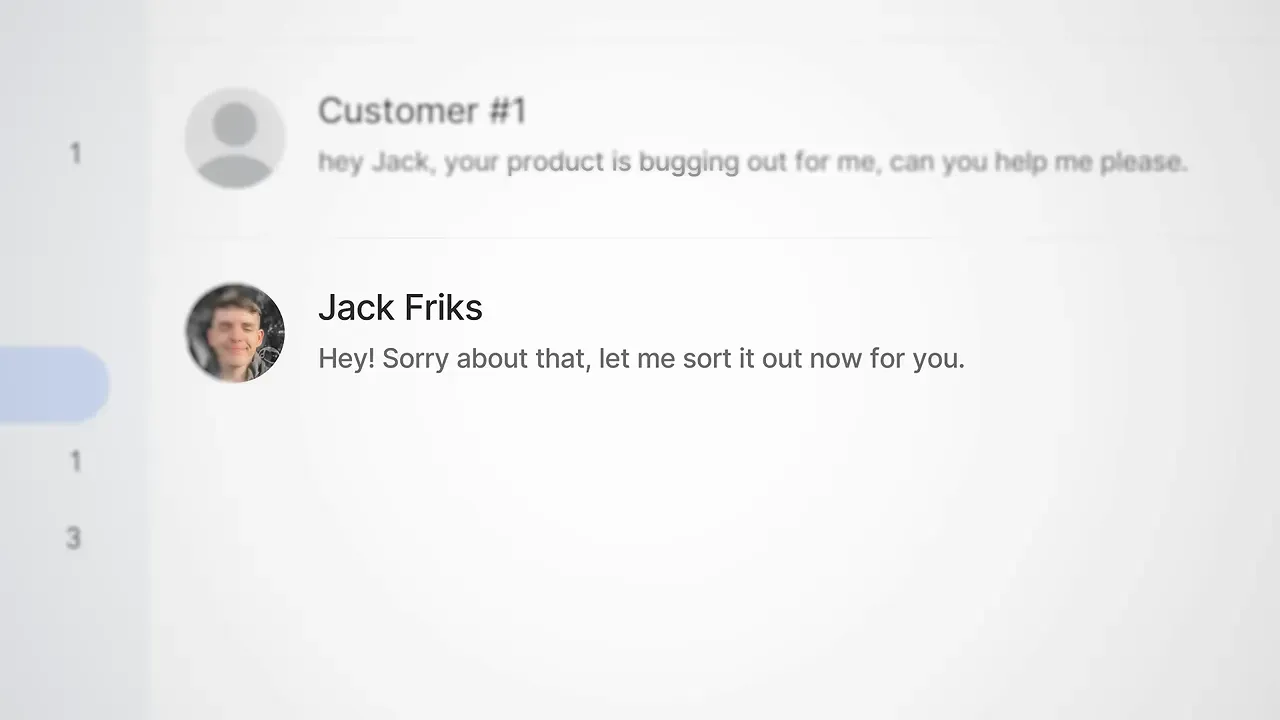
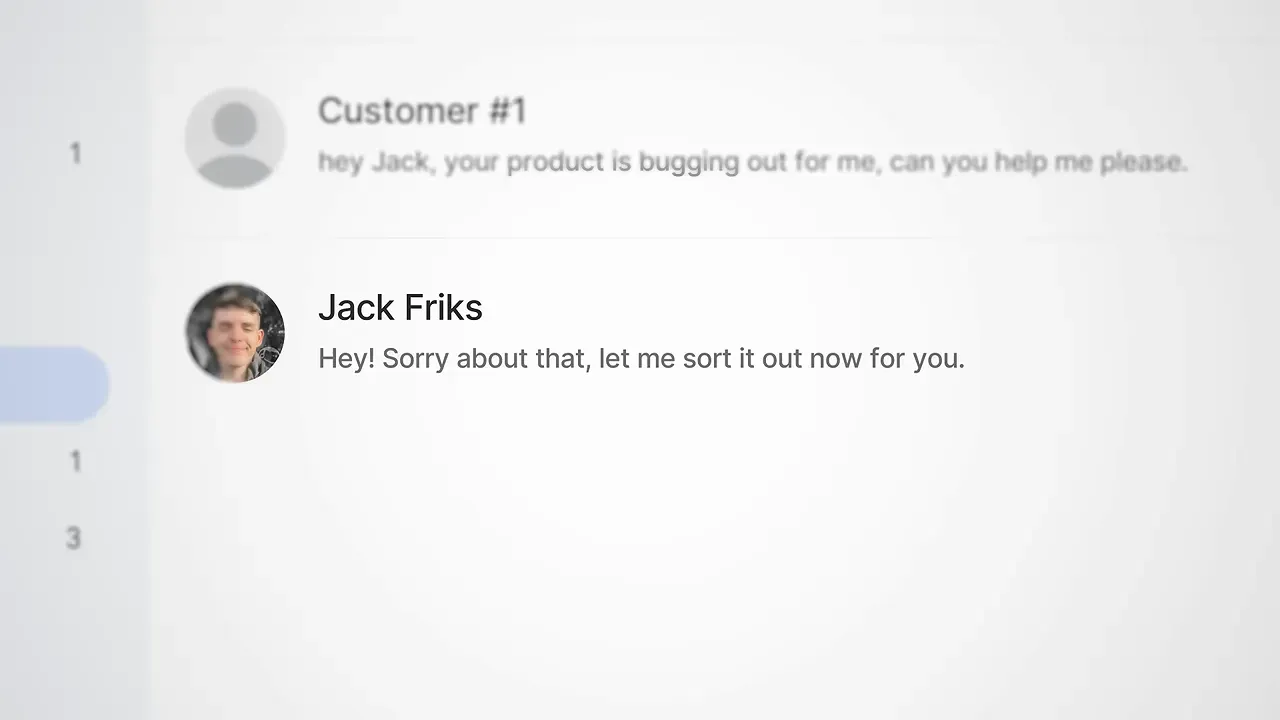
The first work task is customer support. Not because it is exciting, but mostly because it is not. He dislikes having unanswered emails hanging around in his head, which is understandable. A support inbox has the emotional energy of a smoke alarm with a subscription plan.
More importantly, support is where the product gets better. Fast replies and quick fixes make paying customers happier. Those conversations reveal bugs, confusing workflows, missing features, and the language people actually use to describe their problems. That feedback helps improve the product, retain users, and eventually grow revenue.
Why put support before deep work?
Jack treats it as a core part of the business, not an interruption from the “real” work. For a solopreneur, customers are not a department to be avoided. They are the closest thing to a product roadmap that has already paid for itself.
There is a tactical point here for anyone building with no-code startup tools, AI tools, or a full custom codebase: do not hide behind a feature backlog. If customers are encountering friction, the highest-leverage next move may be a reply, a fix, or a clearer explanation. It may not look glamorous in a social post, but it is how products become durable.
Does Jack work from anywhere?
Not really. The coffee shop laptop lifestyle is not his preferred operating model. Jack does his best work in one consistent environment with a good chair, a clean desk, and everything set up the way he likes it.
That is less about desk aesthetics and more about removing tiny decisions. When the environment is stable and uncluttered, there is less friction between sitting down and making progress. The lesson is not that everyone needs the same workspace. The lesson is that each builder should find the conditions where work becomes easier to begin.
🏃 Work in Sprints, Not Pretend Balance
How many hours does Jack work each week?
The honest answer is: it changes. Jack thinks in sprints rather than fixed workdays. One week might involve an hour or two each day. A launch week can become ten-hour days full of product work, customer feedback, bugs, and the particular kind of momentum that makes lunch disappear.
When a new product is live, there is effectively infinite work available. Feedback arrives, problems surface, and ideas multiply. When things settle down, he can return to maintenance work and shorter days. If the weather is good, he also wants the option to take a walk, play sports with his fiancée, or simply go outside. That freedom is a major reason he became a founder in the first place.
What keeps the flexibility from becoming chaos?
Jack uses a very simple constraint: one main project per day, alongside customer support. He might tackle a major bug, build an exciting feature, or move a project forward, but he avoids trying to advance multiple substantial priorities at once.
Multitasking is usually just task-switching with better branding. A solo builder who has five “top priorities” has mostly built a very efficient machine for feeling behind.
His decision filter is also personal. After support, he works on what feels most important and what creates genuine momentum. Curiosity matters. If a project is exciting enough to make him see it clearly in his head, he follows that thread.
Can an AI-powered launch system for creators use this approach?
Yes, but not by turning the whole business into an automation maze. A practical launch stack can help collect feedback, schedule content, organize ideas, and reduce repetitive work. The point is to protect focus, not produce a dashboard with seventeen widgets and no customers.
A simple version of this operating model could look like this:
- Morning: handle customer questions, bug reports, and feedback.
- Choose one build: pick the single product, marketing, or growth task with the most leverage.
- Publish a test: use a landing page, short-form post, or simple demo to see whether the framing lands.
- Read behavior: comments, clicks, signups, and purchases beat abstract opinions.
- Stop deliberately: protect a real end to the workday unless a launch sprint genuinely needs more.
That is a better solo builder tech stack than an elaborate AI funnel builder nobody has time to maintain.
🧠 Security Changes How Hard Work Feels
Did Jack always have a relaxed relationship with work?
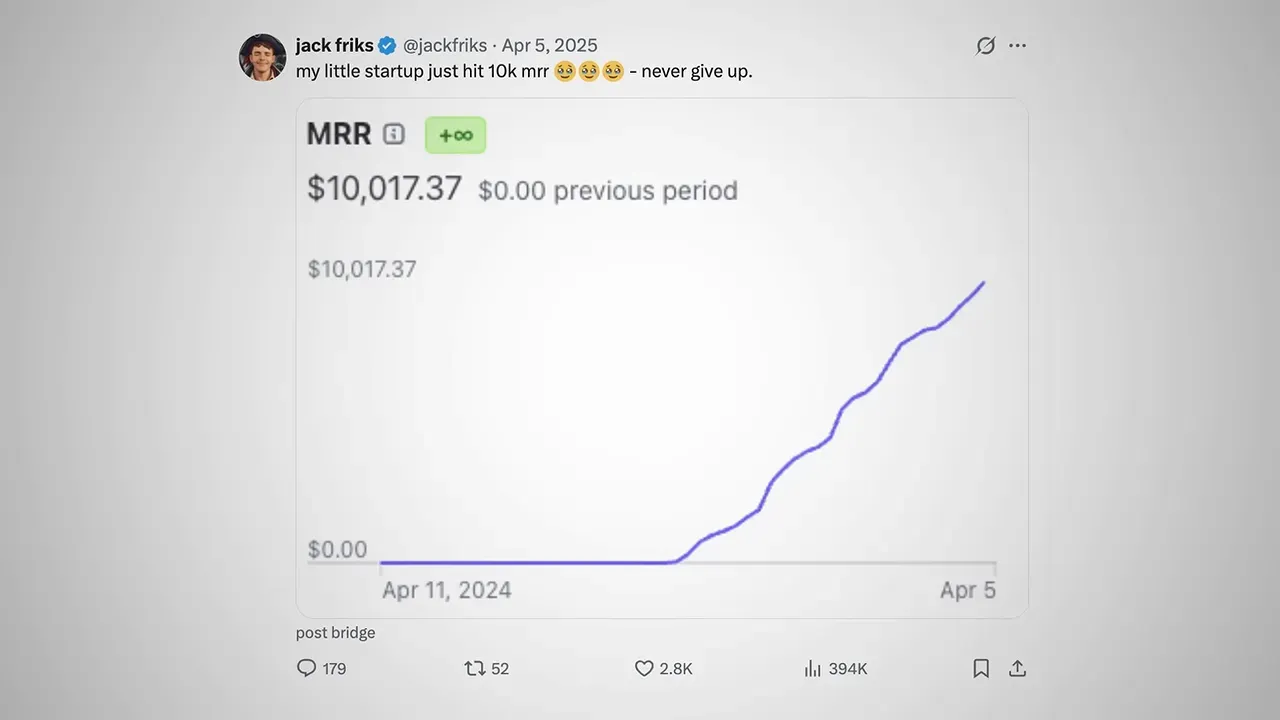
No. The flexibility came after a difficult stretch, not before it. As Jack earned more and became more financially secure, he felt less pressure to prove himself through constant work. When recurring revenue rose above a few thousand dollars per month, he knew he could live from the business. After another year of saving, the stress began to loosen.
Before that, he dealt with persistent headaches and anxiety for around two years. He was constantly thinking about whether he would make it. At one point, he felt stuck around $3,000 a month with a mobile app and genuinely feared that he had reached his ceiling.
Then he kept working. Within a couple of months, the app reached a peak month of around $15,000. From there, the direction changed. The business began to snowball upward instead of feeling stuck or fragile.
What should builders take from that difficult period?
Revenue milestones do not automatically fix a person’s brain. But stability changes the emotional math. When every month feels like a referendum on survival, working less can feel irresponsible. When the business has momentum and savings exist, it becomes easier to make decisions from curiosity rather than panic.
Jack’s story is not an argument for grinding until burnout wins. It is an argument for recognizing the season. Early-stage building can require sustained effort. But permanent anxiety is not a business model, and working more hours is not always the same thing as making more progress.
🔧 Build Products You Actually Want
Where does Jack find product ideas?
His ideas begin with his own needs. His first app, CuriosityQuench, existed because he wanted to see it in the world. A large number of other people wanted it too.
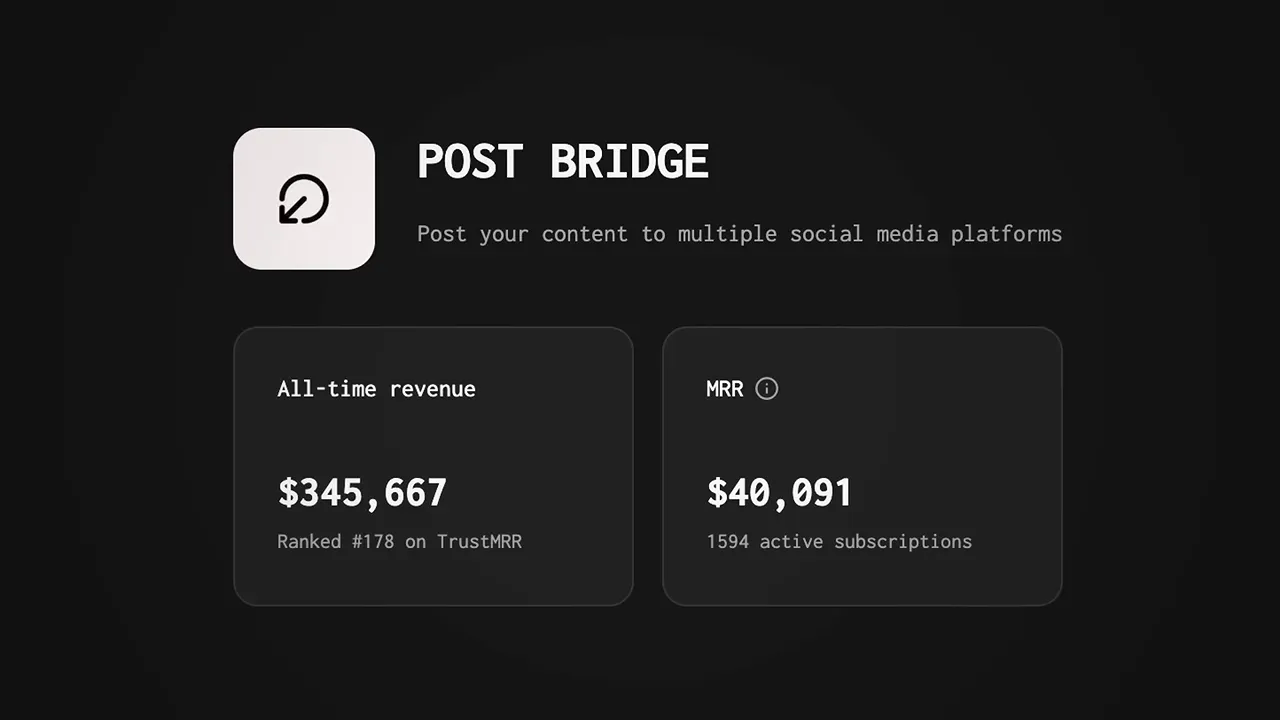
Then he needed a way to maintain that app’s growth, so he built a social scheduling tool for himself. That became PostBridge, which grew far beyond the original mobile app. As he tried to grow again, he built another mobile app from a need of his own. One product led to the next.
The throughline is straightforward: each product is an addition to something Jack personally wants to use or see exist. That does not guarantee demand, obviously. Plenty of personal wants deserve to remain personal wants. But it gives the builder a meaningful advantage: deep familiarity with the problem and a reason to keep going when the first version is ugly.
What is the trap when choosing a profitable niche?
Jack sees builders copying someone else’s success too literally. They see a product make money, then build a similar product in the same niche without any real interest in the problem.
That can look sensible on a spreadsheet. In practice, boredom leaks into everything: the product decisions, the marketing, the willingness to talk to customers, and the stamina required to iterate after the novelty disappears.
Interest is not a fluffy bonus. It is part of the endurance mechanism. A builder who cares about a problem is more likely to keep making the product better, which increases the odds that users eventually care too.
📊 Test the Framing Instead of Debating the Idea
How does Jack decide whether an idea is good?
He does not spend much time asking whether an idea is “good” in the abstract. He puts something in front of people. That might be a landing page, a TikTok post, or another public test. Then he pays attention to what happens.
If a thousand people reach a landing page and nobody clicks buy, there is a signal. The product might be weak. Or the framing might be weak. Those are different problems, but both deserve attention before more building happens.
That is particularly useful for anyone trying to launch with AI tools. AI makes it cheaper and faster to generate pages, prototypes, content, and workflows. Great. It also makes it easier to build the wrong thing at record speed, which is not quite the revolution people were promised.
What questions does Jack use to evaluate a product?
His framework is refreshingly unromantic:
- How can this be framed so its value is obvious?
- Is it actually valuable?
- Would he use it himself?
- Would it help someone else?
- Does it save time, save money, or satisfy another basic desire?
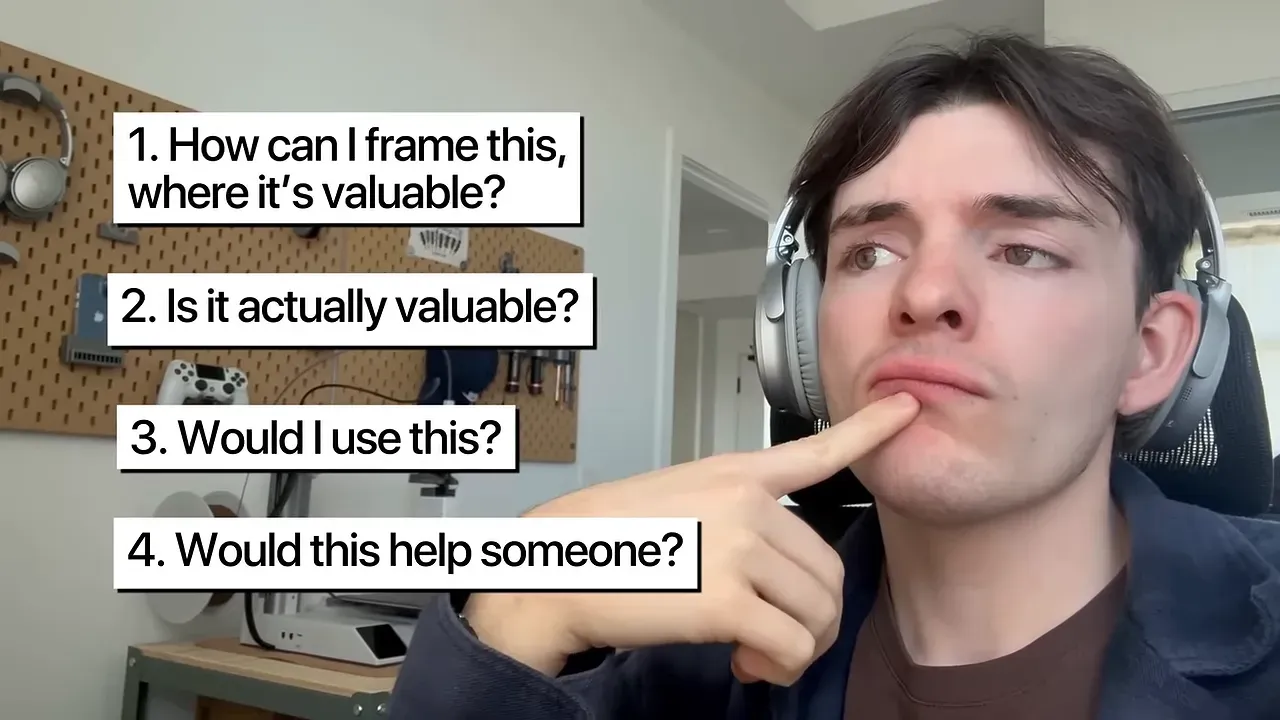
The framework does not require advanced market research theater. It requires honesty. If the product cannot plausibly save someone time, money, or effort, and no one can articulate why they need it, the idea may be weak. Better to learn that from a landing page than six months of building.
🌙 The Stop Time Is Part of the Job
When does Jack stop working?
Most days, Jack closes the computer around 5 p.m. and starts making dinner. Evenings are for spending time with his fiancée, going to the store, getting a treat, walking, biking, playing sports, or doing something resolutely unproductive.
That boundary did not arrive fully formed. During the first two years of his relationship, he often stayed on the computer during dinner prep or while a show was on. Technically, he was present. Practically, he was still working. It affected the quality of their time together.
His answer was to create a stop time around dinner. He still struggles with it sometimes, especially in intense work periods, but the boundary is intentional now.

How seriously does he take sleep?
Jack does not claim perfect sleep discipline. He tends to go to bed around 11 p.m. and wake around 7 a.m. Still, he sees seven to eight hours of sleep as essential, especially before a demanding workday.
It is boring advice because it is correct. A tired brain turns minor problems into architecture. It also makes every task feel like a personal insult. Getting enough sleep is not a luxury feature for founders. It is basic maintenance.
🌱 Keep Trying Things Until the Path Appears
What is Jack’s number one piece of advice for builders?
Find an individual path and stay curious. Jack has tried plenty of things that did not work. Rather than treating that as a verdict, he kept looking for evidence of what might.
He started collecting images on his computer that gave him hope and reminded him to continue. Over time, that became a small personal archive of momentum. It is not a productivity hack. It is a way to hold onto optimism when progress is invisible and the internet is busy pretending everyone else has already figured it out.
There are many ways to build a meaningful life and business, whether the goal is financial freedom, creative independence, more time with people who matter, or simply making something useful. The best path is not obvious in advance. It becomes visible through experiments.
🛠️ The Real Takeaway for Solo Builders
What should someone test tonight?
Jack’s approach can be remixed into a small, workable experiment:
- Write down one problem that keeps showing up in personal work.
- Describe the outcome it could create for someone else.
- Make a simple landing page or post that frames the value clearly.
- Ask whether it saves time, saves money, or solves a recurring irritation.
- Put it in public and observe behavior rather than waiting for certainty.
- If people respond, build the smallest useful version.
- If they do not, adjust the framing or move on without turning it into a courtroom drama.
An AI-powered launch system for creators can make this faster, but it cannot replace the underlying job: noticing real problems, caring enough to solve them, and listening when the market answers. The tools should make experiments cheaper. They should not make builders more distant from customers.
Jack’s work style is not a promise of permanent four-hour weeks. It is more useful than that. It is permission to work hard when the moment calls for it, slow down when it does not, build around genuine curiosity, and keep trying until something starts to move.