
Interview with Kyle Fowler, Builder of Two Card Scanner Apps Making $120K a Month

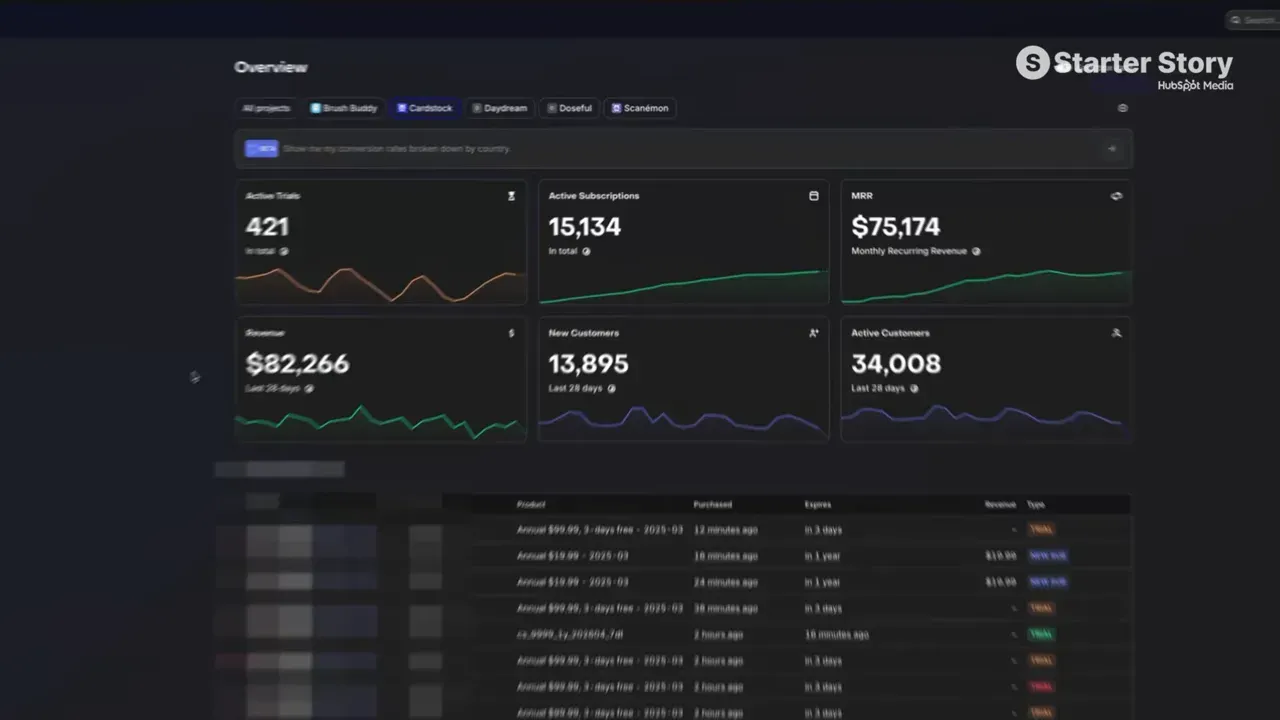
Kyle Fowler did not find his business by chasing some mystical startup lightning bolt. He looked at a hobby he already cared about, found a problem sitting right in front of him, and built the fix. That basic approach turned into two mobile apps, Cardstock and Scanémon, doing a combined roughly $120,000 a month.
For solo builders trying to piece together an AI-powered launch system for creators, this is the part that matters: the playbook is not glamorous. It is practical. Notice the annoying problem. Build the smallest useful version. Get it live. Then market it with something repeatable instead of praying for a viral miracle.
Kyle’s story is useful because it cuts through a lot of startup theater. No big vision deck. No fake founder mystique. Just a collector who wanted a better way to scan, organize, and value cards, then built the thing he wished already existed.
Table of Contents
- Why This Matters 🎯
- The Setup 🧰
- The Magic: How the Idea Actually Happened ✨
- The Build Process 🛠️
- Kyle’s Framework for Finding $1M App Ideas 📓
- Marketing Without the Usual Nonsense 📣
- The Product: Why It Works 📱
- The Real Talk 🤝
- One Trend That Deserves a Side Eye 🙃
- Final Advice for Builders 🧭
- FAQ ❓
Why This Matters 🎯
Why should anyone care about this approach?
Because most people waste a ridiculous amount of time hunting for app ideas as if the good ones only exist on trend reports, niche Twitter, or somebody’s overpriced course.
Kyle’s method is almost annoyingly simple. He pays attention to what frustrates him in real life. If something feels repetitive, clunky, slow, or weirdly manual, that is a clue. If it matters enough to be annoying more than once, it might be worth turning into software.
That makes this especially relevant for creators, indie founders, and solo operators building with no-code startup tools or AI coding assistants. The barrier to building is lower than it used to be. The hard part now is not access. It is attention. Most people are not paying close enough attention to their own workflow pain.
Kyle’s view is refreshingly grounded. Even if an app never becomes a huge business, solving a real problem for himself is already a win. That mindset quietly removes a lot of fear. It also tends to produce better products because they come from actual use, not fantasy demand.
The Setup 🧰
What exactly did Kyle build?
He built two mobile apps in the card collecting space.
- Cardstock helps sports card collectors identify cards with a phone camera, estimate market value, store cards in a digital collection, and track value over time.
- Scanémon applies the same basic model to Pokémon cards.
Cardstock is the larger business, sitting around 15,000 active subscriptions and roughly $75,000 in monthly recurring revenue. Scanémon, which launched much later, is smaller but climbing fast, with around 3,400 active subscriptions and about $17,000 in monthly recurring revenue.
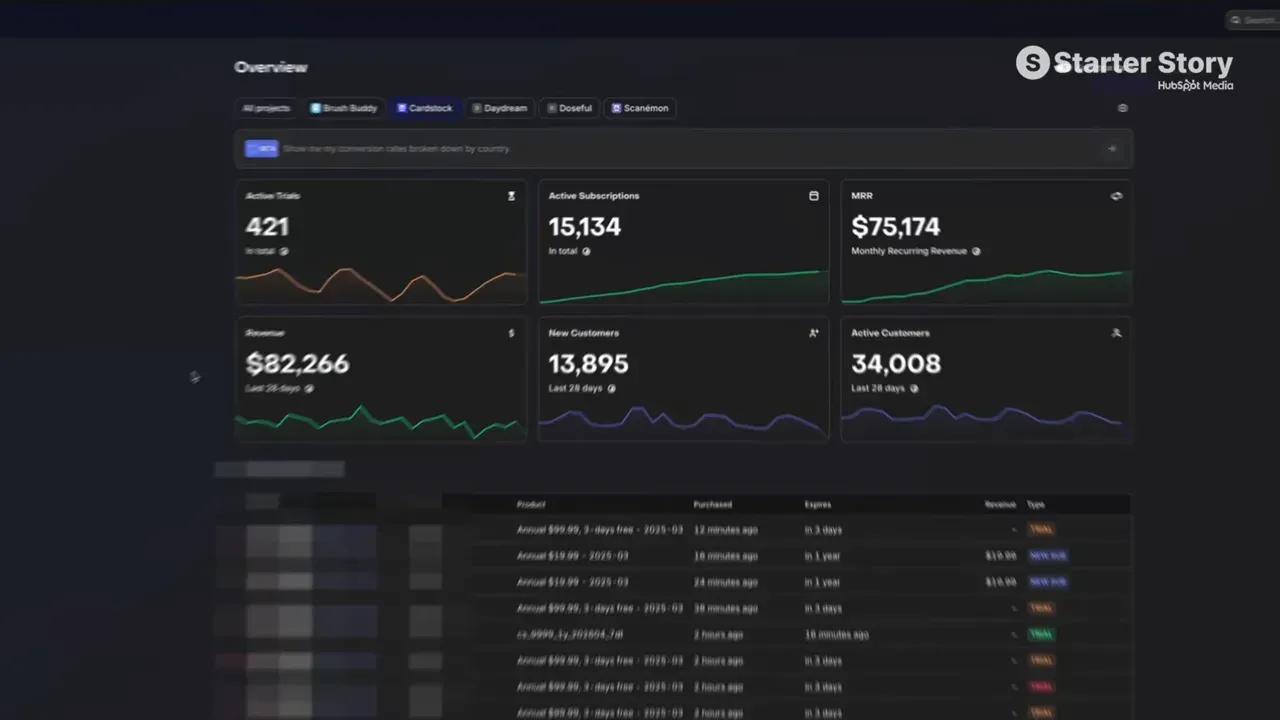
Together, the apps are well into seven figure annual territory. More importantly, they are boring in the best possible way. They solve a concrete problem for people who already care about the category.
What tools did he use to build them?
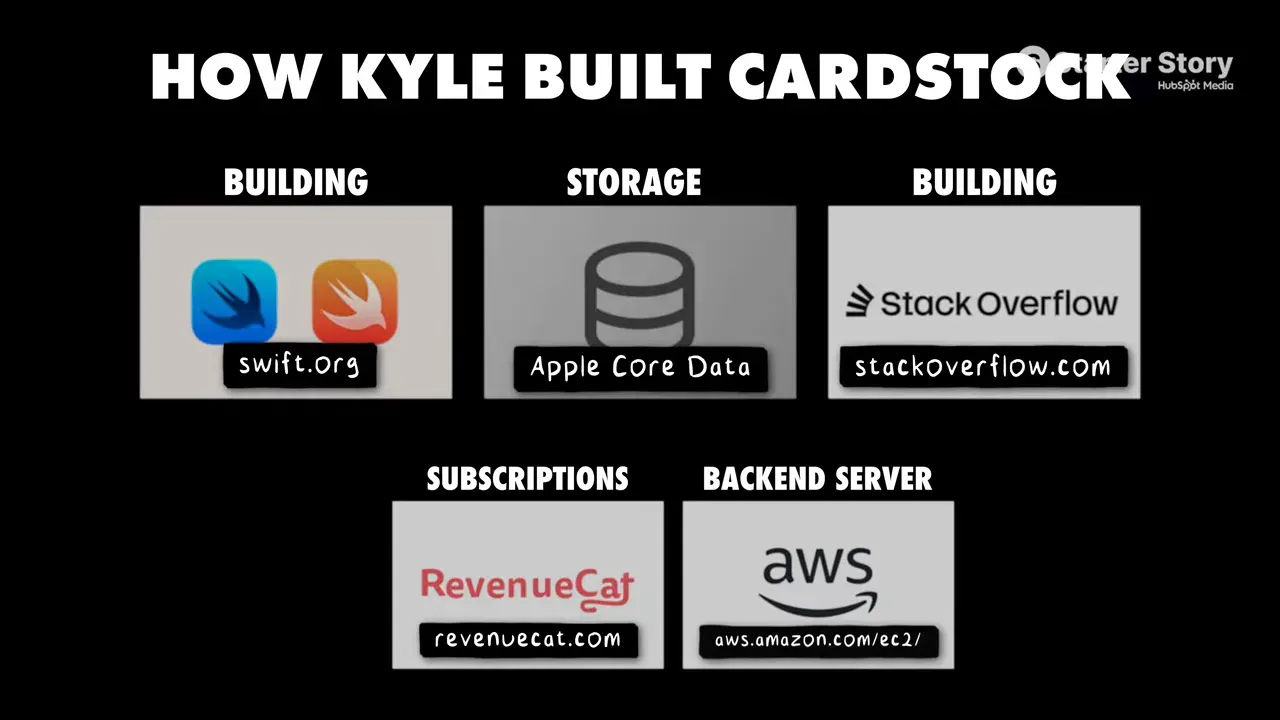
The stack is a mix of native development, AI help, and standard startup plumbing.
- Swift and SwiftUI for the iOS app itself
- Core Data for storage inside the app
- AWS EC2 for backend database needs
- RevenueCat for subscriptions
- Cursor and Claude for AI-assisted building, especially later
- Notion for organization
- Slack and a lightweight team workflow
- Framer for the website
- Supabase, Railway, CodeRabbit, WhisperFlow, Granola and a few other tools in the broader stack
This is where the solo builder tech stack angle gets interesting. Cardstock started in a more traditional way. Stack Overflow, manual coding, figuring it out as he went. Scanémon was different. Kyle leaned heavily on AI and said the MVP came together in about a day.
That is the window a lot of builders are living in now. You still need judgment. You still need taste. But the time between problem and prototype is collapsing fast.
The Magic: How the Idea Actually Happened ✨
How did Kyle come up with Cardstock?
He was already a card collector. The problem was obvious once he stopped accepting it as normal.
He wanted to catalog and sort his collection, but the physical nature of cards made that messy. If he was not standing next to the collection, he could not easily know what he had. That is the kind of friction people live with for years and somehow never promote to “software problem.”
Kyle did what any sensible person does before building. He checked whether the thing already existed. It did not. So he built it.
That sounds simple because it is simple. Not easy, but simple.
Was there formal validation first?
Not in the startup-lab sense. No survey funnel. No waitlist worship. No pretending a landing page equals demand.
The validation was more direct:
- He personally needed the product
- He knew other collectors had the same pain
- He could check the App Store and see a gap
- He could ship and let real usage answer the money question
That is probably the most useful kind of validation for builders using an AI funnel builder or trying to launch with AI tools. If the pain is real and recurring, the first version does not need to be brilliant. It needs to be useful.
The Build Process 🛠️
What was the timeline from idea to money?
For Cardstock, Kyle started in winter 2019. The whole process took around six months from idea to completion, with a break in the middle. Once it was done, he posted an update on Reddit and got early downloads quickly.
That part matters. The launch did not require some cinematic campaign. It needed a real thing and a place where the relevant niche already gathered.
Scanémon was much faster. Built years later, with better tools and far more AI assistance, the MVP took about a day. Same builder. Same general category. Completely different speed.
What changed between the first app and the second?
Leverage.
When Cardstock was built, Kyle was doing a lot more from scratch. By the time he tackled Scanémon, AI agents and coding copilots could handle much more of the repetitive implementation work.
That does not mean the app built itself while he made a sandwich. It means the mechanical part of software became less of a bottleneck. The differentiator shifted toward problem selection, product judgment, and shipping speed.
That is exactly why an AI-powered launch system for creators is even worth talking about. AI is not replacing the need for a good idea or useful product. It is shrinking the distance between noticing a problem and testing a solution.
Kyle’s Framework for Finding $1M App Ideas 📓
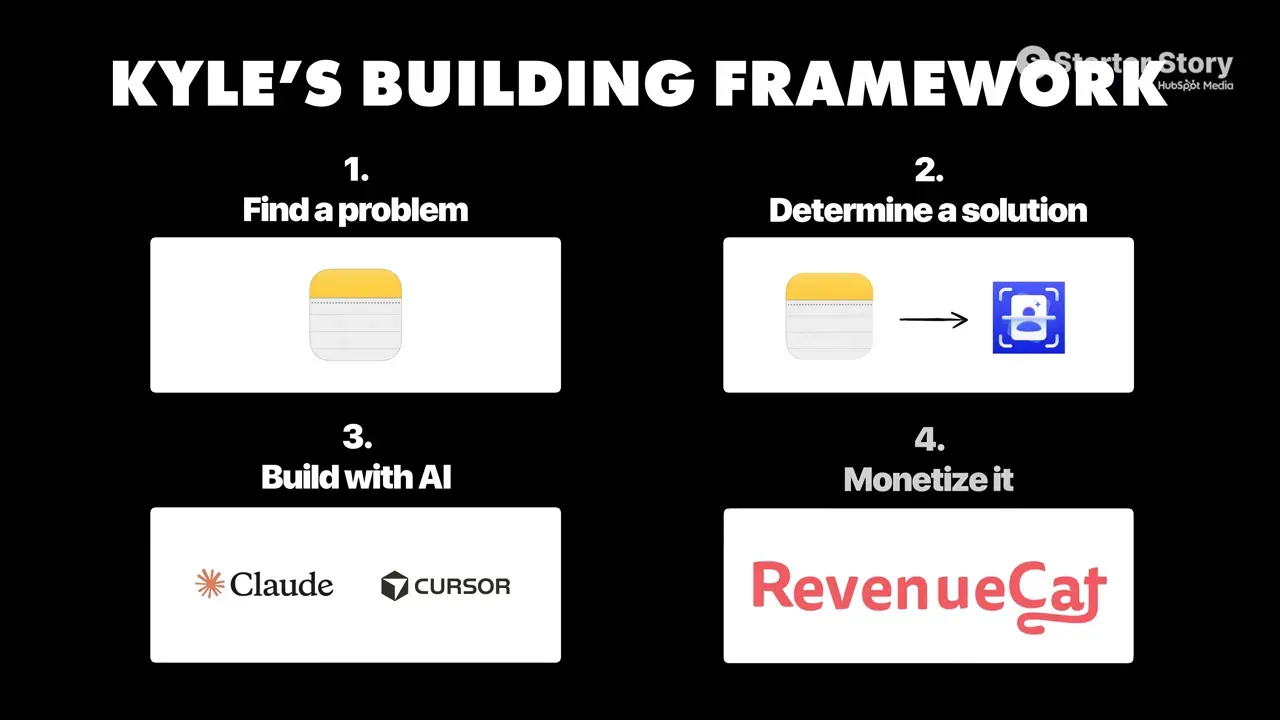
If Kyle had to start over, how would he find a new app idea?
His framework is very straightforward, which is honestly part of the appeal.
- Find a problem or opportunity
- Figure out the simplest possible solution
- Build it
- Monetize it
What does step one look like in real life?
Keep a running note of problems. That is it.
Kyle’s point is that if someone feels like there are no problems in daily life, they are probably not paying attention. Most people do repetitive, annoying, slow tasks every week. They just normalize them.
Good notes to capture:
- Anything repetitive
- Anything manual that should probably be automated
- Anything confusing in a hobby, workflow, or niche community
- Anything that makes someone think, “there has to be a better way than this”
What about step two?
This is where people usually make a mess.
He does not start with the grand version. He starts with the minimum version that actually solves the problem. Not a dashboard empire. Not twelve features and a chatbot duct taped onto it for no reason. Just the quickest useful fix.
If someone wants to automate funnel with AI, this principle still applies. The first system should solve one painful job well. A tiny useful workflow beats a bloated machine that technically does everything and practically does nothing.
And the monetization piece?
Kyle recommends using tools like RevenueCat or Superwall to get paywalls and subscriptions in place without turning it into a six week engineering side quest.
His broader point is that even this part is easier now. AI can often help implement the setup or walk through the steps. Support teams exist too, which is a nice reminder that not every problem needs to be solved by suffering privately in a browser tab at 1:12 a.m.
Marketing Without the Usual Nonsense 📣
How does Kyle think about marketing in 2026?
He likes TikTok slideshows because they are simple and repeatable.
That is an underrated quality in marketing. Repeatable usually beats clever. His approach is to find a format that gets attention, then refine it until it also drives downloads. The trick is balancing reach with conversion instead of treating them like the same thing.
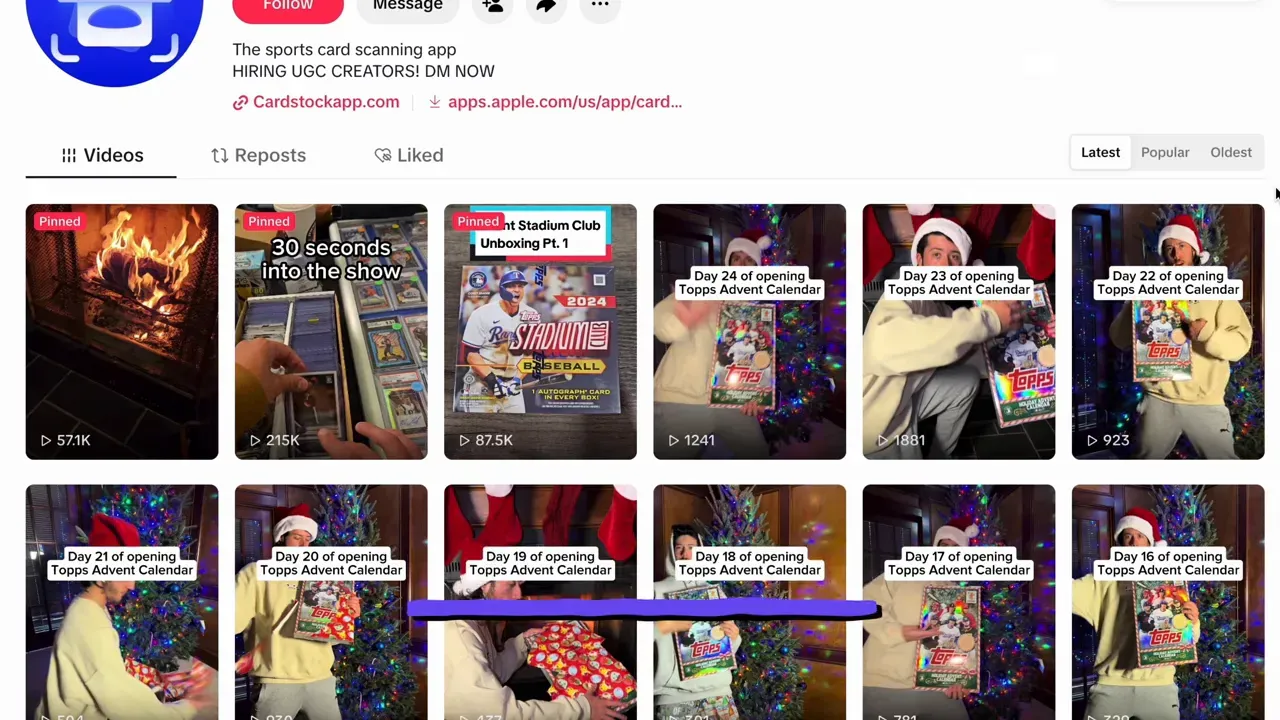
He also mentions using a platform called Noise to distribute slideshow templates to creators who post them, with payment based on views. That gives him a scalable way to test and spread a working format.

What is useful about this for other builders?
It is low drama.
Instead of trying to become a media genius overnight, he looks for a format that can be repeated with a clear audience and a clear call to action. That is much more realistic for creators and founders trying to launch with AI tools while still having an actual life.
A few tactical takeaways:
- Start with one channel instead of five half-dead ones
- Make content native to the platform, not recycled corporate mush
- Test formats, not just topics
- If one thing is driving results, make attribution easy by not muddying the waters with ten other experiments at once
The Product: Why It Works 📱
What does Cardstock actually do inside the app?
The workflow is nicely practical.
- Scan a card with the phone camera
- Match the card
- Show market value and detailed info
- Display recent sales so collectors can gauge current pricing
- Allow edits if the card was not matched correctly
- Add the card into a collection for tracking over time
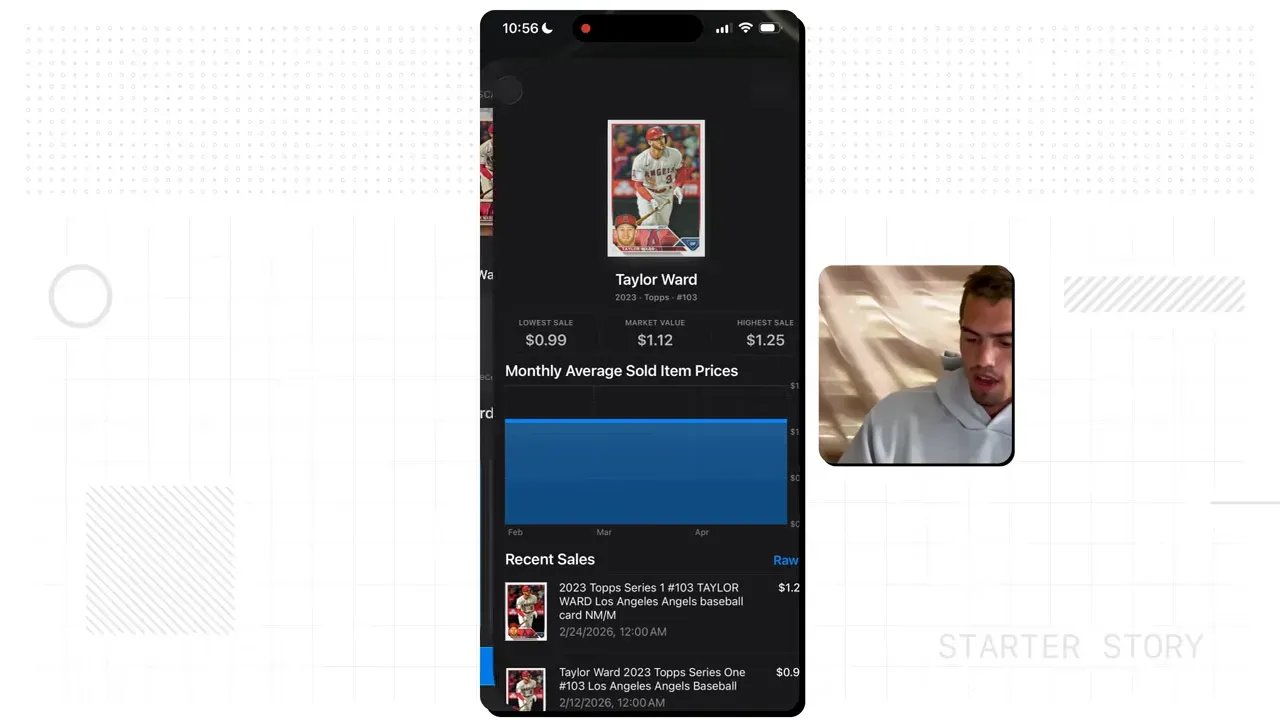
The recent sales piece is especially useful because collectors do not just want a vague estimate. They want evidence. That detail turns the app from a novelty scanner into a tool someone can actually use when buying, selling, or organizing a collection.
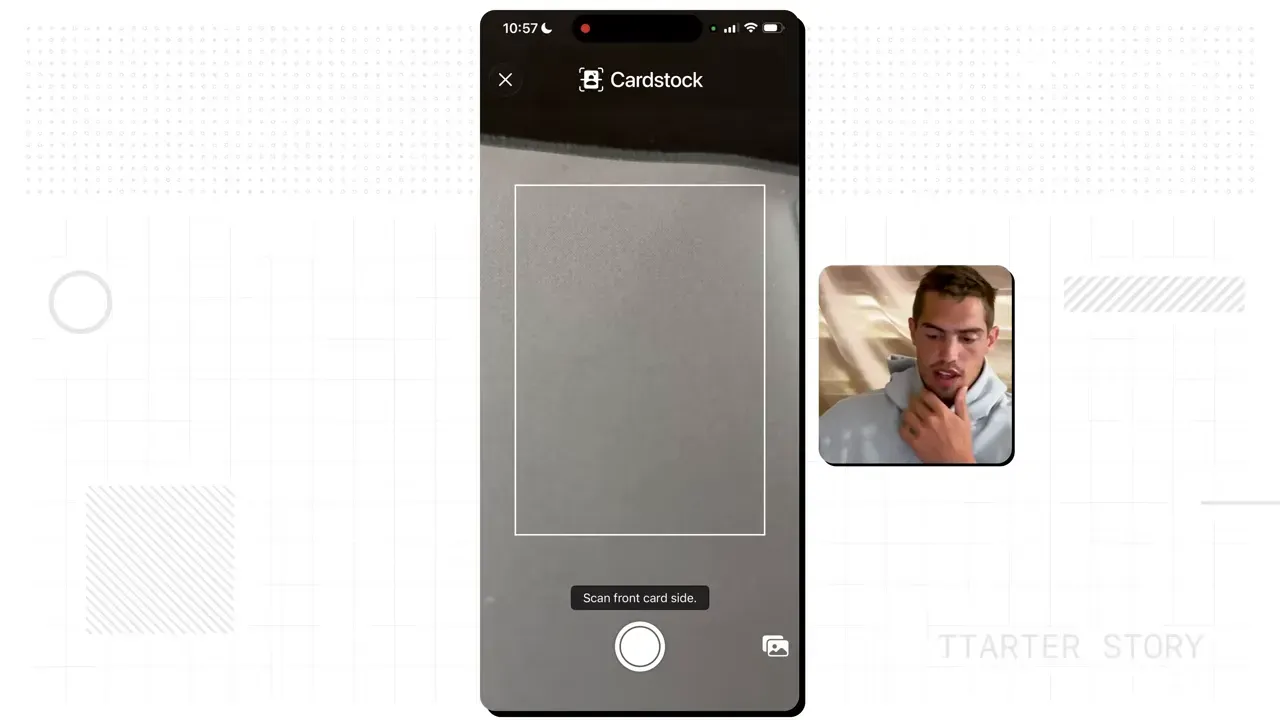
And when a match is wrong, there is an editing path rather than a dead end. That sounds small, but it is the kind of thing that keeps a practical tool from becoming infuriating after five minutes.
The Real Talk 🤝
Did Kyle act like success was guaranteed?
No, which is one reason his approach feels believable.
He is very clear that solving a personal problem improves the odds that others have the same problem, but it does not magically guarantee people will pay. Markets are still markets. People are still weird. Pricing still matters. Distribution still matters.
But he also makes a stronger point that most people need to hear: if the product solves a real problem for the builder, the project is not automatically a loss just because it does not become a huge business.
That mindset protects builders from the all-or-nothing spiral. It also encourages more shipping, which is where actual learning happens.
Would this approach work again today?
Probably yes, especially now.
The combination of AI coding tools, lighter infrastructure, and fast content distribution means a solo builder can go from idea to market test in absurdly short time. That does not make it easy to win, but it does make it much easier to try.
The larger opportunity is not to build some giant generic app for everybody. It is to find a niche where someone already understands the pain, the language, and the weird details. Hobby markets are full of these.
One Trend That Deserves a Side Eye 🙃
What should builders stop doing?
Stop waiting for the perfect idea to arrive dressed like a tech conference keynote.
Also maybe stop building giant systems before proving a tiny one. A lot of people want an AI funnel builder, a content engine, an automation maze, and a monetization stack before they even know whether anyone cares about the core solution.
That is how people end up with twenty subscriptions, no product, and a very intimate relationship with a cancellation page.
Kyle’s method is cleaner. Solve one thing. Use it. Ship it. See if other people want it too.
Final Advice for Builders 🧭
What advice would Kyle give someone starting now?
Ask people for help.
His view is that successful people are often much more willing to share than beginners expect. Builders love talking about how they solved things. The fear of bothering people is usually larger than the actual risk.
That is a useful reminder in a world where people try to brute force every obstacle alone. Sometimes the fastest path is just asking someone who already did it.
If there is a central takeaway here, it is this: the next useful product is probably not hiding in a trend report. It is hiding in a hobby, a workflow, a repetitive frustration, or a niche someone already knows unusually well.
That is the practical version of an AI-powered launch system for creators. Not just AI for the sake of AI. AI plus lived context. AI plus specific pain. AI plus enough taste to build something small that people actually use.
Not sexy. Very effective.
FAQ ❓
What are Kyle Fowler’s apps?
Kyle built Cardstock for sports cards and Scanémon for Pokémon cards. Both apps help collectors scan cards, identify them, estimate value, and manage collections.
How much revenue do Kyle Fowler’s apps make?
Together, the two apps bring in about $120,000 per month, with Cardstock contributing the larger share and Scanémon growing quickly.
How did Kyle find his app idea?
He found it through his own hobby. As a card collector, he wanted a better way to catalog and identify cards, checked whether a good app existed, and built the solution when he saw a gap.
What tech stack did Kyle use?
He used Swift, SwiftUI, Core Data, AWS EC2, RevenueCat, Cursor, Claude, Notion, Slack, Framer, and several supporting tools like Supabase and Railway.
What is Kyle’s advice for finding app ideas?
He recommends keeping notes on annoying, repetitive problems in daily life, choosing the simplest useful solution, building quickly, and monetizing with straightforward subscription tools.
How did Kyle market his apps?
He had success with TikTok slideshows and repeatable short form content formats, along with distribution through creators using a platform called Noise.
This article was inspired by this amazing video I Built Two Apps That Make $120K/Month. Check out more from their awesome channel.